 Save to Pinterest
 One Tuesday afternoon, I stood in my kitchen surrounded by half a dozen farmers market bags, convinced I'd overcommitted myself. Rather than letting those beautiful vegetables wilt in the crisper, I threw together what became my go-to answer for that 3 p.m. slump when I needed something real to eat. The magic happened when I roasted everything at high heat and drizzled it with tahini—suddenly all those separate ingredients became something greater than the sum of their parts.
I made this for my sister on a rainy Saturday when she mentioned feeling exhausted by takeout containers. Watching her eat three-quarters of the bowl without saying much, then asking for the recipe, told me everything I needed to know. That's when I realized this wasn't just efficient food—it was something people genuinely wanted to eat again.
Ingredients
- Quinoa, brown rice, or farro (1 cup): Each grain brings different texture and nutrition—quinoa is quickest and keeps a gentle nuttiness, while brown rice feels more substantial and farro has this satisfying chew if you don't mind the extra cooking time.
- Water or vegetable broth (2 cups): Broth adds flavor from the start, but water works fine; the spices and roasted vegetables carry plenty of taste.
- Salt (1/2 tsp for grains): This goes in the cooking water because grains absorb it differently than when salted afterward.
- Cooked chickpeas (1 cup): Canned and rinsed works just as well as homemade, and they add creamy protein without any fussiness.
- Cooked lentils (1 cup): Green or brown varieties hold their shape better than red lentils, which would turn mushy; I usually cook a big batch on Sunday.
- Red bell pepper, zucchini, red onion, cherry tomatoes, broccoli florets: These vegetables roast beautifully and char slightly at high heat, bringing sweetness and depth that raw versions don't quite offer.
- Olive oil (2 tbsp): Just enough to coat the vegetables without making them swim; this is where the flavor happens.
- Smoked paprika and ground cumin (1 tsp and 1/2 tsp): These warm spices make everything taste more intentional and developed, like you've put actual thought into the seasoning.
- Fresh parsley (1/4 cup chopped): This adds brightness and color at the end; dried won't give you the same fresh-herb lift.
- Avocado (1 sliced): Creamy contrast to the warm bowl, and it helps tie all the flavors together in each bite.
- Toasted pumpkin seeds (2 tbsp): These add crunch and a subtle earthiness that feels more sophisticated than it sounds.
- Tahini (2 tbsp): The dressing's backbone—this is where sesame flavor comes in, so don't skip it or substitute with something else.
- Lemon juice (1 tbsp for dressing): Acid cuts through the richness and wakes up every component; always use fresh.
- Garlic clove (1 minced): Just a whisper of raw garlic rounds out the tahini dressing without overpowering it.
Tired of Takeout? 🥡
Get 10 meals you can make faster than delivery arrives. Seriously.
One email. No spam. Unsubscribe anytime.
Instructions
- Fire up the oven and get your grain going:
- Start by preheating to 425°F and simultaneously bringing your salted water or broth to a boil in a saucepan. Once it's rolling, add your grain of choice and drop the heat to low, covering it so nothing escapes as steam. The timing varies—15 minutes for quinoa, 25 for farro, 40 for brown rice—but you'll know it's done when all the liquid is absorbed and each grain tastes tender all the way through.
- Prepare and roast the vegetables:
- While the grain cooks, cut everything into roughly similar-sized pieces so they roast evenly and get those caramelized edges. Toss them in a large bowl with olive oil, the smoked paprika, cumin, salt, and pepper, then spread them out on a baking sheet in a single layer—crowding the pan steams them instead of roasting them. Slide into the oven for 20 to 25 minutes, stirring halfway through, until the edges are slightly browned and everything is tender when you poke it with a fork.
- Warm your legumes gently:
- If you're using canned chickpeas and lentils straight from the fridge, a quick 2 to 3 minute warm-up in a small pan with a splash of olive oil and a pinch of salt makes them taste fresher and less canned. You're not trying to cook them further—just bringing them to the same temperature as everything else.
- Whisk together the tahini dressing:
- In a small bowl, combine tahini, lemon juice, minced garlic, salt, and pepper, then slowly add water a tablespoon at a time while whisking. You want something that drizzles easily but isn't so thin it runs off the bowl—if you overshoot, a bit more tahini fixes it right up.
- Build your bowls with intention:
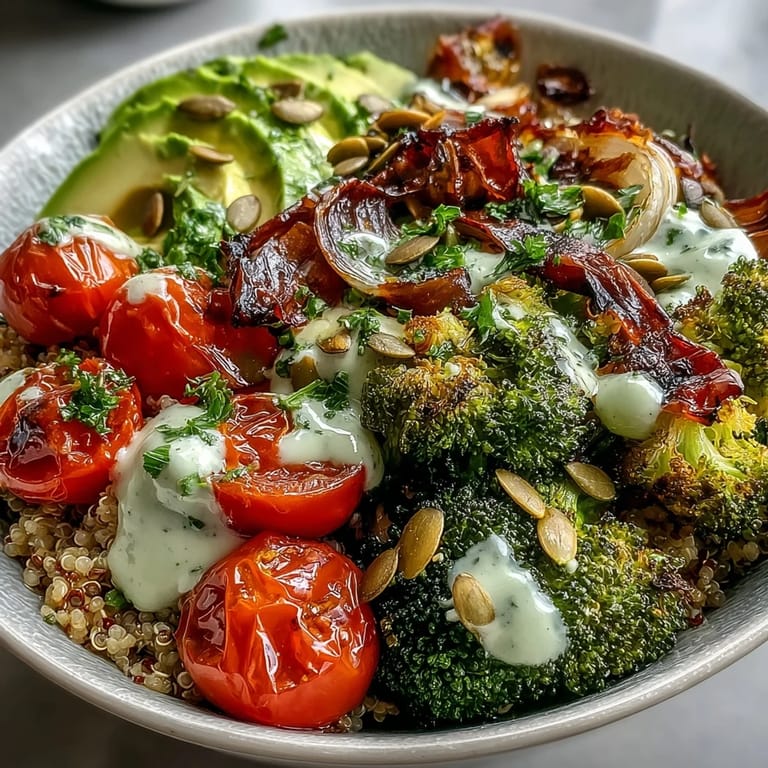
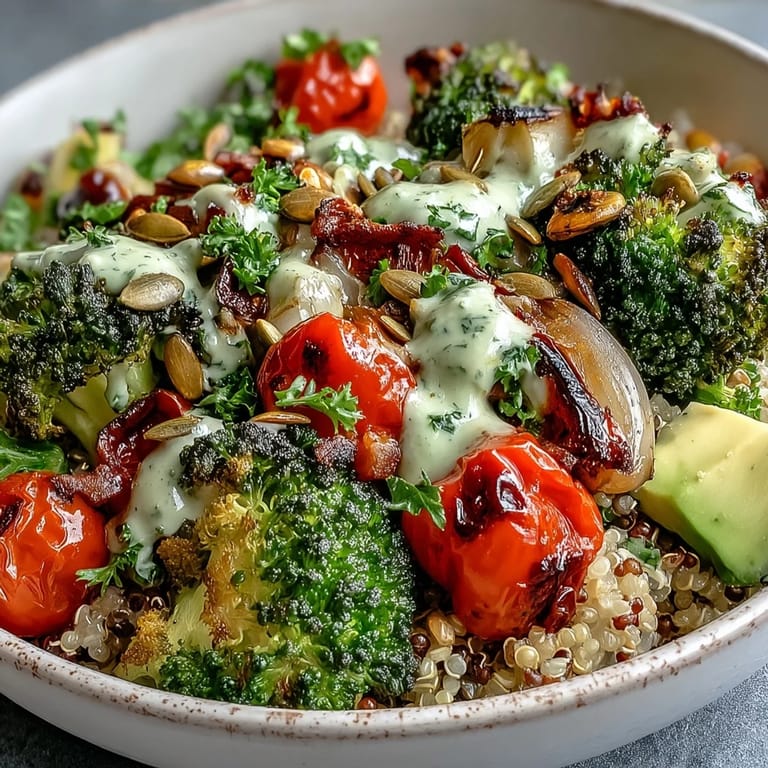
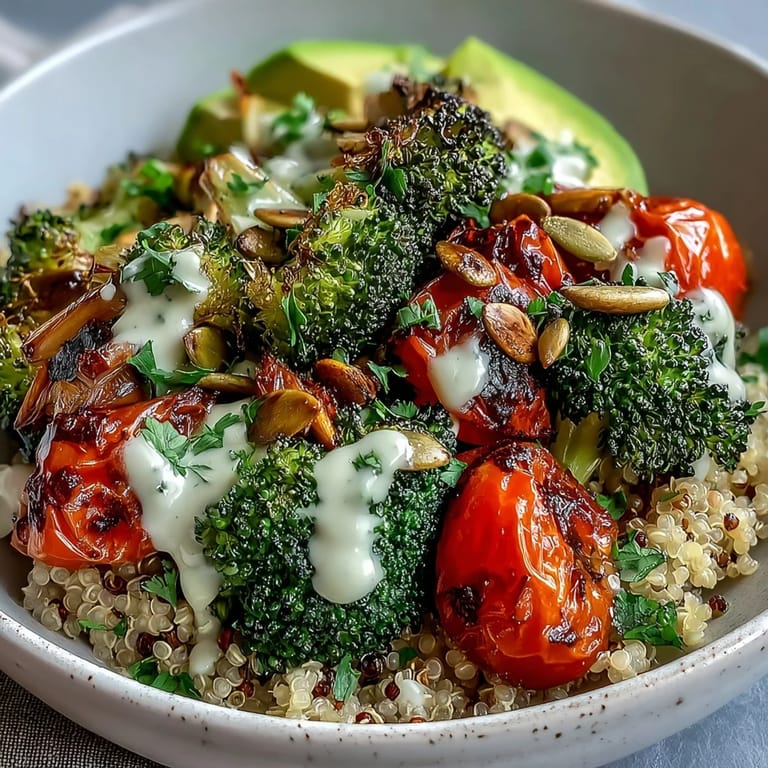
- Divide the cooked grain among four bowls as your base, then arrange the roasted vegetables and warmed legumes on top. Drizzle the tahini dressing over everything, making sure it reaches all the different components.
- Finish with brightness and texture:
- Top each bowl with fresh parsley, avocado slices, and a scatter of toasted pumpkin seeds, then serve with lemon wedges on the side so people can adjust the tartness to their taste.
 Save to Pinterest
 My mom tried this once and asked if the tahini dressing was store-bought because it tasted so creamy and smooth. When I told her it was just five ingredients whisked together, something shifted in how she approached cooking—like she realized impressive food doesn't require elaborate shortcuts. That moment stuck with me more than I expected.
Swapping Vegetables by Season
The beauty of this bowl is that it adapts to what's available and what sounds good at the moment. In spring, I lean toward asparagus and snap peas; summer means more tomatoes and zucchini; fall is when I add sweet potato wedges and cauliflower; winter calls for roasted root vegetables like carrots and parsnips. The technique stays exactly the same—just cut to similar sizes, toss with oil and spices, roast until charred—so you're never fighting the recipe, just working with what the season offers.
The Grain Question
I used to think all grains tasted basically the same until I started paying attention to how they actually felt in my mouth. Quinoa brings this tiny popping texture and nutty finish; brown rice is earthier and more filling; farro has this satisfying chewiness that makes the bowl feel more substantial. For gluten-free mornings, quinoa is my default, but if you're curious, trying different grains is worth the extra five minutes of cooking time to discover what you actually prefer instead of just what's familiar.
Building Flavor and Making It Your Own
Once you've made this bowl a couple times, you'll start seeing it as a template instead of a rigid recipe. The spice blend I use—smoked paprika and cumin—can swap for curry powder, za'atar, or Italian herbs depending on what direction you want to take the flavors. The tahini dressing works as written, but if someone at your table doesn't like sesame, a simple lemon vinaigrette or even a creamy herb yogurt sauce carries the bowl just as well. The legume combo is flexible too—black beans, kidney beans, or split peas all bring different textures and work beautifully.
- Taste as you go and adjust salt and lemon juice in the dressing because those two things make the biggest difference in how alive everything tastes.
- If you're meal prepping, keep the components separate and assemble only what you'll eat that day, since avocado and greens wilt in storage.
- Toasted seeds can be swapped for nuts—sunflower seeds, sliced almonds, or even candied pecans if you want something slightly sweet.
 Save to Pinterest
 This bowl has become my answer to so many different moods and moments—quick lunch, impressive thing to bring to a potluck, something healthy to eat on a day when I've been sitting too long. That's the kind of recipe worth knowing inside and out.
Recipe Help Center
- → What grains work best in this bowl?
Quinoa, brown rice, and farro all work beautifully. Quinoa cooks fastest at 15 minutes, while brown rice takes about 40 minutes. For a gluten-free option, stick with quinoa or certified gluten-free grains.
- → Can I use canned legumes?
Absolutely. Canned chickpeas and lentils work perfectly—just drain and rinse them thoroughly before adding. If using dried legumes, cook them according to package directions until tender.
- → How long does this keep for meal prep?
Stored in airtight containers, this bowl keeps well for 4-5 days in the refrigerator. Keep the dressing separate and add just before serving to maintain the best texture.
- → Can I roast different vegetables?
Yes. Sweet potato, cauliflower, carrots, Brussels sprouts, or eggplant all roast beautifully. Just adjust cooking times as needed—root vegetables may require a few extra minutes.
- → Is this bowl freezer-friendly?
The roasted vegetables, cooked grains, and legumes freeze well for up to 3 months. However, avocado and fresh garnishes don't freeze well—add those fresh after reheating.
- → What can I use instead of tahini?
If you have a sesame allergy, try Greek yogurt for a creamy dressing, or make a vinaigrette with olive oil and lemon juice. Cashew butter also makes a creamy, nut-free alternative.