 Save to Pinterest
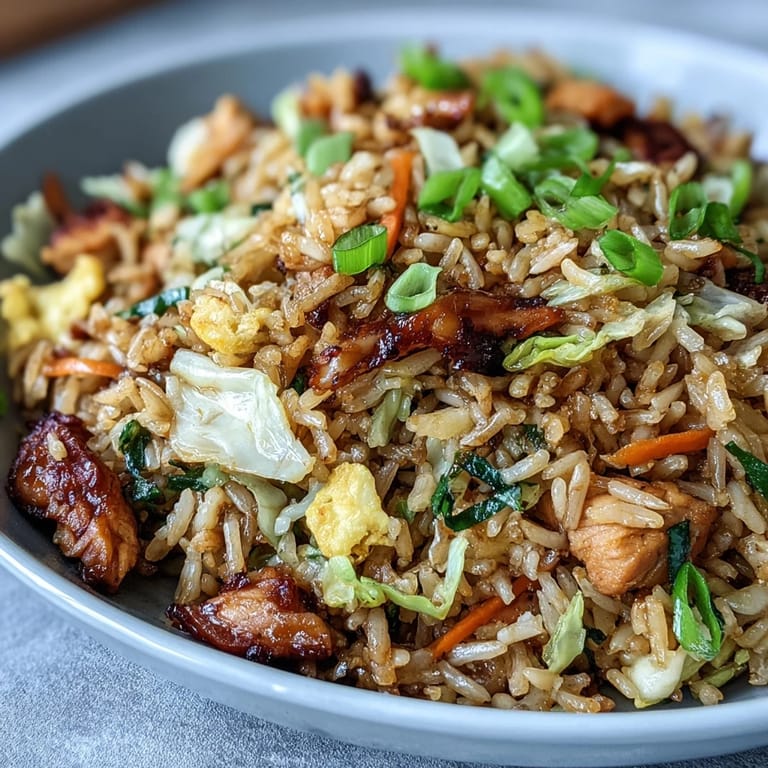
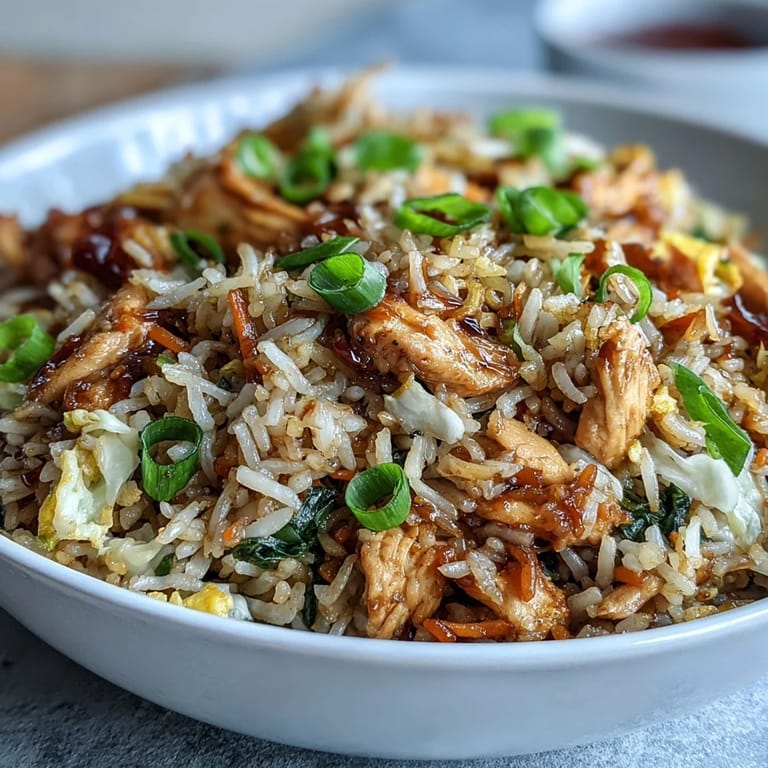
 There's something magical about the moment when a wok gets properly hot and you realize you've got everything prepped within arm's reach. My kitchen smelled like ginger and garlic the afternoon I first threw together this egg roll fried rice, and my partner wandered in asking what smelled so good. What started as me trying to use up leftover chicken and day-old rice became this dish I now make on nights when I want something that tastes impressive but doesn't demand much time or fuss.
I made this for my sister on a Tuesday night when she'd had a rough day at work, and watching her face light up when she took the first bite reminded me that sometimes the simplest meals carry the most comfort. She kept asking if I'd ordered it from somewhere, and I loved being able to tell her I'd made it in about the time it takes for delivery to arrive.
Ingredients
- Cooked chicken breast, shredded or diced (2 cups): Use a rotisserie chicken for even less work, or poach chicken breasts the night before and shred them while they're still slightly warm so they break apart easier.
- Large eggs (3): These create little curls of golden scrambled egg throughout the rice that add protein and richness, so don't skip them or use a substitute.
- Coleslaw mix (2 cups): The pre-shredded cabbage and carrots are honestly a secret weapon for cutting prep time, though you can hand-shred if you prefer more control over the size.
- Green onions, sliced (1/2 cup): Save a little bit to scatter on top at the end for a fresh pop that makes the whole dish feel finished.
- Garlic, minced (2 cloves) and fresh ginger, grated (1 tablespoon): These two together are non-negotiable for that authentic egg roll flavor that makes people ask what your secret ingredient is.
- Cooked jasmine or long-grain rice (3 cups): Day-old rice is actually better here because it's drier and won't get mushy, so make this the day after you've had rice with dinner or cook it ahead and refrigerate.
- Soy sauce (3 tablespoons): Low sodium if you prefer to control the salt level, and taste at the end because this is your main seasoning player.
- Oyster sauce (1 tablespoon, optional): This adds an umami depth that makes the whole dish taste more layered, but if you skip it, the soy sauce is sufficient.
- Toasted sesame oil (1 teaspoon): A little goes a long way here, and it's what gives you that warm, nutty finish that reminds you of the takeout version.
- Ground white pepper (1/2 teaspoon): It has a different flavor than black pepper and won't create visible dark specks, which keeps the appearance clean and light.
- Sriracha or chili sauce (1 teaspoon, optional): Add this if you like heat, or let people customize their own bowls so nobody feels left out.
- Vegetable oil (2 tablespoons): A neutral oil that won't burn at high heat, so your vegetables stay crisp and not greasy.
Tired of Takeout? 🥡
Get 10 meals you can make faster than delivery arrives. Seriously.
One email. No spam. Unsubscribe anytime.
Instructions
- Get everything ready:
- Lay out all your ingredients so you're not searching for things once the wok gets hot. This is called mise en place in fancy kitchens, but really it's just setting yourself up to win.
- Start with the chicken:
- Heat 1 tablespoon of oil over medium-high heat until it shimmers, then add your chicken and let it warm through for about 2 minutes. You're not cooking raw chicken here, just heating it, so don't get impatient and turn up the heat or it'll dry out.
- Build the flavor base:
- Add the second tablespoon of oil, then the garlic and ginger, and let them sizzle together for maybe 30 seconds until your kitchen smells incredible. That's the signal that the aromatics are releasing their oils and you're on the right track.
- Cook the vegetables:
- Toss in the coleslaw mix and keep stirring for 2 to 3 minutes until it's softened but still has a little crunch to it. If it starts sticking to the bottom, you can add a splash of water, but usually the moisture from the vegetables is enough.
- Scramble the eggs:
- Push everything to the side of the pan and crack your eggs into the empty space, then scramble them until they're just set. Once they're done, mix them back in with everything else so you get pieces of egg throughout instead of one big omelette.
- Add the rice and sauce:
- Pour in your cooked rice and break up any clumps with the spatula so every grain gets coated, then add your soy sauce, oyster sauce if using, sesame oil, and white pepper. Toss everything together and keep it moving in the pan for 3 to 4 minutes so the rice gets heated through and the flavors meld.
- Finish strong:
- Stir in the sliced green onions and sriracha if you want heat, cook for another minute, then taste and adjust the seasoning. If it needs more salty depth, add a little more soy sauce, or if you want more heat, add more sriracha.
- Get it to the table:
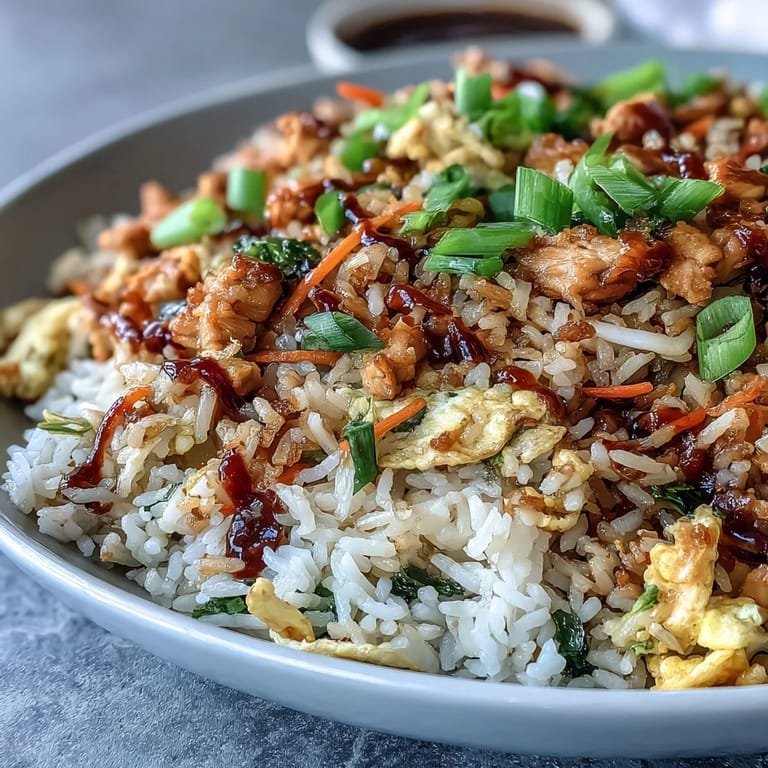
- Serve it hot and garnish with extra green onions so it looks as good as it tastes.
 Save to Pinterest
 The first time I made this for a group of friends during a casual dinner party, someone asked if I'd taken a cooking class, and I realized then that sometimes the best meals aren't about complicated techniques but about having your mise en place ready and moving confidently through the pan. That moment of realizing I could cook something that felt restaurant-quality in my own kitchen shifted something in how I approached weeknight cooking.
Why This Tastes Like Takeout
The secret isn't any single ingredient but the combination of three things working together: high heat that gets your vegetables to soften just slightly while keeping their color, aromatic garlic and ginger that build the flavor foundation before anything else joins the pan, and the sesame oil finishing touch that wraps everything in warmth. When you cook this with intention and don't rush, you're essentially creating the same flavor profile a restaurant wok station produces, just on your own stovetop and with ingredients you actually chose yourself.
Make It Your Own
This recipe is built on a framework, not a rulebook, so feel free to swap in whatever vegetables you have on hand or whatever leftover protein needs using. Water chestnuts add a crisp texture that people love, bean sprouts bring a fresh note, snap peas make it feel more elegant, and if you want to go vegetarian, tofu works beautifully and picks up all the flavors just as well as chicken does. The sauce ratios are forgiving enough that you can dial things up or down depending on what you like.
- Leftover roasted vegetables can be tossed in during the final stage, so nothing good ever has to be wasted.
- If you cook for someone with dietary restrictions, you can make a version with tamari instead of soy sauce and vegetarian oyster sauce and they'll never feel like they're eating something different.
- Serve it with a cold beer or jasmine tea and suddenly you've created an entire experience instead of just dinner.
 Save to Pinterest
 This dish has become my comfort food for nights when I want something delicious without the stress, and I hope it becomes yours too. There's real joy in making something taste this good with your own hands.
Recipe Help Center
- → Can I use fresh rice instead of day-old?
Fresh rice can work but tends to become mushy. Spread cooked rice on a baking sheet and refrigerate uncovered for at least 4 hours to dry it out slightly, achieving better texture during stir-frying.
- → What vegetables work best in this dish?
The coleslaw mix is perfect for that authentic egg roll crunch. Additional options include bean sprouts, snap peas, water chestnuts, or diced bell peppers for extra color and texture variation.
- → Is this dish spicy?
The base version is mild with just white pepper for subtle warmth. Add sriracha or chili sauce according to your preference, starting with ½ teaspoon and adjusting to taste.
- → Can I make this vegetarian?
Absolutely. Substitute shredded chicken with firm tofu cubes or extra vegetables. Use vegetarian oyster sauce and ensure your sauces are vegetarian-friendly.
- → What protein alternatives work well?
Beyond chicken, try pork loin, shrimp, beef strips, or even crumbled sausage. Cooking times may vary slightly depending on your protein choice.