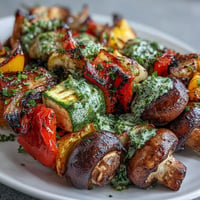
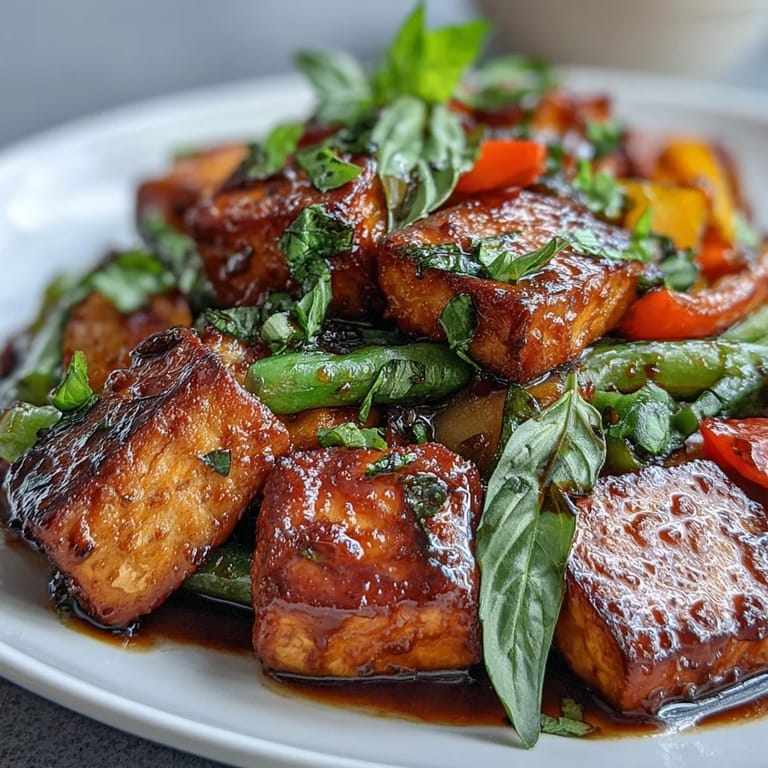
 Save to Pinterest
 There's a particular kind of magic that happens when you're cooking in a small apartment kitchen with the windows fogged up and the smell of garlic and basil filling every corner. That's when I discovered this Thai basil stir-fry, actually—not in a restaurant or from a cookbook, but by accident on a Tuesday evening when I was trying to use up vegetables before they wilted and happened to have a block of tofu that needed rescuing. The combination of crispy, golden tofu with that bright, peppery Thai basil and the snap of fresh vegetables became something I found myself making again and again, each time tweaking it slightly based on what was in my fridge or what mood I was in.
I remember making this for my friend Marco on a night when he'd just announced he was trying plant-based eating, and I was nervous about whether it would feel like real food or just virtuous vegetables. He had thirds, sitting cross-legged on my kitchen floor with the bowl balanced on his lap, asking if I'd ever considered cooking professionally. That meal became a turning point—not just for him, but for how I thought about cooking without animal products.
Ingredients
- Firm tofu, 400 g (14 oz), pressed and cubed: Pressing is non-negotiable here—it removes moisture so the tofu can actually turn golden and crispy instead of steaming itself into submission.
- Red and yellow bell peppers, 1 of each, sliced: The colors matter as much for how they look on the plate as for the sweet-savory balance they bring.
- Medium carrot, julienned: Cut them thin so they cook quickly and add a delicate crunch rather than turning into soft little coins.
- Small red onion, sliced: Red onion stays slightly crisp and adds a peppery sharpness that regular yellow onion wouldn't provide.
- Snap peas, 100 g (3.5 oz), trimmed: These are the last thing you want to overcook, so they keep their snap and that fresh, green taste.
- Garlic, 2 cloves, minced: Mince it fine so it distributes throughout the pan without any harsh chunks.
- Red chili, 1 small, finely sliced: Optional, but it adds complexity beyond just heat—a subtle floral quality alongside the spice.
- Soy sauce, 3 tbsp: Use tamari if you're avoiding gluten, though regular soy sauce is more traditional and honestly tastes cleaner in this context.
- Dark soy sauce, 1 tbsp: This deepens the color and adds a slight sweetness and depth that regular soy sauce alone can't achieve.
- Maple syrup or coconut sugar, 1½ tbsp: Either works, though maple syrup dissolves more smoothly and has a subtle complexity.
- Rice vinegar, 1 tbsp: The acid brightens everything and prevents the sauce from becoming cloying.
- Black pepper, ½ tsp, freshly ground: Grind it just before you cook—pre-ground loses its volatile oils and turns dusty.
- Water, 1 tbsp: This keeps the sauce from being too intense and helps it coat the vegetables evenly.
- Vegetable oil, 2 tbsp, divided: Use something neutral that can handle high heat—vegetable, canola, or peanut all work, though peanut oil adds a subtle richness.
- Fresh Thai basil, 1 cup, loosely packed: This is the soul of the dish, so don't substitute with Italian basil if you can help it—Thai basil has an anise-like, slightly peppery character that's completely different.
- Lime wedges, for serving: Fresh lime is the final brightness that pulls everything together.
- Cooked jasmine rice, to serve: Jasmine rice's subtle floral quality pairs better than plain white rice ever could.
Tired of Takeout? 🥡
Get 10 meals you can make faster than delivery arrives. Seriously.
One email. No spam. Unsubscribe anytime.
Instructions
- Mix your sauce first and let it wait patiently:
- Combine soy sauce, dark soy sauce, maple syrup, rice vinegar, black pepper, and water in a small bowl, stirring until the sweetener dissolves completely. Set it aside—you want this ready before your pan gets hot because once you start cooking, you won't have time to fiddle with a bowl.
- Get your tofu golden and crispy:
- Heat 1 tablespoon of oil in your largest skillet or wok over medium-high heat until it shimmers, then add the tofu cubes and let them sit for a minute before stirring. Turning them occasionally over 6-8 minutes, you're looking for all sides to develop a deep golden crust that's almost nutty-smelling—this is what makes people believe tofu can actually taste good. Remove it to a plate once it's done.
- Build your aromatics:
- Pour the remaining tablespoon of oil into the pan and immediately add minced garlic, red onion, and chili if you're using it, stirring constantly for just 30 seconds until the kitchen smells unmistakably Thai. Don't let the garlic brown or it'll turn bitter—you're going for fragrant and golden.
- Add your vegetables strategically:
- Toss in the bell peppers, carrot, and snap peas, stirring continuously for 3-4 minutes until they're tender but still have personality—they should snap slightly when you bite one, not surrender completely. The timing here is crucial because these vegetables go from perfect to overcooked in about 30 seconds.
- Bring everything back together:
- Return the tofu to the pan, pour in your waiting sauce, and toss everything thoroughly so every piece gets coated. Stir-fry for 2-3 minutes, watching as the sauce reduces slightly and coats everything with a glossy sheen.
- Add the basil at the very end:
- Remove from heat and gently fold in the fresh Thai basil leaves—they'll wilt from the residual heat while staying bright and fragrant. If you cooked the basil, it would lose everything that makes it special, so resist the urge to keep the pan over heat.
- Serve immediately while it's still warm and vivid:
- Spoon it over jasmine rice and finish with lime wedges on the side, letting people squeeze their own to taste. The acid from the lime is the final touch that brings the entire dish into focus.
 Save to Pinterest
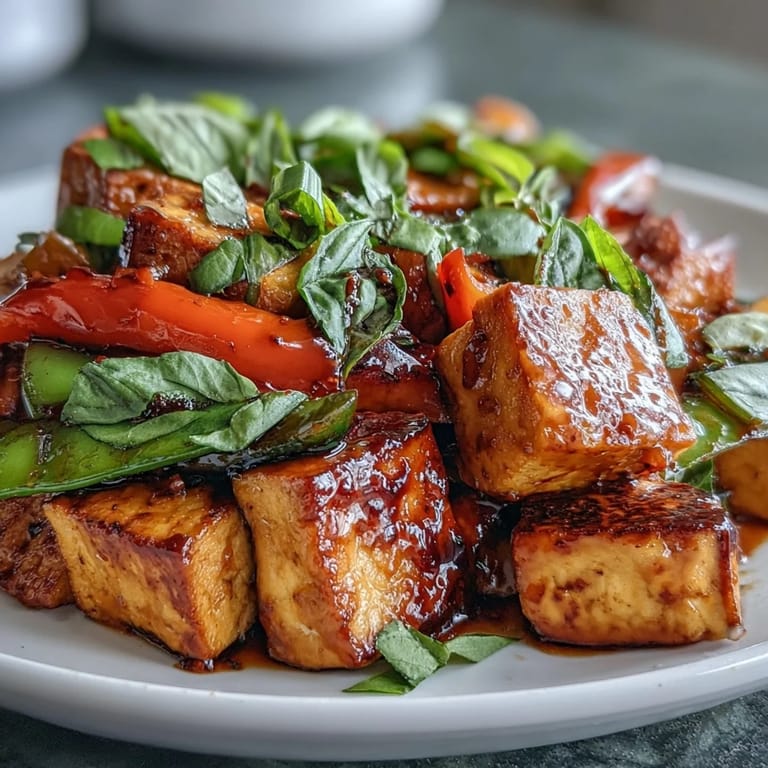
 There's a moment about three minutes into cooking when your kitchen stops being just a kitchen and becomes something else entirely—when the aromatics hit the air and you know with certainty that the next thirty minutes are going to result in something worth tasting. That moment, that certainty, is what I chase every time I make this.
The Secret to Crispy Tofu
Most people assume tofu is inherently soggy, but that's only true if you treat it like something that needs gentleness. The moment you press it properly and then resist the urge to move it around the pan constantly, it transforms into something completely different. The sound it makes when it hits the hot oil—that particular sizzle—is how you know you're doing it right. Let each side sit undisturbed for a minute or so, and you'll get the Maillard reaction working in your favor instead of against you.
Why the Sauce Matters More Than You'd Think
A stir-fry sauce is the difference between cooking vegetables and creating a dish with intention. The combination of salty, sweet, sour, and slightly bitter elements creates a complexity that feels sophisticated without requiring fancy techniques. The dark soy sauce does something that regular soy sauce can't—it adds depth and a subtle sweetness that balances the garlic and chili while the rice vinegar keeps everything bright rather than heavy.
Making It Work With What You Have
This is genuinely one of those recipes that improves with adaptation rather than strict adherence. I've made it with broccoli when that's what was in the fridge, with baby corn, with zucchini, and once with some mushrooms and water chestnuts I found at the back of the produce drawer. The structure—crispy tofu, fresh vegetables, Thai basil, savory sauce—stays constant while everything else can shift based on the season, your mood, or what needs eating before it goes bad. Here's what actually matters:
- Keep the tofu pressed and crispy: That's the anchor of the whole dish.
- Don't skip the Thai basil or find an actual substitute: It's too essential to fake.
- Taste the sauce before serving and adjust with lime juice or soy sauce as needed: Your ingredients might be slightly different from mine, so be willing to make it yours.
 Save to Pinterest
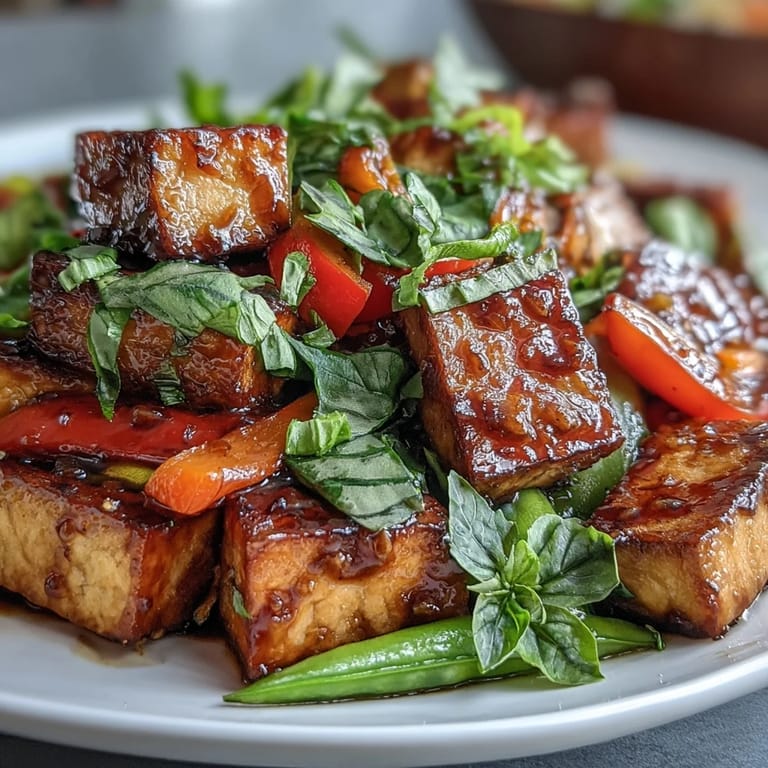
 This dish has become my reliable answer to the question of what to cook when I want something that feels both nourishing and indulgent, without any of the guilt. It's vegetable-forward but doesn't taste like penance—it tastes like someone who knows how to cook decided to make you dinner.
Recipe Help Center
- → How do I achieve crispy tofu for this dish?
Press tofu to remove excess moisture, then pan-fry in hot oil turning occasionally until all sides turn golden and crisp.
- → Can I adjust the spice level in this stir-fry?
Yes, include or omit the red chili slices and add chili flakes to increase or reduce heat according to preference.
- → What vegetables work best in this stir-fry?
Bell peppers, carrots, snap peas, and red onion provide great texture and flavor, but you can substitute with broccoli or zucchini if desired.
- → Is there a way to add more depth to the sauce?
Using a combination of light and dark soy sauce with a touch of maple syrup or coconut sugar balances savory and sweetness effectively.
- → How to incorporate Thai basil properly?
Fold in fresh Thai basil leaves off the heat at the end to preserve their aroma and vibrant color.