 Save to Pinterest
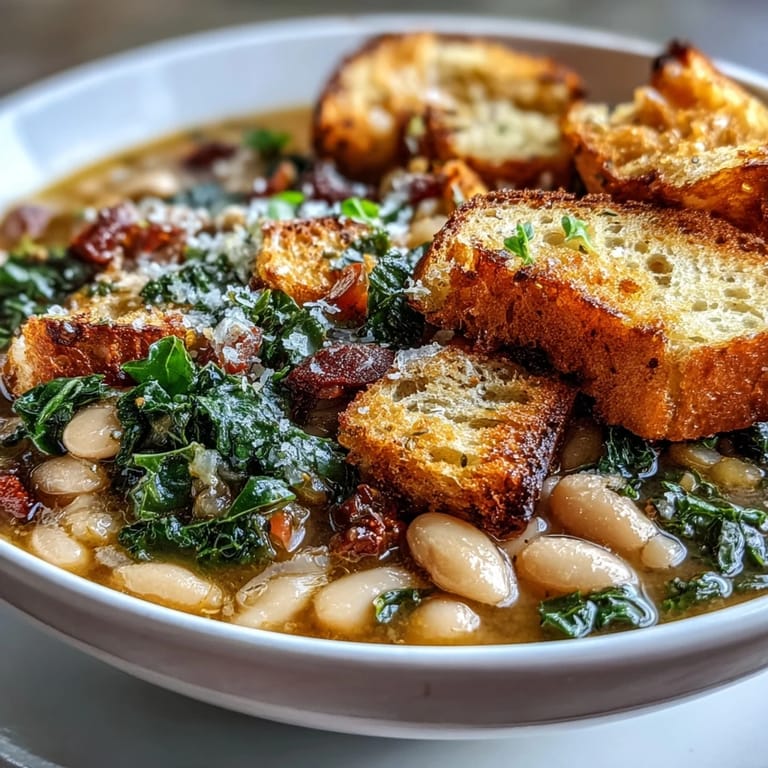
 There's something about watching a pot of vegetables soften into gold that makes you feel like you're doing something ancient and true. I discovered ribollita on a grey afternoon when a friend handed me a worn Italian cookbook and said, simply, use what you have. What emerged was this soup—humble, honest, and somehow more comforting than anything I'd planned. The sourdough croutons were an afterthought, a way to use up bread that had gone hard, but they became the whole reason I'd make it again.
I made this for my parents on their first visit to my tiny apartment, nervous about impressing them with something that wasn't just delivery in a bag. My mother took one spoonful, then another, and asked for the recipe in that particular tone that meant she was going to make it her own way immediately when she got home. My father ate three bowls and complained there weren't croutons on the fourth.
Ingredients
- Extra-virgin olive oil: Use the good stuff you'd actually taste on bread, because it makes the entire soup taste like someone who cares made it.
- Yellow onion, carrots, and celery: This is the holy trinity that every cook should know—they're the foundation that makes everything else sing.
- Garlic cloves: Fresh is non-negotiable; it adds the kind of warmth that jarred garlic simply cannot reach.
- Fennel bulb: Optional but worth seeking out, it brings an anise whisper that makes people ask what the secret ingredient is.
- Tuscan kale (cavolo nero): Its texture holds up better than other greens, and it has a gentle bitterness that balances the sweetness of the beans.
- Yukon gold potato: Waxy and reliable, it softens without turning to mush, creating a subtle thickening effect.
- Diced tomatoes: Canned is completely acceptable here; their acidity brightens the whole pot.
- Cannellini beans: Creamy and mild, they absorb the flavors around them like small blank canvases waiting for paint.
- Vegetable broth: The quality here matters more than you'd think—use homemade if you have it, or a brand you'd actually drink from a mug.
- Dried herbs: Bay leaf, thyme, and oregano are the Italian whisper that reminds everyone where this soup comes from.
- Day-old sourdough bread: It must be slightly stale so the cubes stay firm and crisp instead of turning into soup-soaked sadness.
Tired of Takeout? 🥡
Get 10 meals you can make faster than delivery arrives. Seriously.
One email. No spam. Unsubscribe anytime.
Instructions
- Begin with the holy trinity:
- Heat your olive oil in a large Dutch oven and add the onion, carrots, celery, and fennel if you're using it. You're looking for that moment when they soften and the kitchen smells like something warm is happening—about 8 to 10 minutes of gentle sautéing. Let them get a little golden at the edges; this is where flavor lives.
- Wake up the garlic:
- Stir in your minced garlic and listen for it to sizzle softly, then add the zucchini, potato, and kale. Cook for just 3 or 4 minutes—you're not trying to finish them, just convince them to release their essence into the pot.
- Build your broth:
- Pour in the tomatoes with their juice, add the drained beans, broth, and all your dried herbs. Season generously with salt and pepper, tasting as you go because seasoning is a conversation, not a destination. Bring everything to a boil, then settle it down to a gentle simmer.
- Let time do the work:
- Simmer for 35 to 40 minutes, stirring occasionally and listening to the soup tell you when it's ready. The vegetables should be tender, the flavors mingled and deep. About halfway through, take the back of your spoon and gently mash some of the beans and potatoes against the side of the pot—this creates a creamy texture without any cream.
- Toast your bread into gold:
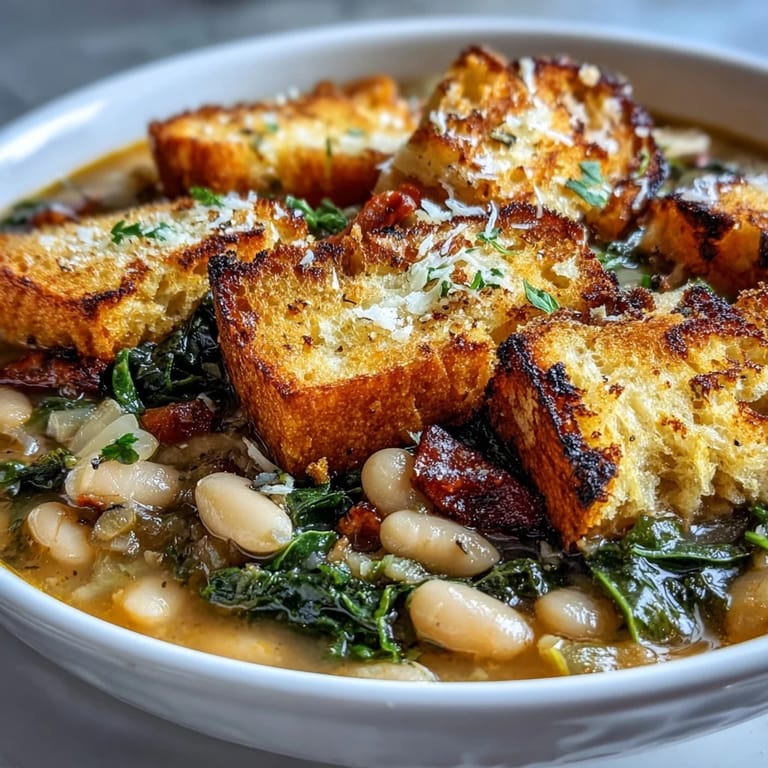
- While the soup simmers, toss your sourdough cubes with olive oil and spread them on a baking sheet. Bake at 400°F for 10 to 12 minutes, turning once, until they're deeply golden and crisp enough to crack between your teeth. Rub them with a cut garlic clove while they're still warm so the heat opens it up and lets the garlic perfume sink in.
- Finish like you mean it:
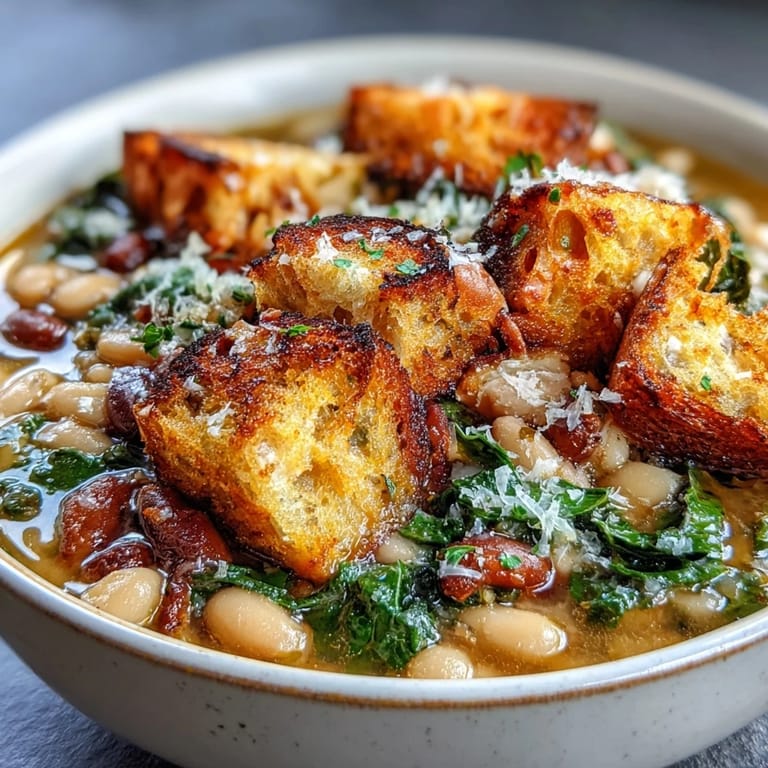
- Remove the bay leaf, taste your soup one more time, adjust the seasoning, and ladle it into bowls. Top each one generously with croutons, a drizzle of olive oil, and cheese if you're using it, then serve immediately while the croutons still have that snap.
 Save to Pinterest
 My neighbor came home to the smell of this soup emanating from my apartment and we ended up eating it together on my fire escape, talking until the light faded, the warmth of the bowls in our hands more necessary than the conversation itself. That's when I understood this wasn't just food—it was an invitation to slow down.
The Depth of Simplicity
There's a particular kind of cooking wisdom that comes from Italian peasant food: never confuse simple with easy. This soup teaches you that every ingredient has a reason for being there, and that respect for raw materials creates something more complex than any fancy technique ever could. The longer it sits, the better it becomes, which is why Italians have always made extra.
Why Sourdough Croutons Matter
I used to think croutons were just a way to save stale bread, but then I realized they're actually the bridge between two textures, two temperatures, two entirely different experiences of the same bowl. The moment that crispy square hits the hot soup and softens just slightly while maintaining its character—that's the moment the dish becomes memorable. Don't skip this part or buy store-bought; the garlic-rubbed version you make yourself will taste like someone who cares made it.
Variations and Whispers
Once you've made this once, you'll start seeing it as a template rather than a rigid prescription. Add a parmesan rind to the pot while it simmers if you have one—it dissolves into umami that makes people think you're secretly a professional chef. Swiss chard works beautifully if kale isn't calling to you, though the flavor will be gentler. Some days I add a pinch of red pepper flakes for people who like their comfort with a warning, and some days I don't.
- A vegetable stock you made yourself will taste noticeably better than the boxed version, so start saving your vegetable scraps in the freezer.
- Fresh herbs stirred in at the end—basil, parsley—add brightness to bowls that have been sitting for a day and tasted every flavor.
- This freezes beautifully for up to three months, which means one afternoon of cooking becomes several evenings of dinner already waiting.
 Save to Pinterest
 This soup is the kind that becomes part of your cooking rhythm once you've made it, a reliable friend you return to when you need comfort or when you want to prove to someone that you care. Make it often, change it slightly each time, and watch how it becomes yours.
Recipe Help Center
- → What is ribollita?
Ribollita is a traditional Tuscan stew made by simmering white beans, vegetables, and greens like kale, resulting in a hearty, thick dish.
- → Can I use other greens instead of kale?
Yes, Swiss chard or spinach can be substituted for kale to vary texture and flavor.
- → How do I get the croutons crispy?
Toss sourdough cubes in olive oil, bake at 400°F for 10–12 minutes, turning once until golden and crisp, then rub with garlic.
- → Is it possible to make this dish vegan?
Omit the Parmigiano-Reggiano or use a plant-based alternative to keep it vegan-friendly.
- → Why partially mash some beans and vegetables?
Mashing some beans and vegetables thickens the stew, creating a richer, creamier texture typical of ribollita.