 Save to Pinterest
 There's something almost magical about watching a pot of fragrant broth come alive at the dinner table, steam rising while everyone leans in with their chopsticks ready. My first hot pot experience wasn't at a restaurant, but in my friend's cramped apartment kitchen where we crowded around a tiny portable burner, passing plates of thinly sliced beef and arguing good-naturedly about who got the last shiitake mushroom. It felt less like cooking and more like a shared ritual, where the meal became an excuse for people to slow down and actually talk to each other. Since then, I've hosted countless hot pot dinners, and each one has its own story, its own rhythm. This version hits that perfect balance of impressive without being complicated, and it transforms any ordinary evening into something communal and unforgettable.
I still think about the evening my usually quiet colleague brought his elderly mother to a hot pot dinner I'd organized, and watching her navigate the broth with such joy, teaching us the proper way to dip and season as she went, reminded me why this meal format matters. She explained techniques her own mother had taught her decades ago, and suddenly the table felt connected to something much older and richer than just food. That's when I realized hot pot isn't really about the ingredients, it's about the permission it gives people to linger together.
Ingredients
- Low-sodium beef broth (8 cups): This is your foundation, so don't skimp or use bouillon cubes, as they'll overwhelm the delicate aromatics you're building in.
- Fresh ginger (4 slices): Smash it against your cutting board with the side of your knife to release oils, it makes a real difference in how the broth tastes.
- Garlic (4 cloves): Smashed, not minced, so you can fish it out later and the flavor stays subtle and layered.
- Lemongrass (2 stalks): Cut and smash these the same way, and yes, it smells almost citrusy and floral when you get your face near it.
- Star anise (3 pods): These little star-shaped spices give you that warm, licorice-like depth that makes people ask what the secret ingredient is.
- Soy sauce (2 tablespoons) and fish sauce (1 tablespoon): Fish sauce smells intense in the bottle, but trust the process, it dissolves into umami magic once the broth simmers.
- Sugar (1 teaspoon): Just balances the saltiness and lets all the other flavors sing without making anything taste sweet.
- Beef sirloin (400 g): Freeze it for an hour before slicing so your knife glides through effortlessly, creating those paper-thin slices that cook in seconds.
- Rice noodles (300 g): Medium width is forgiving and soaks up broth beautifully without getting mushy if you're careful.
- Vegetables: Baby bok choy, shiitake, Napa cabbage, carrots, and bean sprouts give you color, texture, and different cooking times so the table stays interesting.
- Fresh herbs (cilantro and Thai basil): These go on at the very end, and the cilantro especially adds this bright, almost grassy note that cuts through the richness.
- Lime wedges: One squeeze and the whole bowl suddenly tastes alive.
Tired of Takeout? 🥡
Get 10 meals you can make faster than delivery arrives. Seriously.
One email. No spam. Unsubscribe anytime.
Instructions
- Build your aromatic broth:
- Pour beef broth and water into a large pot, then add ginger, garlic, lemongrass, and star anise. Bring it to a rolling boil, then lower the heat and let it simmer uncovered for 20 to 25 minutes, which is enough time for all those spices to soften and infuse. You'll notice the kitchen starting to smell complex and warm, not just meaty.
- Season and strain:
- Stir in soy sauce, fish sauce, sugar, and your sliced red chili if you want heat. Strain through a fine mesh to catch all the solids, then return the broth to a simmer, tasting it one more time to adjust seasoning if needed.
- Prep the beef the smart way:
- Pop your sirloin in the freezer for exactly one hour, then slice it against the grain as thin as you can manage. This isn't just for looks, the thinner slices cook almost instantly in hot broth, staying tender instead of tough.
- Soak your noodles:
- Pour warm water over the rice noodles and let them sit for 20 to 30 minutes until they're flexible but still have some structure. Drain them well before the meal starts so they don't get waterlogged.
- Arrange your table like a spread:
- Use large platters or bowls for the beef slices, vegetables, herbs, lime wedges, and any dipping sauces you're offering. Give each person their own bowl and set out chopsticks, small ladles, and slotted spoons so they can fish out what they want.
- Set up your tabletop station:
- Place the portable burner or electric hot pot in the center with the simmering broth in a shallow pot, making sure it's stable and everyone can reach it comfortably. You want this close enough to chat around but far enough that no one gets accidentally splashed.
- Cook together at the table:
- Invite everyone to add their noodles, vegetables, and beef slices directly into the simmering broth, cooking to their own preference. Beef takes maybe 10 to 15 seconds, vegetables vary from 30 seconds to a couple of minutes depending on thickness, and noodles just need to warm through.
- Finish and flavor each bowl:
- As people pull their cooked items into their bowls, let them top with fresh cilantro, Thai basil, a squeeze of lime, and whatever dipping sauces appeal to them. This is where everyone gets to make it exactly theirs.
 Save to Pinterest
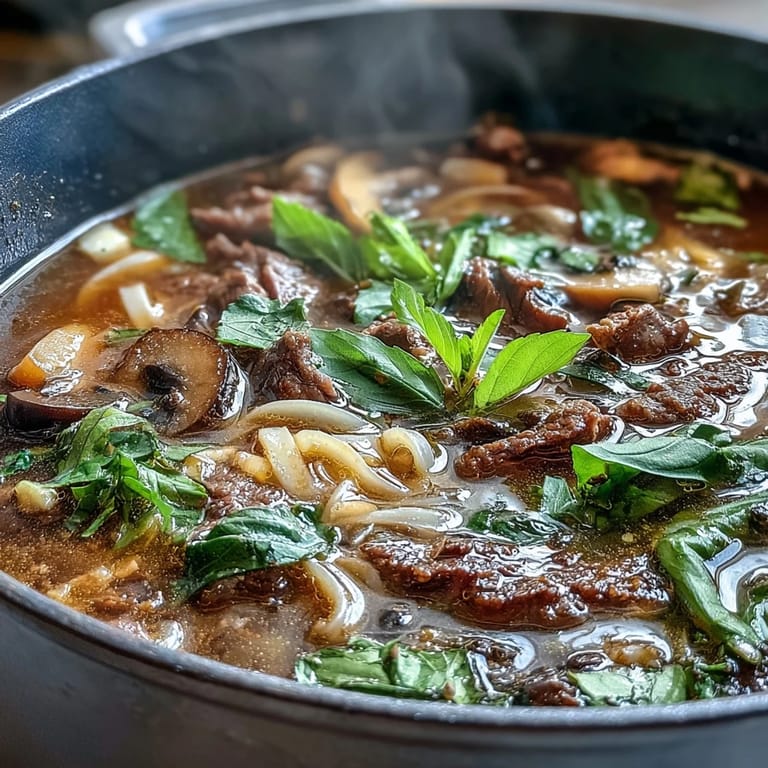
 What I love most is when someone who's never done hot pot before realizes they can control exactly how cooked their food is, and their whole face changes. There's this moment of ownership, where they stop following instructions and start experimenting, fishing for the noodles they like best and piling vegetables according to their own taste. That's when dinner becomes play.
Why This Broth Matters
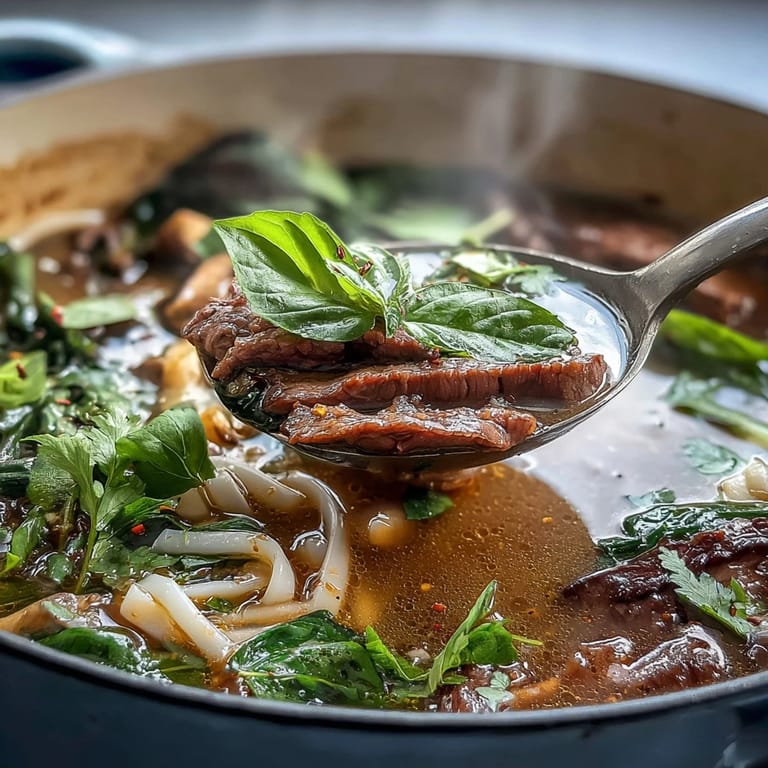
The broth is honestly the entire meal, and I mean that sincerely, so don't treat it like an afterthought. Those 20 to 25 minutes of simmering let the ginger soften and become almost sweet, the lemongrass loses its sharp edges and contributes this subtle floral note, and the star anise adds warmth without tasting like licorice candy. When you strain it, you should see something almost amber colored and crystal clear, and if you taste it plain on a spoon, it should make you close your eyes for a second because of how balanced and deep it is.
The Art of Prep Before Guests Arrive
Everything for this meal should be ready hours before people sit down, which means sliced beef on a platter in the fridge, vegetables prepped and arranged in bowls, noodles soaked and drained, dipping sauces in small dishes. This is the only part that requires actual stress, because once everyone's seated, you're just watching the broth and making sure the temperature stays steady. I learned this the hard way when I tried to slice beef while friends were already sitting at the table, which made me feel rushed and distracted, and honestly rushed energy spreads to the meal itself.
Customization and Dietary Flexibility
One of the real gifts of hot pot is how easily it adapts to different preferences without creating tension or extra work. Vegetarian guests can bring their own broth, shrimp lovers can use shrimp instead of beef, someone watching their carbs can skip noodles entirely, and no one's meal looks diminished. I've had meals where half the table is doing one variation and no one cares because everyone's still part of the same experience, gathered around the same pot. You could substitute spinach for bok choy, add enoki mushrooms if they're on sale, use whatever herbs you love, or swap in tofu and still have something beautiful.
- Vegetarian broth made with mushrooms and kombu tastes nearly as rich as beef if you simmer it long enough.
- Shrimp cooks even faster than beef, usually 20 to 30 seconds, so watch it carefully or it turns into rubber.
- If someone's avoiding soy or fish sauce, taste the broth with just salt and decide from there.
 Save to Pinterest
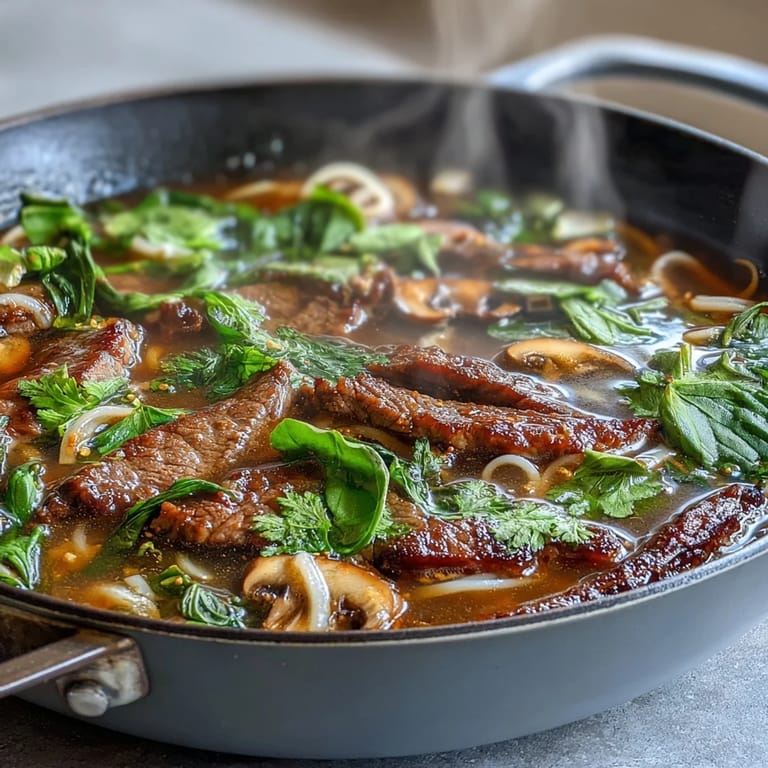
 Hot pot is proof that the best meals aren't about perfection or complicated techniques, they're about creating space for people to be present together. Invite friends, set out the broth, and let the evening unfold naturally.
Recipe Help Center
- → What broth ingredients create the aroma?
Fresh ginger, lemongrass, star anise, garlic, and a blend of beef broth and fish sauce contribute to the fragrant, savory base.
- → How is the beef prepared for easy cooking?
Sirloin is thinly sliced across the grain and chilled for about an hour to ensure tender, quick cooking in the broth.
- → What vegetables complement the hot pot?
Bok choy, shiitake mushrooms, napa cabbage, carrots, bean sprouts, and fresh herbs like cilantro and Thai basil add texture and freshness.
- → How are the rice noodles prepared?
Rice noodles are soaked in warm water until pliable before being added to the simmering broth at the table.
- → Can the protein be substituted?
Yes, thinly sliced chicken, shrimp, or tofu can replace beef for alternative flavors and dietary preferences.
- → What dipping sauces enhance the flavors?
Hoisin sauce, sriracha or chili garlic sauce, and soy sauce offer tangy, spicy, and salty complements to each bite.