 Save to Pinterest
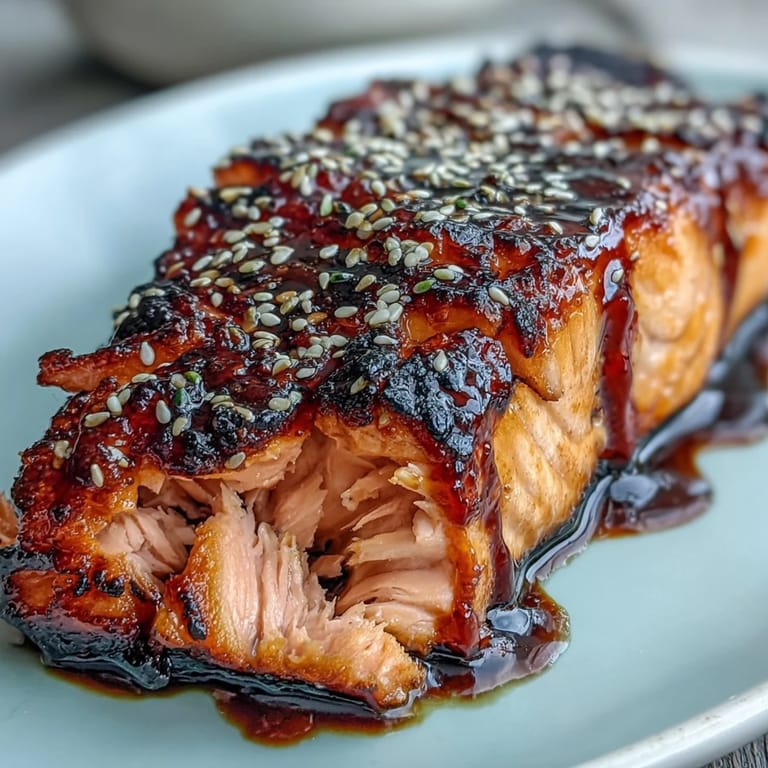
 There's something almost magical about watching salmon transform under the broiler's heat, the teriyaki glaze turning glossy and caramelized right before your eyes. I discovered this recipe on a Tuesday evening when I had exactly four salmon fillets and twenty minutes before dinner guests arrived—no time for second-guessing, just instinct and a bottle of mirin I'd been saving. The smell that fills your kitchen as it bakes is pure umami, that savory depth that makes everyone pause mid-conversation and ask what you're making.
My sister called mid-preparation one night asking if I could make something special for her boyfriend's first family dinner, and I nearly laughed at the timing. I'd been testing this exact recipe that afternoon, and by the time they arrived, the apartment smelled like a Japanese izakaya in the best possible way. Watching him take that first bite—eyes widening at the balance of sweet and salty and the way the salmon practically melted—reminded me why I cook: it's that moment when food becomes a conversation starter.
Ingredients
- Salmon fillets (4, about 170g each), skin-on or skinless: Pat them completely dry before brushing with glaze—this is the secret to getting that gorgeous caramelized finish rather than steamed skin.
- Soy sauce (60 ml / 1/4 cup), low sodium if preferred: Low sodium gives you control over the saltiness without the glaze becoming one-dimensional; regular soy works fine too, just taste as you go.
- Mirin (60 ml / 1/4 cup): This sweet rice wine is what makes teriyaki actually teriyaki—don't skip it or substitute with sugar alone, the depth won't be the same.
- Honey or brown sugar (2 tbsp): Honey adds a subtle floral note that brown sugar doesn't quite capture, but both work; choose based on what you have and your mood.
- Rice vinegar (1 tbsp): This adds brightness and prevents the glaze from tasting one-note sweet, balancing the mirin's richness.
- Fresh ginger, grated (2 tsp): Fresh ginger is non-negotiable here; powdered ginger tastes dusty by comparison and won't give you that pleasant bite.
- Garlic cloves, minced (2): Minced fine so it doesn't leave harsh chunks—the garlic should disappear into the glaze, adding depth rather than announcing itself.
- Sesame oil (1 tsp): Just a teaspoon because it's potent; this is the ingredient that whispers complexity into the background.
- Cornstarch (1 tbsp) mixed with cold water (2 tbsp): This slurry is what transforms a loose sauce into that glossy coating that clings to the salmon—absolutely essential for the visual appeal.
- Toasted sesame seeds (2 tsp) for garnish: Buy them pre-toasted or toast your own in a dry pan for 2 minutes; the difference between raw and toasted is night and day.
- Spring onions, thinly sliced (2) for garnish: The fresh onion provides a sharp contrast to the sweet-savory glaze and adds a textural element that the dish needs.
Tired of Takeout? 🥡
Get 10 meals you can make faster than delivery arrives. Seriously.
One email. No spam. Unsubscribe anytime.
Instructions
- Heat your oven and prep your stage:
- Preheat to 200°C (400°F) and line a baking tray with parchment paper or foil. Having everything ready before you start cooking means you're not scrambling when the glaze is bubbling on the stove.
- Build the glaze base:
- In a small saucepan, combine soy sauce, mirin, honey, rice vinegar, ginger, garlic, and sesame oil, then bring to a simmer over medium heat. You'll notice the kitchen filling with that warm, savory aroma—that's when you know you're on the right track.
- Thicken to glossy perfection:
- Mix cornstarch and cold water in a small bowl to create a slurry with no lumps, then stir it into the simmering sauce. Keep stirring for 2-3 minutes until the sauce goes from thin to glossy and coats the back of a spoon—it should look almost lacquered.
- Prepare and brush the salmon:
- Pat your salmon fillets completely dry with paper towels, then place skin-side down on the prepared tray. Brush each fillet generously with the teriyaki glaze, saving some to drizzle at the end—don't be shy, the glaze is forgiving and the more you use, the better it caramelizes.
- Bake until tender and flaky:
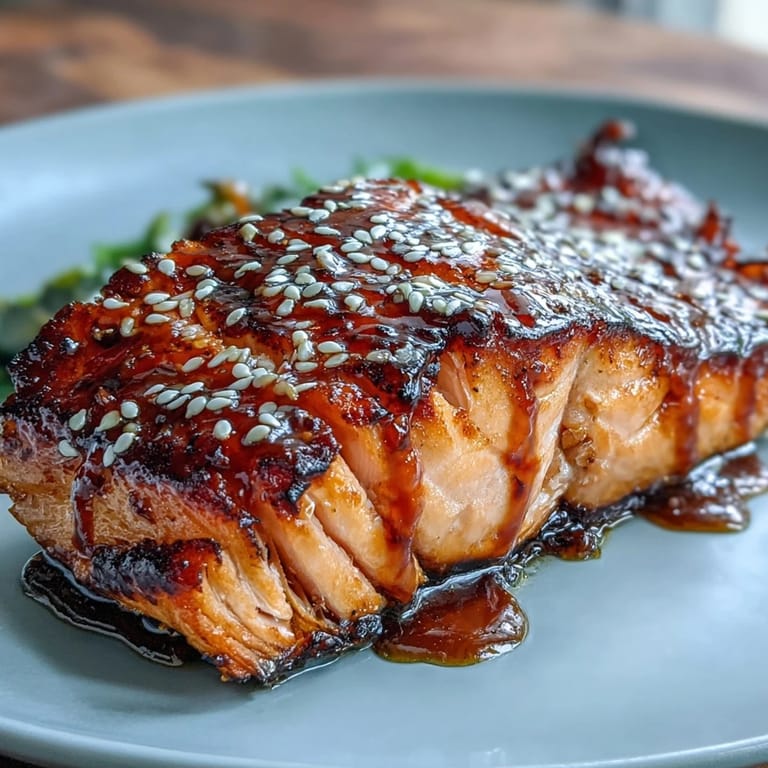
- Bake for 10-12 minutes until the salmon is cooked through and flakes easily with a fork—the thickest part should be opaque when you peek inside. For that restaurant-quality caramelized top, finish with 1-2 minutes under the broiler, watching closely so it doesn't burn.
- Plate and finish with flair:
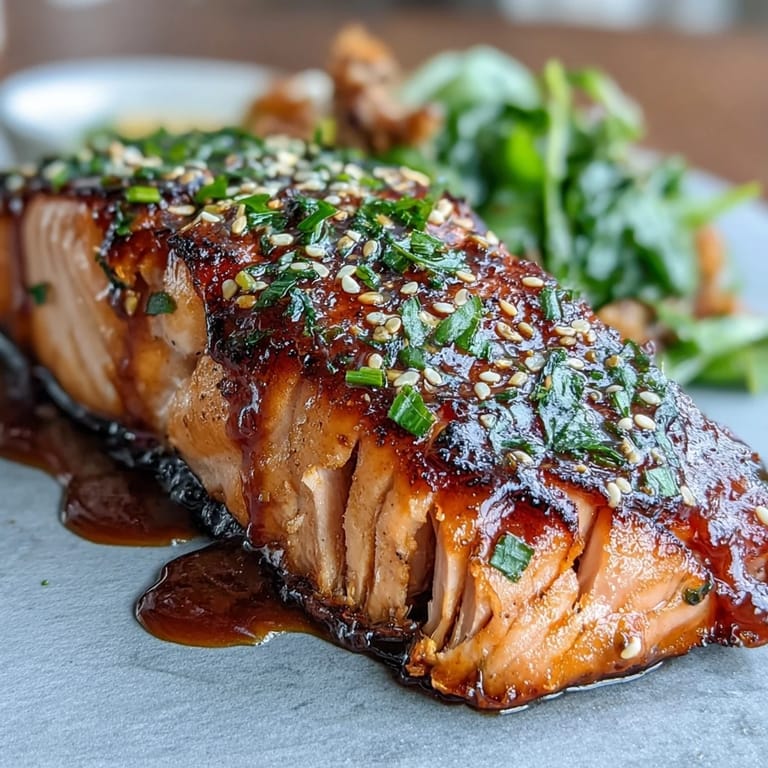
- Transfer each fillet to a plate, drizzle with reserved glaze, then scatter toasted sesame seeds and fresh spring onions on top. Serve immediately while the salmon is still warm and the sesame seeds stay crispy.
 Save to Pinterest
 There was an unexpected moment last winter when my neighbor knocked on my door with his young daughter, following the smell from his apartment downstairs. I invited them in, and watching her carefully pick up a single sesame seed with chopsticks she'd never used before, then taste it like it was the most precious thing on the plate—that's when I understood this recipe isn't just about salmon. It's about creating a moment where food tastes like care.
Why the Glaze Makes All the Difference
I spent years making salmon in butter and herbs before trying teriyaki, and honestly, I was skeptical that something sweet could work with fish. Then I realized teriyaki isn't actually sweet in the way I'd imagined—it's a balance where salty, savory, and subtly sweet all exist together, each one making the others taste more interesting. The glaze also does something magical: it seals moisture into the fish while the outside gets this glossy, attractive appearance that makes plating feel like you went to culinary school.
Timing and Temperature Matter More Than You Think
The first time I made this, I overcooked it by three minutes because I was worried it wouldn't be done, and the salmon turned dense and dry. Now I use the fork-flaking test as my guide—gently press the thickest part with a fork, and if it flakes apart like it's barely holding together, that's perfect. The optional broil at the end is the secret weapon for getting that caramelized finish without a second oven, but watch it like a hawk because it can go from golden to burnt in the time it takes to step away.
Make It Your Own and Serve Smartly
This recipe is a canvas more than a rulebook—I've added chili flakes for heat, swapped honey for maple syrup for earthiness, and even tried white miso for deeper umami. The pairing matters too; I always serve this with something neutral like steamed rice or something bright like sautéed greens to let the glaze shine.
- For gluten-free, swap soy sauce with tamari and it becomes naturally accommodating to most dietary needs.
- Make the glaze ahead of time and store it in the fridge for up to three days, then reheat gently before brushing onto the salmon.
- If your fish is thicker than 2 cm, add a few extra minutes to the baking time and test with a fork in the thickest part.
 Save to Pinterest
 This recipe taught me that simple ingredients treated with respect and timing become something that tastes like you spent hours in the kitchen. It's the kind of dish that makes people ask for the recipe, and when you tell them it's 25 minutes start to finish, they don't quite believe you.
Recipe Help Center
- → How do I achieve a glossy teriyaki glaze?
Simmer soy sauce, mirin, sweetener, vinegar, ginger, garlic, and sesame oil, then thicken with a cornstarch slurry until shiny and smooth.
- → Can I use skinless salmon fillets?
Yes, skinless fillets work well and allow the glaze to coat the fish evenly, though skin-on adds extra texture when baked.
- → What is the best way to bake the salmon?
Preheat oven to 200°C (400°F), bake the glazed fillets for about 10-12 minutes until flaky, then optionally broil briefly for caramelization.
- → How can I make this dish gluten-free?
Replace soy sauce with tamari and ensure all other ingredients are gluten-free; this keeps the glaze naturally flavorful.
- → What sides complement this salmon dish?
Steamed rice, sautéed greens, or stir-fried vegetables pair well, enhancing the meal’s balance and texture.