 Save to Pinterest
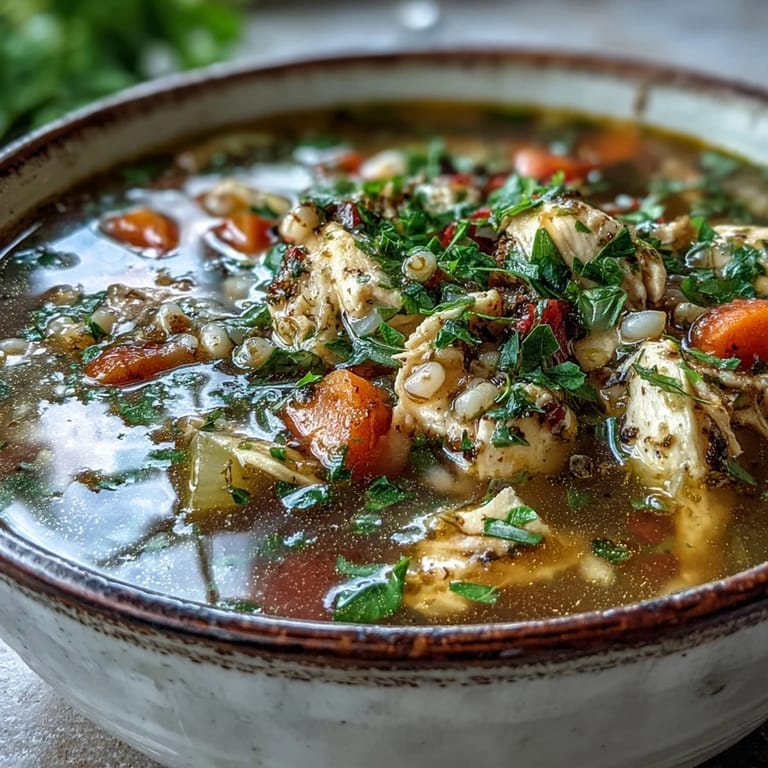
 My neighbor handed me a steaming mug of golden broth one chilly afternoon when I was feeling run down, and I watched the turmeric swirl through the liquid like liquid silk. There was something almost ceremonial about how she stirred it, explaining that her grandmother made this soup whenever someone needed restoring. I asked for the recipe that very day, and now whenever the kitchen fills with that warm spice-laden steam, I find myself in a much gentler headspace. It's become my quiet ritual on mornings when the world feels too sharp.
I made this for my sister after she came home from the hospital, nervous that cooking would feel too complicated. But the way the chicken turned golden, how the kitchen smelled like turmeric and hope—it became this small act of love I could hold in a bowl. She ate two servings and asked me to make it again the next week. Food has this strange power sometimes, doesn't it?
Ingredients
- Boneless, skinless chicken breasts (400 g, diced): Dice them into bite-sized pieces so they cook evenly and disappear into each spoonful rather than demanding to be chewed.
- Pearl barley (3/4 cup, rinsed): Rinsing removes excess starch—this small step keeps your broth clear and jewel-like rather than cloudy.
- Carrots (2 medium, diced): The sweetness balances the earthy spices beautifully, so don't skip them or use old, tired ones.
- Celery stalks (2, diced): This is your flavor foundation along with the onion, so use fresh stalks with real crunch.
- Onion (1 medium, finely chopped): Finely chop it so it dissolves into the broth rather than leaving visible chunks.
- Garlic cloves (3, minced): Mince fine enough that it disappears into the background, adding depth without announcing itself.
- Zucchini (1 small, diced): It softens quickly, so add it late in cooking or it becomes mushy and forgettable.
- Baby spinach (100 g): Fresh spinach wilts at the very end, bringing a bright green moment to the golden broth.
- Low-sodium chicken broth (6 cups): This is your liquid foundation—taste it before using, as saltiness varies wildly between brands.
- Olive oil (1 tbsp): Just enough to start the sauté without making the soup feel slick on your tongue.
- Ground turmeric (1 1/2 tsp): The star ingredient—earthy, slightly bitter, and carrying all those anti-inflammatory promises your body needs to hear.
- Ground black pepper (1/2 tsp): Pepper activates turmeric's benefits, so don't skip it even though it's small.
- Ground cumin (1 tsp): Warm and slightly smoky, it prevents the turmeric from tasting medicinal.
- Ground coriander (1/2 tsp): A whisper of citrus brightness that lifts everything else.
- Bay leaf (1): Remove it before serving or it'll surprise someone—learned this the awkward way.
- Salt (1/2 tsp or to taste): Taste as you go rather than dumping it all in at once.
- Lemon juice (from 1/2 lemon): The acid brings everything into focus at the very end, making the spices sing rather than blend.
- Fresh parsley (chopped, for garnish): A bright finish that makes it look like you know what you're doing in the kitchen.
Tired of Takeout? 🥡
Get 10 meals you can make faster than delivery arrives. Seriously.
One email. No spam. Unsubscribe anytime.
Instructions
- Build your flavor foundation:
- Heat the olive oil in your pot over medium heat, then add onion, carrots, and celery. Let them soften for about 5 minutes—you're listening for a gentle sizzle, watching for the onion to turn translucent at the edges. This is where the magic starts, creating a bed of sweetness for everything else.
- Bloom the spices:
- Stir in the garlic, turmeric, cumin, coriander, and black pepper, cooking for just 1 minute until the kitchen fills with that distinctive warm aroma. Don't skip this step—blooming the spices in oil releases their essential oils and deepens their flavor into something almost round.
- Sear the chicken:
- Add the diced chicken and stir it around for about 3 minutes, letting it pick up color on the edges without worrying about cooking it through. The chicken will finish gently in the broth, so you're just creating a sealed surface here.
- Simmer the foundation:
- Pour in your chicken broth, add the pearl barley and bay leaf, then bring everything to a boil before dropping the heat to low. Let it simmer uncovered for 35 minutes—the barley will gradually soften and the chicken will become impossibly tender, releasing its flavor into the liquid.
- Add the late-bloomers:
- Stir in the zucchini and continue simmering for 10 more minutes until the barley tastes creamy when you bite it. This timing matters because zucchini cooks fast and you want it tender but still holding its shape.
- Finish with freshness:
- Toss in the spinach and cook just until it wilts into the warm broth, about 2 minutes. Fish out the bay leaf, then taste and adjust with salt and lemon juice—the lemon brings the whole soup into focus, cutting through the richness with brightness.
- Serve and gather:
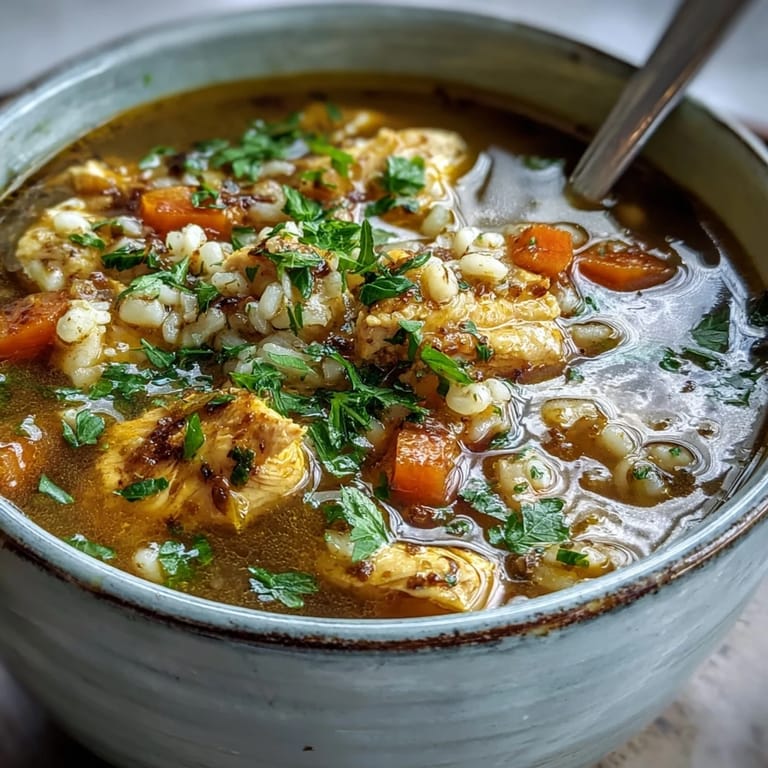
- Ladle into bowls and scatter fresh parsley on top, letting the steam carry that herbal green scent to your nose. The color at this moment—the golden broth with bright green flecks—is reason enough to make this soup.
 Save to Pinterest
 There's a moment about halfway through cooking when your kitchen stops being just a kitchen and becomes this warm, spice-filled sanctuary. Someone will walk in and pause, inhaling deeply, and suddenly everyone wants to stay close to the stove. This soup has this quiet power to gather people, to make them feel tended to without any fuss.
When to Make This Soup
I've learned to make big batches in early autumn when the first cool evening arrives, filling my freezer with containers of golden comfort. It's equally perfect in winter when you're tired of heavy foods, or on any day when you need to feel held by something warm and wise. The beauty is that it tastes even better a day or two later, when the spices have time to settle into every grain of barley and fiber of chicken.
Flavor Adjustments That Work
I used to be afraid of adjusting recipes, but this soup taught me that cooking is conversation with your ingredients. Some days I add a tiny pinch of chili flakes for gentle warmth, other times I steep the bay leaf with a cinnamon stick for subtle sweetness. You can't really go wrong—the turmeric is forgiving and welcomes other flavors like a gracious host.
Making It Your Own
The first time I made this vegetarian for my mother-in-law, I swapped the chicken for hearty chickpeas and used vegetable broth, and honestly, it lost nothing in the translation. The turmeric still glows, the barley still has that satisfying chew, and the broth still tastes like medicine wrapped in comfort. You can also experiment with swapping the barley for farro or brown rice—just adjust your timing since different grains cook at different speeds.
- For a vegetarian version, use two cans of chickpeas (drained and rinsed) instead of chicken, and reach for vegetable broth to keep everything aligned.
- Pair this with warm, crusty bread and watch how people instinctively tear pieces to soak up the golden broth—it completes the ritual.
- Leftover soup actually deepens in flavor as it sits, so make extra and freeze it in portions for those mornings when you need comfort before breakfast.
 Save to Pinterest
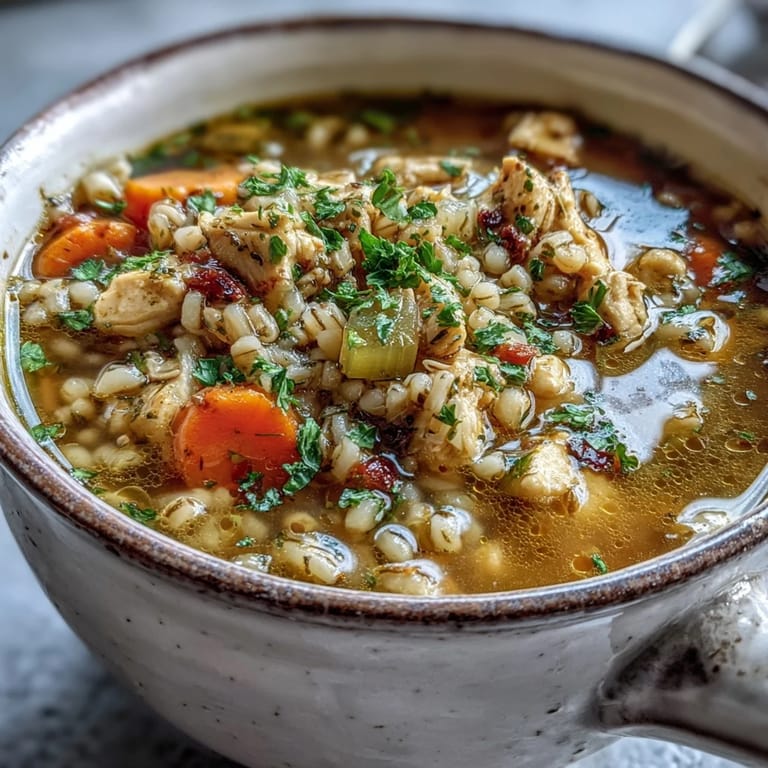
 This soup became my answer to so many moments—illness, sadness, exhaustion, or simply needing proof that the world still holds warmth. Make it for someone you care about and watch what happens.
Recipe Help Center
- → What makes turmeric beneficial in soups?
Turmeric contains curcumin, a powerful anti-inflammatory compound with antioxidant properties. When combined with black pepper in this soup, its absorption increases significantly, making it both comforting and potentially health-supporting.
- → Can I prepare this soup in advance?
Absolutely. This soup actually improves after sitting in the refrigerator for a day or two as the flavors meld together. Store in an airtight container for up to 4 days. The barley will continue absorbing liquid, so you may need to add extra broth when reheating.
- → How do I know when pearl barley is fully cooked?
Pearl barley is done when it's tender but still retains a slight chew. It typically takes 35-45 minutes of simmering. Taste test a few grains—if they're soft throughout with just a bite, they're ready. Undercooked barley will be chalky in the center.
- → What can I use instead of pearl barley?
Farro works well as a direct substitute with similar cooking time. Brown rice takes about 45 minutes to cook properly. Quinoa cooks faster (15 minutes) but will become quite soft. For gluten-free options, brown rice or buckwheat are excellent choices.
- → Is this suitable for freezing?
Yes, this soup freezes beautifully. Cool completely before transferring to freezer-safe containers, leaving some space for expansion. It will keep well for up to 3 months. Thaw overnight in the refrigerator and reheat gently, adding extra broth if needed.
- → Can I make this vegetarian?
Certainly. Replace the chicken with chickpeas or white beans, and swap the chicken broth for vegetable broth. The spices and barley provide plenty of heartiness and protein. Add the chickpeas during the last 10 minutes to prevent them from becoming too soft.