 Save to Pinterest
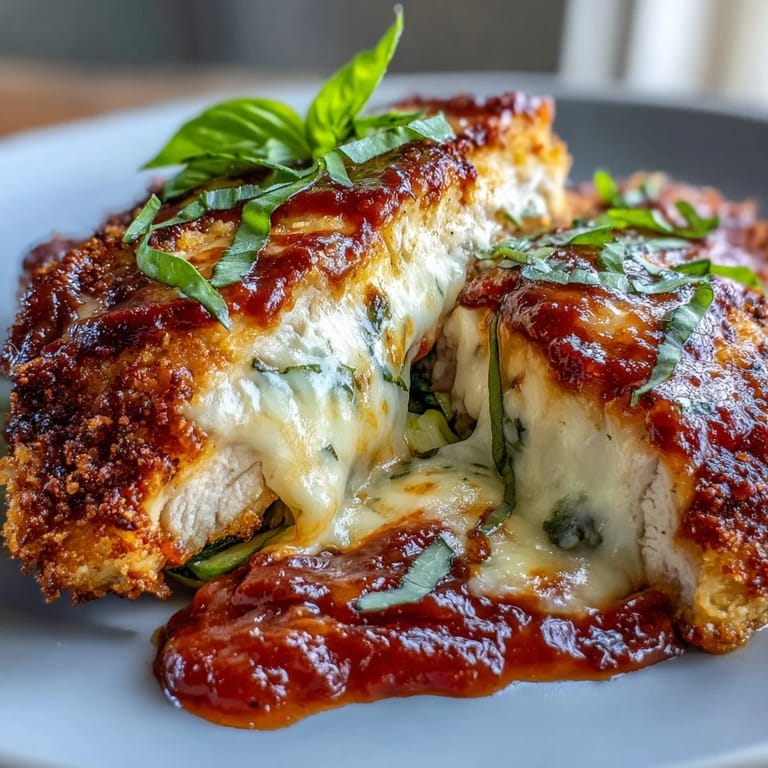
 My sister called mid-afternoon asking if I could make something that wouldn't derail her new eating goals, and honestly, I was tired of the usual grilled chicken routine. That's when it hit me—what if I took the crispy, cheesy comfort of chicken Parmesan and rebuilt it from the ground up? The almond flour crust sizzles just like the traditional breadcrumb version, the cheese still bubbles golden, but suddenly you're eating something that feels indulgent without the guilt. It became the dish I make when I want to prove that healthy eating doesn't mean boring eating.
I made this for my book club last spring, and someone actually asked if I'd hired a caterer. The thing that got me was watching everyone relax when I told them there was no flour in the coating—they'd been worried I'd made some sad, dry version of a classic. Instead, they found themselves going back for seconds, spiralizing extra zucchini, asking for the recipe before they left. That's when I knew I'd cracked the code on what people actually want: real food that nourishes them, not food that apologizes for itself.
Ingredients
- Boneless, skinless chicken breasts (4, about 5 oz each): The foundation of everything—pound them to an even thickness if they're uneven so they cook uniformly and stay tender.
- Almond flour (1/2 cup): This is your secret weapon; it browns beautifully and holds onto seasonings better than you'd expect, creating that satisfying crunch without any wheat.
- Grated Parmesan cheese (1/3 cup for coating, plus 2 tablespoons for topping): Use the fresh stuff if you can—pre-grated versions sometimes contain anti-caking agents that interfere with browning.
- Dried Italian herbs (1 teaspoon) and garlic powder (1/2 teaspoon): These live in your coating and make every bite taste intentional; don't skimp or rush past them.
- Egg (1 large, beaten): Your adhesive—it's what makes the almond flour coating stick instead of sliding off, so beat it well and don't skip it.
- Marinara sauce (1 cup): Pick one you actually like eating, and if you're watching sugar, check the label; some brands hide sweetness that can throw off the balance.
- Part-skim mozzarella cheese (1 cup, shredded): Shred it yourself from a block if you have time; it melts more evenly than pre-shredded, which often contains cornstarch.
- Fresh basil leaves: These are your final flourish—tear them just before serving so they stay vibrant and fragrant.
- Zucchini (4 medium, spiralized): Choose zucchini that are medium-sized and relatively straight; spiralizing releases water, so you'll want to sauté them briefly to avoid a soggy plate.
- Olive oil (1 tablespoon for zucchini noodles): Just enough to coat the pan and prevent sticking; too much turns the noodles greasy.
- Salt and pepper: Season in layers—once on the raw chicken, again in the coating mixture, again on the zucchini noodles—so the seasoning actually penetrates instead of sitting on the surface.
Tired of Takeout? 🥡
Get 10 meals you can make faster than delivery arrives. Seriously.
One email. No spam. Unsubscribe anytime.
Instructions
- Set your stage:
- Preheat the oven to 425°F (220°C) and line a baking sheet with parchment paper or a light grease; this prevents sticking and makes cleanup almost painless. Have all your ingredients prepped and within reach—mise en place matters here because once you start dredging, you want momentum.
- Prepare the chicken:
- Pat your chicken breasts dry with paper towels (this step is non-negotiable if you want a crispy crust) and season both sides generously with salt and pepper. The moisture you remove here is the difference between a golden crust and a soggy disappointment.
- Build your coating station:
- In a shallow dish, whisk together almond flour, grated Parmesan, Italian herbs, and garlic powder until evenly combined. Pour beaten egg into another shallow dish right next to it; you're creating an assembly line, and the flow matters.
- Bread the chicken:
- Working with one breast at a time, dip it into the beaten egg, making sure both sides are coated, then place it directly into the almond flour mixture and press gently but firmly so the coating adheres rather than sits loosely. You want texture and coverage, not bare patches.
- Bake the first round:
- Arrange your coated chicken on the prepared baking sheet and bake for 18–20 minutes until the coating is golden brown and the internal temperature hits 165°F (74°C) when you check the thickest part with a thermometer. This first bake gives you that crispy foundation before the cheese goes on.
- Top and finish:
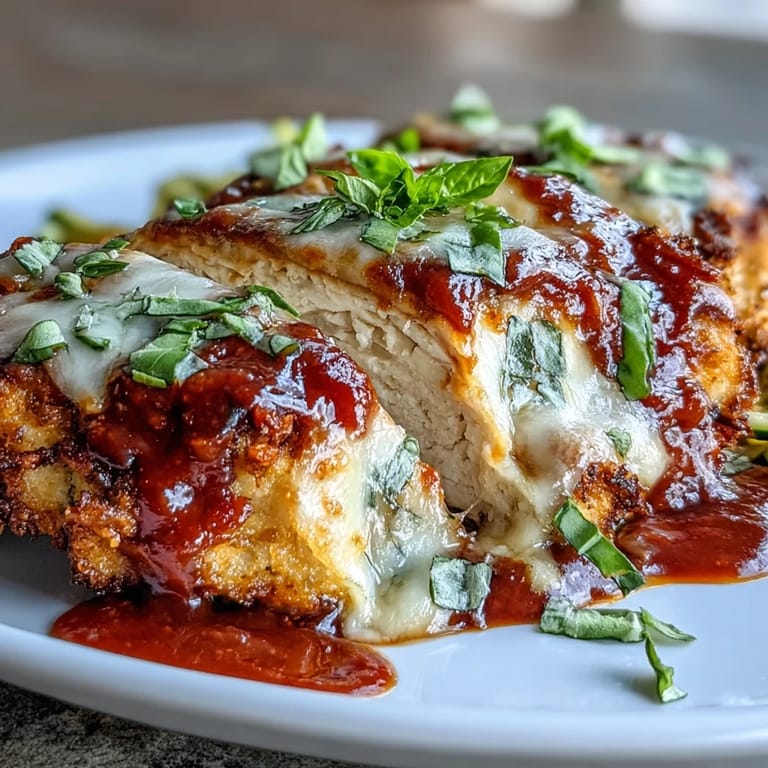
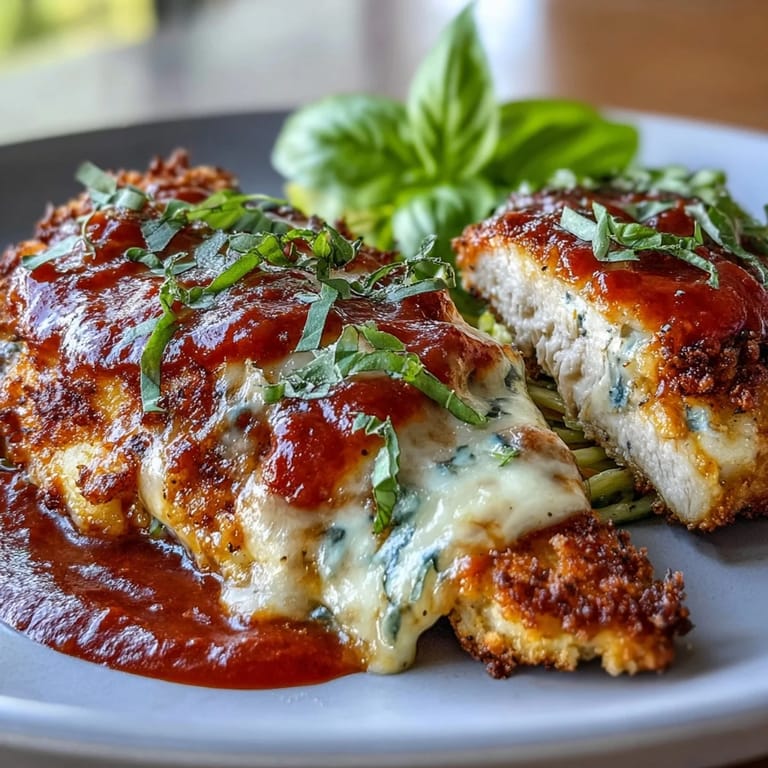
- Remove the chicken from the oven, spoon marinara sauce evenly over each breast, then top with shredded mozzarella and a light sprinkle of additional Parmesan. Return to the oven for 5–7 minutes just until the cheese is melted and bubbly but not browned to the point of toughness.
- Sauté the zucchini noodles:
- While the final bake happens, heat olive oil in a large skillet over medium heat and add your spiralized zucchini along with a pinch of salt and pepper. Sauté for 2–3 minutes, stirring gently and frequently, until the noodles are just tender but still have a slight bite—overcooked zucchini noodles turn into a wet mess on your plate, so err on the side of less time rather than more.
- Plate and serve:
- Divide the zucchini noodles among your plates, top each serving with a hot chicken breast (the residual heat will keep everything warm), and tear fresh basil over the top just before eating. The brightness of basil against the rich cheese is what takes this from good to actually memorable.
 Save to Pinterest
 There was a moment last summer when my neighbor came over and tried this dish, and she got genuinely quiet for a second. Then she asked if I was secretly a nutritionist with a sense of humor, because she'd been expecting to compromise on taste for health and instead found neither compromise. That's the real magic of this meal—it doesn't ask you to choose between feeling good and eating well.
Why Almond Flour Is Your New Best Friend
When I first switched from traditional breadcrumb coatings to almond flour, I was skeptical. I thought I'd miss that authentic crunch, but what I discovered was something actually better—almond flour browns faster, stays crispier longer, and adds a subtle nuttiness that elevates the entire dish. It's also naturally gluten-free without tasting like a substitute, which is honestly rare. The key is toasting it slightly in the pan before you mix it into your coating mixture; it deepens the flavor and ensures your finished crust has real character instead of tasting like the health-conscious alternative it technically is.
The Zucchini Noodle Game Changer
I used to make zucchini noodles and serve them cold because I was convinced that was the only way to keep them from turning into mush. Then a friend suggested I sauté them for exactly three minutes—not more, not less—and everything changed. The brief heat removes enough moisture to prevent sogginess but not so much that you lose the tender, fresh quality that makes zucchini noodles worth eating in the first place. Now I always plan to sauté them while the final bake is happening; it's the choreography of the meal that makes it feel effortless when everything hits the table at once.
Making This Meal Your Own
The beauty of this recipe is that it's flexible without being wishy-washy. I've made it with turkey cutlets pounded thin, with chicken thighs (which stay more forgiving if you're new to cooking), and even with eggplant slices for vegetarian guests. The coating technique works for all of them, and the flavor profile is bold enough to stand up to substitutions. You could also experiment with different marinara sauces—some have roasted red peppers, others are infused with vodka or fresh herbs—and each one tells a slightly different story on your plate.
- Add a few tablespoons of gluten-free panko to your almond flour coating if you want extra crunch and don't have a nut allergy concern.
- Fresh spinach wilted into the marinara sauce adds color and nutrients without changing the core flavor profile.
- Serve with a simple green salad dressed in lemon vinaigrette to cut through the richness and balance the meal.
 Save to Pinterest
 This meal sits somewhere between the comfort food you crave and the nourishment your body actually needs, which is honestly the sweet spot most of us are chasing. Make it once, and it'll become one of those recipes you turn to again and again without even thinking.
Recipe Help Center
- → Can I substitute turkey for the chicken?
Yes, turkey cutlets can be used as a lean alternative with similar cooking times.
- → How do I prevent zucchini noodles from becoming soggy?
Sauté zucchini noodles briefly over medium heat until just tender, about 2–3 minutes, to avoid excess moisture.
- → What can I use instead of almond flour for coating?
Gluten-free panko or crushed nuts can provide a crunchy coating alternative.
- → Is it necessary to use a meat thermometer?
Using a thermometer ensures the chicken reaches the safe internal temperature of 165°F (74°C) for perfect doneness.
- → Can I prepare this dish ahead of time?
Chicken can be baked ahead and reheated, but zucchini noodles are best cooked fresh to maintain texture.