 Save to Pinterest
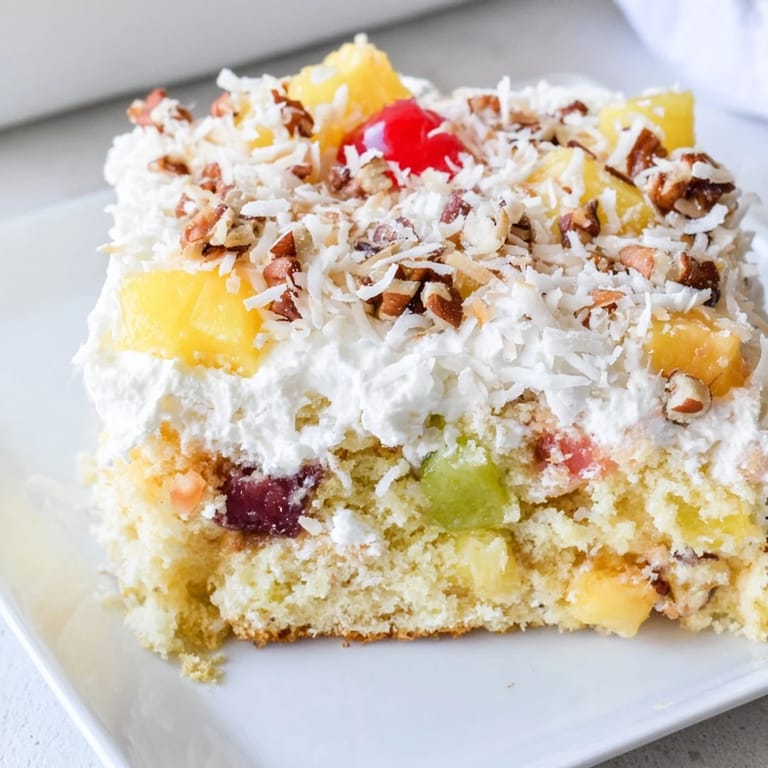
 My neighbor brought this cake to a backyard picnic on the hottest day of summer, and I watched people go back for thirds without hesitation. The fruit cocktail keeps it impossibly moist, and the warm coconut frosting soaks right into the cake while it's still hot from the oven. That's when I knew I had to master it myself, because something that simple and that good deserved a permanent place in my kitchen rotation.
I made this for my book club once, slightly nervous because it seemed too easy to be impressive, but it became the cake that people actually remember. One friend asked for the recipe three times that night, and I finally realized the real magic isn't complexity—it's how a simple cake cooked with care somehow tastes like someone spent all afternoon on it.
Ingredients
- All-purpose flour: Two cups gives you structure without heaviness, and measuring by weight keeps it consistent.
- Granulated sugar: The one-and-a-half cups sweetens both cake and frosting, and there's no reason to overthink it.
- Large eggs: Room temperature if you have time, but they work fine straight from the fridge.
- Canned fruit cocktail in juice: The juice is essential—don't drain it no matter what your instinct says.
- Baking soda: Just one teaspoon, and it reacts with the fruit juice to give you that tender crumb.
- Salt and vanilla extract: Salt balances the sweetness, vanilla adds depth without announcement.
- Unsalted butter and whole milk: For the frosting, these create the base that becomes silky once you add the coconut.
- Sweetened shredded coconut: This is where the personality comes from—don't skip it even if you think you're not a coconut person.
- Pecans or walnuts: Optional but they add a subtle nuttiness that keeps the frosting from being one-note.
Tired of Takeout? 🥡
Get 10 meals you can make faster than delivery arrives. Seriously.
One email. No spam. Unsubscribe anytime.
Instructions
- Preheat and prepare:
- Get your oven to 350°F and grease that 9x13-inch pan thoroughly—the edges are where cake likes to stick.
- Mix the dry foundation:
- Whisk flour, sugar, baking soda, and salt together in a big bowl, breaking up any lumps you feel forming with the whisk.
- Bring it together:
- Add your eggs, the entire can of fruit cocktail with all its juice, and vanilla, then stir just until combined. Overmixing develops gluten and makes the cake tough, so stop as soon as you see no white streaks of flour.
- Bake the cake:
- Spread batter evenly in the pan and bake 30 to 35 minutes until a toothpick comes out clean and the top is golden. You'll know it's done when the kitchen smells like it's been holding in this secret for years.
- Make the frosting while it bakes:
- In a medium saucepan, combine sugar, milk, and butter, then bring to a gentle boil over medium heat, stirring often so the sugar dissolves completely. Once it's boiling, let it bubble for exactly one minute, then remove from heat.
- Add the coconut goodness:
- Stir in shredded coconut, nuts if you're using them, and vanilla extract, mixing until everything is distributed evenly.
- The magic moment:
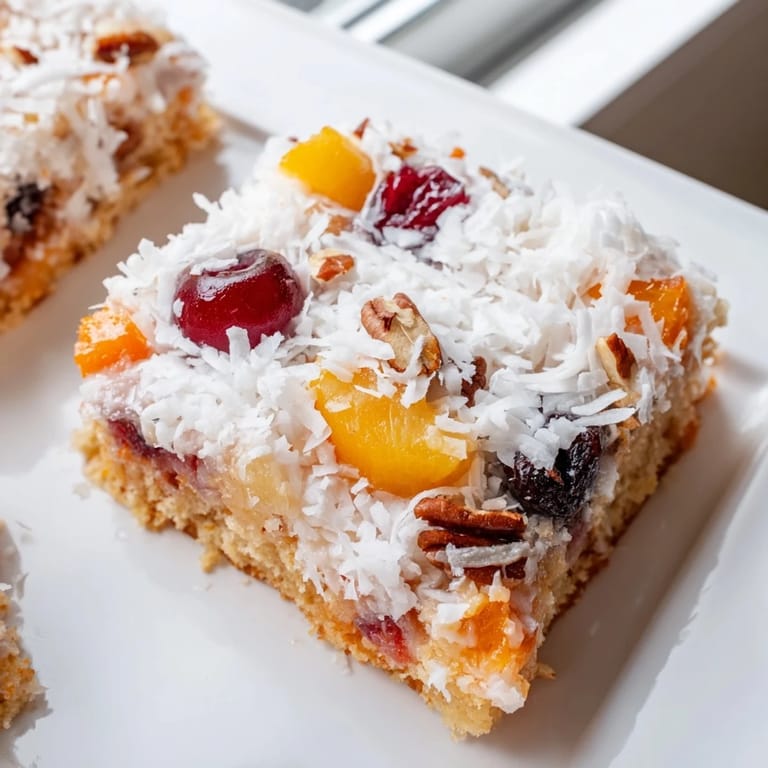
- Pull the hot cake from the oven and immediately poke holes all over the surface with a fork or skewer—you want them close enough that the frosting reaches everywhere but not so dense that you're destroying the cake. Pour that hot frosting slowly and evenly over the entire surface and watch it soak in.
- Cool and serve:
- Let the cake rest in the pan until it's cool enough to eat, or serve it warm with vanilla ice cream if you're feeling generous.
 Save to Pinterest
 There's a moment when you pull this cake from the oven and pour that hot coconut frosting over it, and steam rises and the whole thing glistens—that's when a dessert becomes more than just something sweet. It becomes proof that the simplest ingredients, treated with attention, can make people feel cared for.
Why This Cake Never Fails
The fruit cocktail does something clever in this cake that you don't fully appreciate until you've made it once. It adds moisture and sweetness simultaneously, which means the batter stays forgiving even if you're not precise about every measurement. The canned fruit has enough syrup to keep the crumb tender even days later, and the frosting seals everything in so the cake actually improves as it sits.
Coconut Frosting Secrets
The frosting technique here is almost foolproof because you're making a simple sugar and milk mixture that relies on heat, not on whipping air into butter or worrying about temperature. The coconut and nuts get stirred in after you remove it from heat, which keeps them from breaking down and makes them stay distinct and flavorful rather than melting into mush.
Making It Your Own
This cake is wonderfully forgiving about variations, whether you're avoiding nuts, substituting coconut milk for a richer frosting, or adding a teaspoon of coconut extract if you want the flavor to announce itself louder. It's the kind of recipe that wants to be adapted rather than followed to the exact letter.
- For deeper coconut flavor, swap out half the whole milk for coconut milk and watch how the frosting becomes silkier.
- If you don't have pecans or walnuts, the cake is equally delicious plain, or you can use chopped macadamia nuts or even toasted shredded coconut on top.
- Serve it warm from the pan for the most tender experience, or make it a day ahead and cover it loosely—it only gets better as it sits.
 Save to Pinterest
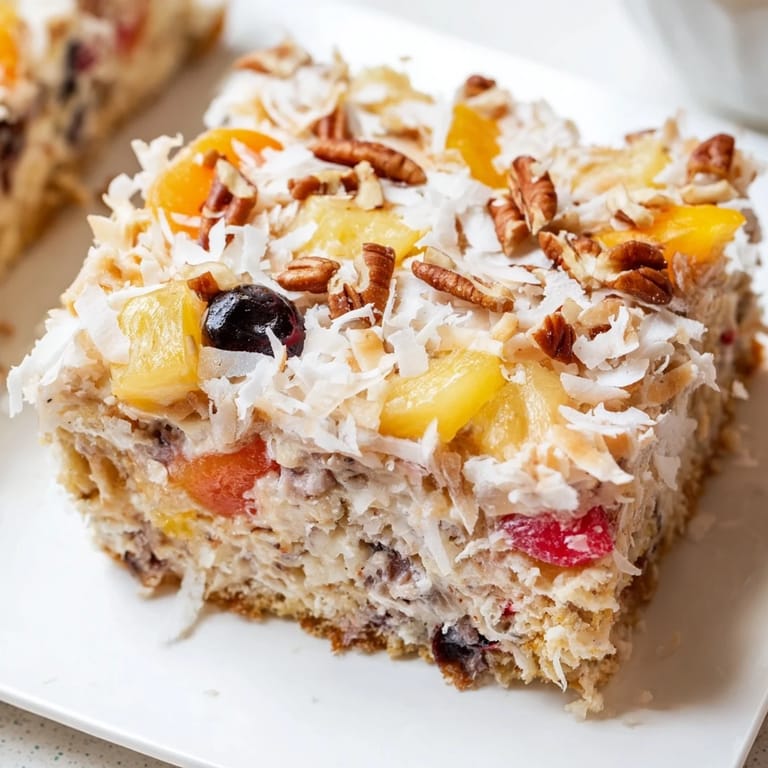
 This cake has shown up at more gatherings than I can count, and it's never once disappointed. There's real wisdom in a recipe this honest.
Recipe Help Center
- → Can I use fresh fruit instead of canned fruit cocktail?
Fresh fruit can be used but may alter moisture and cooking time. Ensure fruits are chopped uniformly and drained to avoid excess liquid.
- → Is it necessary to poke holes before adding the frosting?
Poking holes helps the coconut frosting soak into the cake, enhancing flavor and moisture throughout the crumb.
- → What can I substitute for whole milk in the frosting?
Coconut milk is a great alternative, adding extra coconut flavor while maintaining the creamy consistency of the frosting.
- → How can I make this cake nut-free?
Simply omit the chopped pecans or walnuts in the frosting. It will still be flavorful and moist without nuts.
- → Can this cake be served warm or cold?
This cake is delicious both warm and at room temperature, allowing the frosting to set or remain slightly gooey.
- → What is the best way to store leftover cake?
Store leftovers covered at room temperature for up to two days or refrigerate to keep fresh longer, bringing to room temperature before serving.