 Save to Pinterest
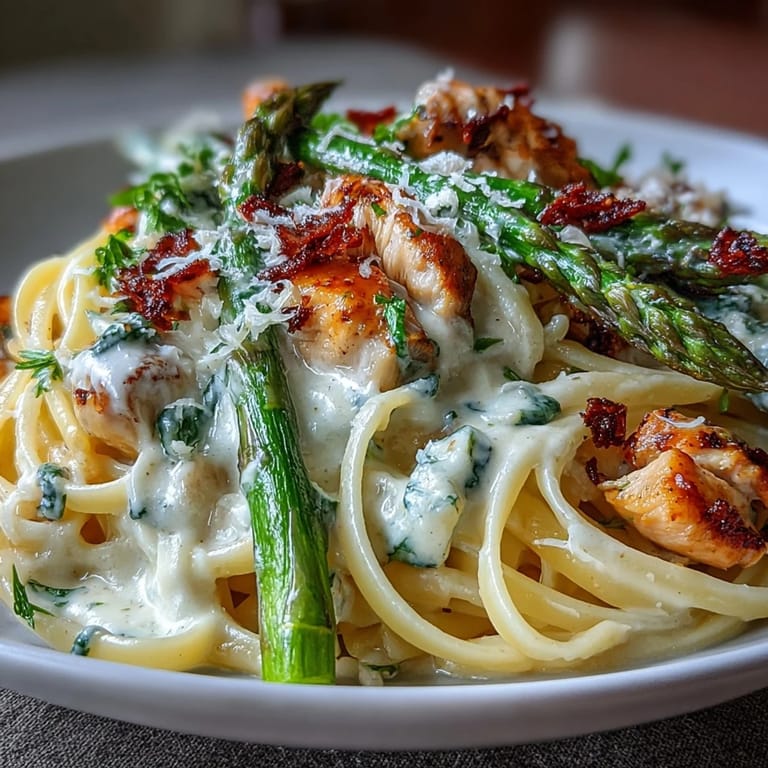
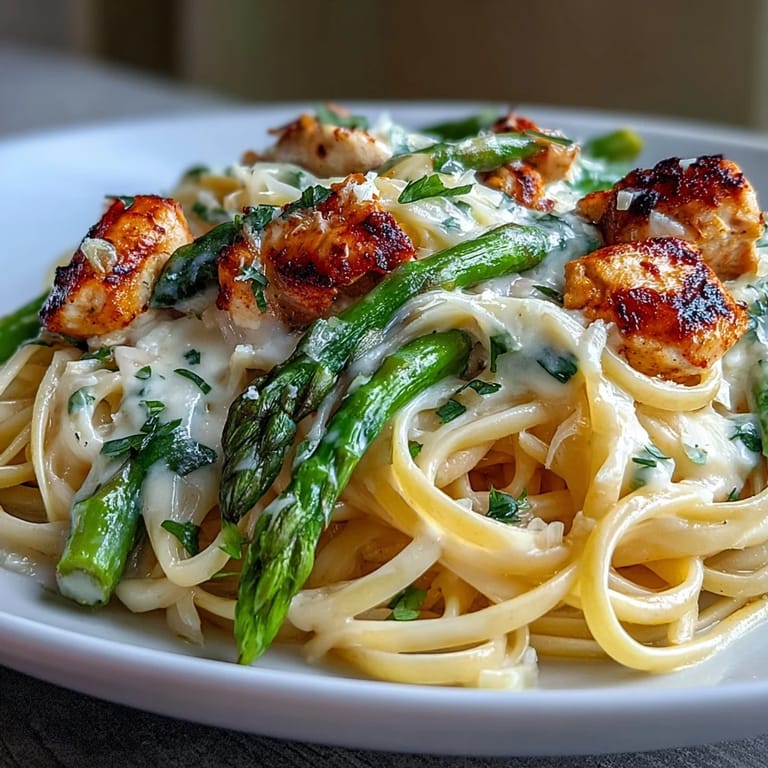
 Last spring, a friend stopped by with a bundle of fresh asparagus from the farmer's market, and I had to think fast about what to do with it. I'd been craving something creamy and comforting but also bright, and that's when this dish came together almost by accident. The crispy, cheese-crusted asparagus hitting those tender pasta strands while the Asiago cream brought everything into perfect balance—it felt like I'd discovered something I'd been missing. Now whenever asparagus shows up, this is what I make.
I made this for my partner on a Tuesday when I wanted to feel like I'd cooked something special but didn't have the energy for complicated techniques. The smell of garlic hitting butter, then the sound of cream starting to bubble with melted cheese—there was something so satisfying about knowing exactly how it would turn out. We ate it straight from the skillet because plating felt unnecessary.
Ingredients
- Boneless, skinless chicken breasts (2 large, about 400 g): Cutting them into bite-sized pieces means they cook quickly and distribute evenly through the pasta without any chewy bits.
- Fresh asparagus (1 bunch, about 300 g): The 2-inch pieces roast to tenderness while the tips get crispy with cheese—trimming the woody ends is non-negotiable.
- Garlic (2 cloves, minced) and onion (1 small, finely chopped): These build the flavor base when they hit the hot butter and create that savory foundation the sauce needs.
- Linguine (350 g): The flat strands catch and hold onto the cream sauce better than round pasta would.
- Asiago cheese (120 g, freshly grated and divided): Freshly grating it makes a real difference in how smoothly it melts into the cream—pre-shredded versions have anti-caking agents that don't play nicely with sauces.
- Heavy cream (180 ml): This is what creates that luxurious mouthfeel, though you can use half-and-half if you're looking to lighten things up.
- Unsalted butter (1 tablespoon): It's the bridge between the pan and your aromatics, allowing everything to cook without sticking.
- Parmesan cheese (2 tablespoons, optional): Use this for garnish if you want an extra hit of sharpness on top.
- Olive oil (2 tablespoons): Keep one tablespoon separate for the asparagus—it's what helps the cheese get crispy in the oven.
- Salt, black pepper, and red pepper flakes: These adjust the final seasoning and add gentle heat if you're in the mood for it.
- Lemon zest (optional): A small amount brightens the whole dish and cuts through the richness if needed.
Tired of Takeout? 🥡
Get 10 meals you can make faster than delivery arrives. Seriously.
One email. No spam. Unsubscribe anytime.
Instructions
- Get Your Oven Ready:
- Preheat to 220°C (425°F) and line a baking sheet with parchment paper so nothing sticks and cleanup is easier.
- Roast the Asparagus:
- Toss the asparagus pieces with 1 tablespoon olive oil, salt, pepper, and half the grated Asiago. Spread them out in a single layer on the baking sheet and roast for 12–15 minutes until the tips are tender and the cheese turns golden and crispy. Let them cool slightly, then roughly chop—some pieces will be crispier than others, and that's exactly what you want.
- Cook the Linguine:
- While the asparagus roasts, get a large pot of salted water boiling and add the linguine, stirring once so nothing sticks together. Cook until al dente (usually a minute or two before the package says), then reserve about 120 ml of that starchy pasta water before draining. This liquid is liquid gold for adjusting your sauce later.
- Sear the Chicken:
- Season the chicken pieces with salt and pepper. Heat 1 tablespoon olive oil in a large skillet over medium-high heat and add the chicken, letting it sit for a minute or two before stirring so it gets golden on the edges. Cook for about 5–6 minutes total until it's cooked through and no longer pink inside, then move it to a plate.
- Build the Cream Base:
- In the same skillet, melt the butter over medium heat, then add the chopped onion and let it soften for 2–3 minutes while you stir occasionally. Add the minced garlic and cook for just 30 seconds—any longer and it starts to taste bitter instead of sweet and fragrant.
- Create the Asiago Sauce:
- Pour in the heavy cream and stir in the remaining Asiago cheese, letting everything simmer gently for 2–3 minutes while the cheese melts and the sauce thickens slightly. If it looks too thick, stir in some of that reserved pasta water a splash at a time until it reaches a consistency that coats the back of a spoon.
- Bring It All Together:
- Add the cooked linguine, chicken, and roasted asparagus to the skillet and toss everything together over medium heat until it's warmed through and the flavors have a chance to mingle, about 1–2 minutes. Taste it now and adjust the seasoning with salt, pepper, lemon zest, or a pinch of red pepper flakes depending on your mood.
- Serve Right Away:
- Transfer to plates or bowls immediately and top with extra Asiago or Parmesan if you want that finishing touch.
 Save to Pinterest
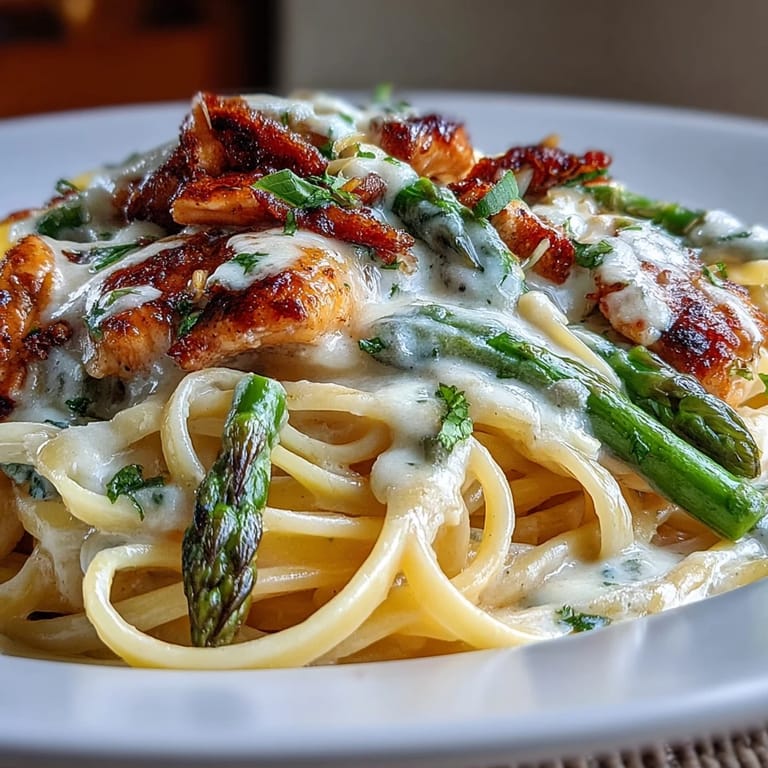
 There was this moment where my partner tasted it and just said nothing for a few seconds, which usually means I've either nailed it or completely missed the mark. Turns out it was the first one—that cream, the tender chicken, the crispy asparagus edges—all of it came together exactly right.
Why Roasting Asparagus Changes Everything
Roasting asparagus instead of boiling or sautéing it means the natural sugars concentrate and caramelize, while the cheese creates these little crispy bits that add texture contrast to soft pasta. I used to throw asparagus into the skillet with everything else, and it would just disappear into the sauce. Now it's the star of the show.
Making This Lighter Without Losing Soul
If you want to ease up on the richness, swapping half-and-half for heavy cream works beautifully—you'll just need to watch the sauce more carefully so it doesn't break when it simmers. You can also add a handful of baby spinach or fresh peas during the final toss, which adds color, nutrition, and a subtle sweetness that plays nicely with the Asiago.
Timing and Small Adjustments That Matter
The beauty of this dish is that most of the components are done in parallel—while the asparagus roasts and the pasta cooks, you're building the sauce. A lemon zest finish is optional but genuinely elevates the whole thing by cutting through the richness with a little brightness. If you're serving this to someone who loves heat, that pinch of red pepper flakes adds complexity without overpowering.
- Taste the sauce before adding all the pasta water—you might need less than you think, depending on how thick you like it.
- Keep the skillet on medium or even medium-low when combining everything so the cream stays silky and doesn't break.
- If life happens and everything isn't ready at once, you can keep the sauce warm on low heat and add the warm pasta and chicken when you're ready.
 Save to Pinterest
 This dish has become my go-to when I want to cook something that feels special without the stress. It's the kind of meal that reminds you why you love cooking in the first place.
Recipe Help Center
- → Can I use a different type of pasta?
Fettuccine, penne, or rigatoni work beautifully. Shorter pasta shapes capture the creamy sauce differently, while wider noodles provide more surface area for coating.
- → What can I substitute for Asiago cheese?
Parmesan, Romano, or aged Gouda make excellent alternatives. Each brings a slightly different flavor profile while maintaining that salty, nutty depth.
- → How do I store leftovers?
Keep in an airtight container in the refrigerator for up to 3 days. Reheat gently with a splash of cream or pasta water to restore the sauce's consistency.
- → Can I make this dish lighter?
Substitute half-and-half or whole milk for heavy cream. You can also increase the vegetable ratio by adding spinach, peas, or broccoli.
- → Why roast the asparagus first?
Roasting concentrates the asparagus flavor and creates crispy, cheesy edges. This technique adds texture and prevents the vegetables from becoming mushy in the sauce.
- → What wine pairs well with this pasta?
A crisp Sauvignon Blanc or Pinot Grigio cuts through the rich cream sauce. For red wine lovers, a light Pinot Noir complements without overwhelming the dish.