 Save to Pinterest
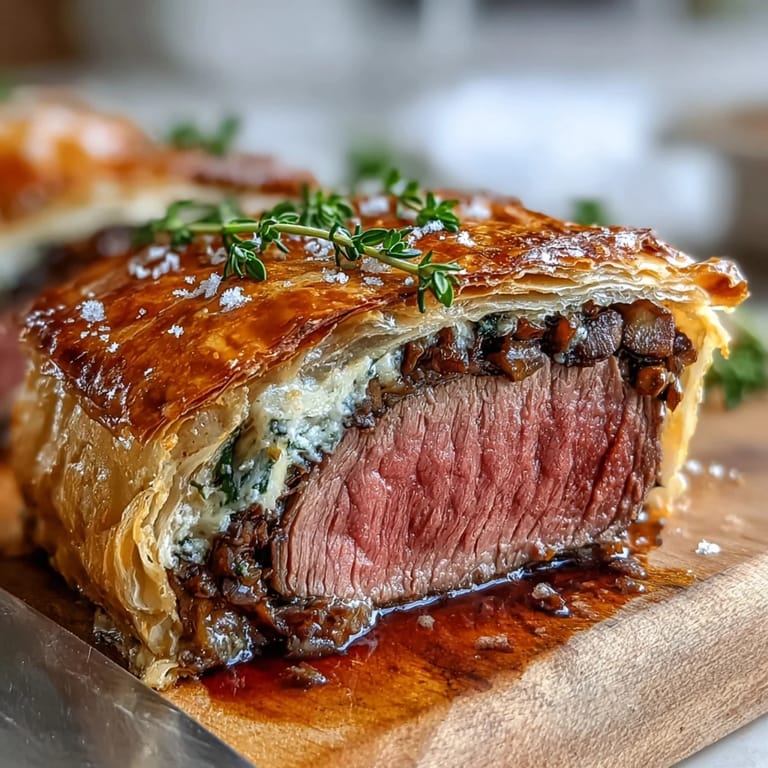
 My sister asked me to make something unforgettable for her anniversary dinner, and I panicked until I remembered watching a cooking show where the chef made Beef Wellington look almost easy. I'd never attempted anything so intimidating, but something about the golden pastry and the promise of tender beef made me say yes. The kitchen smelled like butter and thyme for hours, and when I sliced into that first Wellington, the layers revealed themselves like a secret. Everyone went quiet for a moment, then the compliments started, and I realized I'd just made something that would become my signature dish. It's been my go-to showstopper ever since.
I made this for New Year's Eve once, and my friend who claimed to hate mushrooms ate two slices without realizing what was in the duxelles. The mushrooms cook down into this earthy, almost meaty paste that just melts into the prosciutto, and she kept asking what the mystery ingredient was. When I finally told her, she laughed and said it didn't count because it tasted nothing like mushrooms. That night taught me that technique can transform ingredients people think they dislike. Now I make it whenever I want to prove that good cooking changes minds.
Ingredients
- Beef tenderloin: This cut is naturally tender and cooks evenly, making it perfect for wrapping in pastry without drying out.
- Cremini mushrooms: They have more flavor than white mushrooms and release just enough moisture to create that paste-like duxelles texture.
- Shallots and garlic: These aromatics add a sweet, mellow depth that balances the earthiness of the mushrooms.
- Fresh thyme: Its subtle, woodsy flavor ties everything together without overpowering the beef.
- Prosciutto: This creates a barrier that keeps the pastry crisp and adds a salty, savory layer.
- Dijon mustard: A thin coat adds a subtle tang that cuts through the richness.
- Puff pastry: Store-bought works beautifully and saves hours, just make sure it's fully thawed so it rolls evenly.
- Egg wash: This gives the pastry that glossy, golden finish that makes it look bakery-perfect.
Tired of Takeout? 🥡
Get 10 meals you can make faster than delivery arrives. Seriously.
One email. No spam. Unsubscribe anytime.
Instructions
- Preheat and Prepare:
- Set your oven to 425°F (220°C) so it's ready when you need it. Gather all your ingredients and tools so you're not hunting for things mid-recipe.
- Sear the Beef:
- Season the tenderloin generously with salt and pepper, then sear it in hot oil until every side is deeply browned, about 2 minutes per side. Let it cool completely on a plate so it doesn't cook further or steam the pastry later.
- Make the Duxelles:
- Melt butter in the same skillet, then cook the shallots and garlic until fragrant. Add the finely chopped mushrooms and thyme, season well, and cook until all the liquid evaporates and the mixture looks like a thick, dark paste, about 10 minutes.
- Arrange the Prosciutto:
- Lay out a large sheet of plastic wrap and overlap the prosciutto slices to form a rectangle slightly bigger than your beef. This creates a protective, flavorful layer that keeps everything together.
- Spread the Duxelles:
- Spread the cooled mushroom mixture evenly over the prosciutto, leaving a small border around the edges. The duxelles should be thick enough to coat but not so heavy that it slides off.
- Coat the Beef:
- Brush the cooled beef with a thin layer of Dijon mustard, then place it on top of the duxelles-covered prosciutto. The mustard adds flavor and helps everything stick together.
- Roll and Chill:
- Use the plastic wrap to tightly roll the prosciutto and duxelles around the beef, twisting the ends like a candy wrapper to seal. Chill for 20 minutes to firm everything up.
- Roll Out the Pastry:
- On a floured surface, roll the puff pastry into a rectangle large enough to fully wrap the beef log. Work quickly so the pastry stays cold and flaky.
- Wrap the Beef:
- Unwrap the beef from the plastic and place it in the center of the pastry. Fold the pastry over, trim any excess, and press the edges to seal tightly, then place seam-side down on a parchment-lined baking sheet.
- Egg Wash and Decorate:
- Brush the entire surface with beaten egg, making sure to cover all the seams. If you have pastry scraps, cut out shapes and attach them for a decorative touch, then chill for 10 minutes.
- Bake to Perfection:
- Bake for 40 to 45 minutes until the pastry is deep golden and an instant-read thermometer reads 120°F for rare or 130°F for medium-rare. The pastry should sound hollow when you tap it.
- Rest and Slice:
- Let the Wellington rest for 10 to 15 minutes before slicing so the juices redistribute. Use a sharp knife and wipe it between cuts for clean, beautiful slices.
 Save to Pinterest
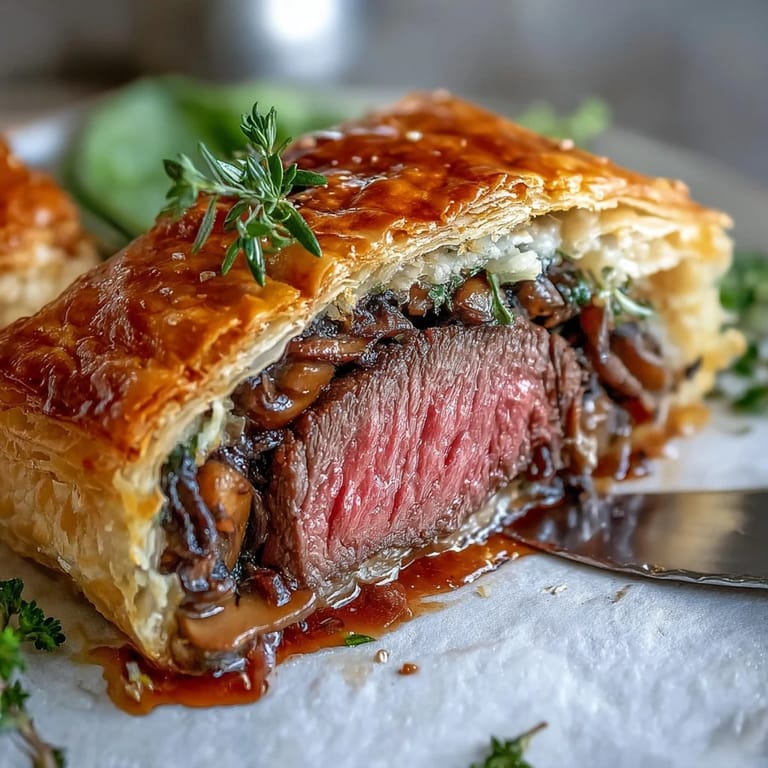
 The first time I served this at a dinner party, my friend's dad, a retired butcher, took a bite and nodded slowly, then asked if I'd trained in a professional kitchen. I hadn't, but that moment made me realize that some dishes carry a kind of magic that makes people forget you're just a home cook. Beef Wellington became my proof that patience and attention can create something that feels far more sophisticated than the sum of its parts. Now, every time I make it, I think of that quiet nod of approval.
Make-Ahead Magic
You can prepare the entire Wellington up to the point of baking, wrap it tightly in plastic, and refrigerate it for up to 24 hours. I've done this for holiday dinners when I needed the oven free for other dishes, and it worked perfectly. Just add an extra 5 minutes to the baking time if it goes in cold. The flavors actually deepen overnight as the mustard and duxelles meld with the prosciutto. This trick turns a stressful centerpiece into something you can handle with confidence.
Choosing Your Beef
A center-cut tenderloin works best because it's uniform in thickness, which means even cooking. I learned the hard way that a tapered end will overcook while the thick part stays rare, so ask your butcher to trim it into an even log. If you're buying pre-trimmed beef, look for a piece that's about 2 pounds and roughly the same diameter all the way through. The better the starting shape, the more professional your final Wellington will look. It's worth spending a few extra minutes at the butcher counter to get it right.
Serving Suggestions
Beef Wellington shines alongside simple sides that don't compete for attention. Roasted asparagus, creamy mashed potatoes, or a crisp green salad with a mustard vinaigrette all work beautifully. I like to make a quick red wine reduction with shallots and beef stock, then spoon it over each slice for extra richness. The key is to keep the sides clean and elegant so the Wellington remains the star.
- Serve with a bold red wine like Cabernet Sauvignon or a rich Merlot.
- Garnish the platter with fresh thyme sprigs for a restaurant-style presentation.
- Slice it at the table so everyone sees those beautiful layers as they're revealed.
 Save to Pinterest
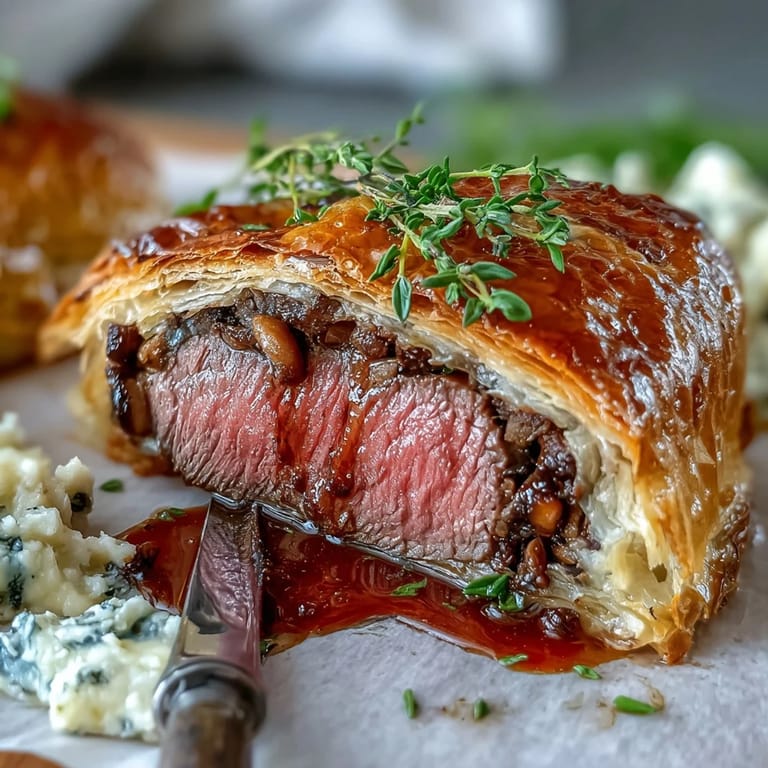
 Beef Wellington taught me that the dishes we're most afraid to try often become the ones we're proudest to serve. Every time I pull it from the oven and hear that first gasp from my guests, I'm reminded that cooking is about more than feeding people, it's about creating moments they'll remember.
Recipe Help Center
- → What temperature should the beef reach for medium-rare?
For medium-rare, aim for an internal temperature of 130°F (54°C) when measured with an instant-read thermometer. The beef will continue cooking slightly while resting, so remove it from the oven just before it reaches your target temperature.
- → Can I prepare Beef Wellington ahead of time?
Yes, you can assemble it completely up to 24 hours in advance. Wrap it tightly and refrigerate, then brush with egg wash and bake when ready. Add 5-10 minutes to the cooking time if baking directly from the refrigerator.
- → Why is my puff pastry soggy?
Soggy pastry usually results from excess moisture in the mushroom duxelles. Cook the mushrooms until completely dry and paste-like, with no liquid remaining in the pan. Also ensure the seared beef is completely cooled before wrapping.
- → What can I serve alongside Beef Wellington?
Classic accompaniments include roasted asparagus, green beans, creamy mashed potatoes, or roasted root vegetables. A rich red wine sauce or pan jus complements the beef beautifully.
- → Can I use a different cut of beef?
Beef tenderloin is ideal for its tenderness and even shape, but you can use a center-cut filet mignon portion for individual servings. Avoid tougher cuts as the short cooking time won't allow them to become tender.
- → How do I prevent the pastry from splitting during baking?
Ensure the pastry is rolled thin enough to wrap without stretching, seal all edges thoroughly with egg wash, and place the wellington seam-side down on the baking sheet. Chilling before baking also helps the pastry hold its shape.