 Save to Pinterest
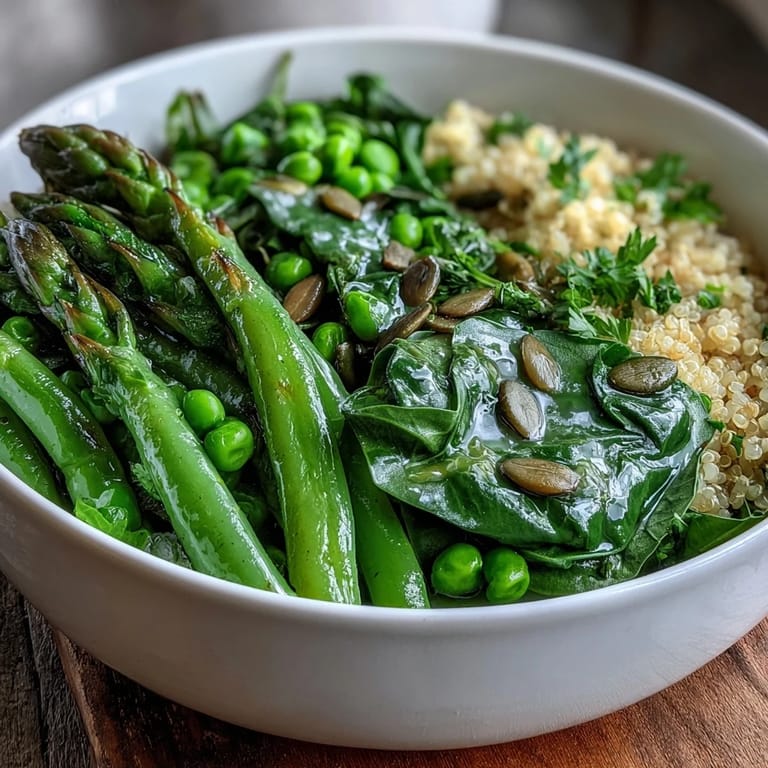
 There's something about late April when the farmers market suddenly explodes with green that made me want to build a bowl around that abundance rather than fight it. I'd been standing there with a basket overflowing with asparagus, peas, and spinach, wondering how to make it feel like an actual meal instead of just a pile of vegetables, when it clicked—layer everything over something substantial like quinoa and tie it together with a bright lemon dressing that tastes like spring tastes.
I made this for my sister last month when she was in one of those phases where she was trying to eat lighter but didn't want to feel like she was just eating rabbit food, and watching her go back for seconds while talking about how the bowl somehow felt both satisfying and bright was exactly the confirmation I needed that this works.
Ingredients
- Quinoa, brown rice, or farro (1 cup, about 180g): Choose whatever grain you have on hand or what's calling to you that day—quinoa cooks fastest and has a lovely texture, brown rice is earthier and more forgiving, farro is chewy and substantial.
- Water (2 cups, 480ml) and salt (½ tsp): Always salt your grain water like you're seasoning pasta, it makes a real difference to the final flavor.
- Fresh or frozen green peas (1 cup, 150g): Frozen peas are honestly just as good here and sometimes better because they're picked at peak ripeness—don't feel like you need fresh ones.
- Asparagus (1 cup, 120g trimmed and cut into 2-inch pieces): Look for stalks that snap when you bend them rather than bending softly, that's how you know they're actually fresh.
- Green beans (1 cup, 120g trimmed and cut into 2-inch pieces): The blanching is non-negotiable here because it sets the color and makes them tender without turning them mushy.
- Baby spinach leaves (2 cups, 60g): A quick wilt means it melts into the warm grains while still keeping some texture and brightness.
- Extra-virgin olive oil (3 tbsp): This is one place where quality actually matters because the oil is doing real work in the dressing, not just hiding in a cooked dish.
- Freshly squeezed lemon juice (2 tbsp): Bottled won't give you that snap you're after, so squeeze it fresh or don't bother.
- Lemon zest (1 tsp): This is the secret move that keeps the dressing from tasting one-dimensional.
- Dijon mustard (1 tsp): It acts as an emulsifier so your oil and acid actually hold together instead of separating.
- Maple syrup or honey (1 tsp): Just a touch to balance the sharpness of the mustard and lemon without making it sweet.
- Garlic clove (1 small, minced): Raw garlic here is bright and sharp, so really just one small clove unless you're serious about garlic.
- Salt and freshly ground black pepper, to taste: Taste the dressing on a piece of grain before you assemble everything—this is where it comes alive.
- Toasted pumpkin seeds or sunflower seeds (2 tbsp, optional): The crunch is crucial for making the bowl feel interesting rather than just soft vegetables on soft grains.
- Crumbled feta cheese (¼ cup, optional): Tanginess that plays beautifully off the lemon, or leave it out if you're going vegan.
- Fresh herbs—mint, parsley, or dill (chopped, optional): Mint is my instinct, but honestly any fresh herb you like will work here.
Tired of Takeout? 🥡
Get 10 meals you can make faster than delivery arrives. Seriously.
One email. No spam. Unsubscribe anytime.
Instructions
- Cook your grains with intention:
- Rinse them under cold water first because that starchy coating can make them gummy, then bring your salted water to a proper boil before adding them. Cover the pot, turn the heat down low, and don't peek—just let them sit there until they're tender through (about 15 minutes for quinoa, longer for brown rice, so check your package). Fluff with a fork when they're done and they'll have that perfect individual grain texture.
- Blanch the vegetables until they're just barely done:
- Bring a big pot of salted water to a rolling boil and blanch each vegetable separately for 2–3 minutes—you're looking for them to brighten up and just turn tender, not soft. Immediately dump them into a bowl of ice water to shock them cold so they stop cooking and hold onto that color and slight firmness.
- Wilt the spinach quickly in a hot skillet:
- A dry skillet over medium heat for just a minute or two is all it takes—you want it soft enough to eat but not gray and sad looking. Let it cool for a minute so it's not piping hot when it hits your bowl.
- Whisk the dressing together until it's actually emulsified:
- In a small bowl, combine the oil, lemon juice, zest, mustard, syrup, and garlic, then whisk it hard for about a minute until it looks thicker and more cohesive instead of oily and separated. Taste it on a piece of grain and adjust salt and pepper until it's bright and balanced.
- Layer your bowls with intention:
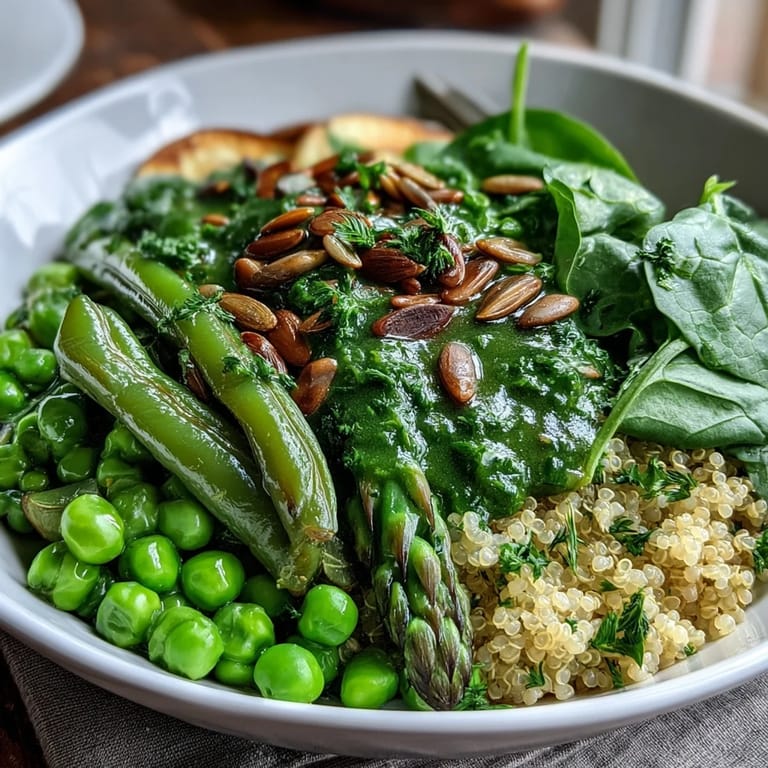
- Divide the warm grains among four bowls first as your base, then arrange the vegetables on top in whatever way makes you happy—they can be scattered or neatly organized, it's your bowl. Pour the dressing over while the grains are still warm so they absorb some of it.
- Garnish right before serving:
- Sprinkle on the seeds for crunch, the cheese if you're using it, and the fresh herbs so they're still bright and not wilted from sitting in the dressing.
 Save to Pinterest
 My mom made a comment once about how eating this bowl felt luxurious even though it's just vegetables and grains, and I think she nailed what makes it work—it tastes intentional and composed rather than thrown together, like you actually considered every element instead of just dumping salad into a bowl.
Building Your Bowl Strategy
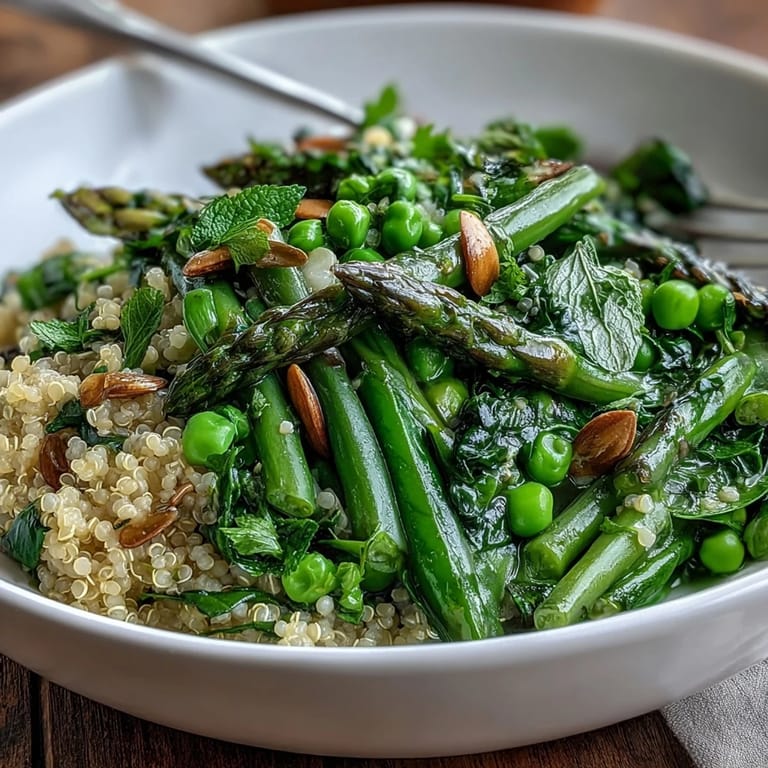
The real trick to this working is understanding that you're not making a salad, you're building a warm grain base and then layering cool or warm vegetables on top so you get temperature contrast happening in every bite. The warm grains stay warm because the vegetables aren't hot enough to heat them further, but they're warm enough that everything melts together a little in the middle of the bowl. This is also why you don't toss it all together before serving—keeping things layered means you get a little bit of everything in each spoonful instead of mouthfuls of just one thing.
Seasonal Flexibility Without Losing the Plot
I've made this with summer zucchini and tomatoes (which was good but less interesting), with fall roasted beets and kale (which was genuinely better than the spring version), and with winter braised cabbage and carrots, and every version works as long as you keep the ratio of grain to vegetables roughly similar. The spring version is what got under my skin though, because there's something about fresh peas and tender asparagus that tastes like you're actually celebrating the season instead of just working with what's available. If you're buying vegetables out of season, roasting them brings out their flavor more than blanching does—something about that caramelization makes up for the lack of peak freshness.
Making This Actually Substantial
This is gorgeous as a vegetarian main dish, but if you're cooking for someone who needs more protein, adding grilled chicken, crumbled tofu, or even just a handful of chickpeas on top transforms it without making you feel like you're adding something that doesn't belong. I've also topped it with a soft boiled egg and it became something entirely different but still completely cohesive. The dressing works with all of these additions because it's bright enough to cut through richer proteins without disappearing.
- A soft boiled egg adds richness and protein without needing any extra dressing.
- Grilled chicken strips should be tossed in a little of the lemon dressing so they're not dry against the vegetables.
- Crumbled tofu or chickpeas give you that protein hit while keeping the bowl feeling light and not heavy.
 Save to Pinterest
 This bowl somehow became the thing I make when I want to feel like I'm actually taking care of myself without it feeling like deprivation, which is probably the highest compliment a recipe can receive. It's fresh and nourishing and actually fun to eat, which turns out to be a pretty rare combination.
Recipe Help Center
- → What grains work best in this bowl?
Quinoa, brown rice, and farro all provide excellent texture and nutty flavor. Quinoa cooks fastest at 15 minutes, while brown rice takes about 35 minutes. Bulgur or couscous make great quick-cooking alternatives.
- → Can I prepare the vegetables ahead of time?
Yes, blanch the vegetables up to 2 days in advance and store them in an airtight container in the refrigerator. Keep the dressing separate and toss everything just before serving to maintain freshness and texture.
- → How do I make this bowl more protein-rich?
Add grilled chicken strips, baked tofu, roasted chickpeas, or a soft-boiled egg. You could also mix hemp seeds or pumpkin seeds into the grains, or top with crumbled feta for additional protein and flavor.
- → What if I can't find fresh spring vegetables?
Frozen peas work beautifully and don't require blanching—just thaw and toss. Asparagus and green beans can be substituted with snow peas, snap peas, or broccoli florets depending on what's available in your area.
- → How long does the lemon dressing keep?
The dressing stays fresh in the refrigerator for up to 1 week when stored in a sealed jar. Give it a good shake or whisk before using, as the ingredients may separate slightly over time.