 Save to Pinterest
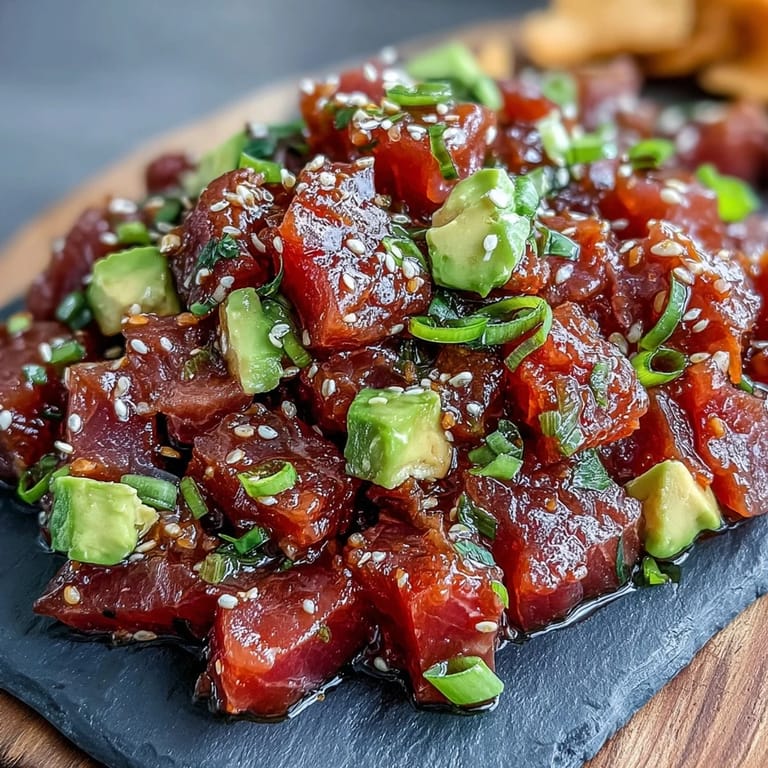
 There's something about assembling spicy tuna tartare that feels like opening a gift to yourself. My friend Marco brought me some pristine sushi-grade tuna from his favorite fishmonger one Thursday evening, and I had maybe twenty minutes to turn it into something impressive before guests arrived. The lime, sriracha, and sesame oil came together so quickly, and by the time I'd fried those wonton chips until they sang with crispness, I realized I'd created something that tasted far more complex than its simple ingredient list suggested.
I made this for a dinner party where one guest mentioned in passing that she was tired of restaurant appetizers feeling pretentious and disconnected from actual flavor. When she took that first bite, watching her eyes light up at how the lime juice cut through the richness of the sesame oil, I understood exactly what she meant—this dish tastes like someone actually cared about the experience, not just the plating.
Ingredients
- Sushi-grade tuna, 300 g: This needs to be the real deal—ask your fishmonger to point you toward their sushi-quality selection, and don't hesitate to ask questions about freshness and sourcing.
- Soy sauce, 2 tbsp: Use a good quality sauce here; the difference between ordinary and excellent soy sauce becomes obvious when it's the star of a dressing.
- Sriracha sauce, 1 tbsp: Start with this amount and taste as you go—some bottles pack more heat than others, and you want to control the spice level yourself.
- Toasted sesame oil, 2 tsp: The toasted variety has deeper flavor and a darker color, which makes a real difference in the final taste profile.
- Fresh lime juice, 1 tbsp: Bottled lime juice exists, but fresh lime juice tastes brighter and sharper, which is exactly what this dish needs.
- Rice vinegar, 1 tsp: This adds subtle sweetness and rounds out the sharp edges of the lime and sriracha.
- Honey or agave syrup, 1 tsp: Either works, though honey brings a warmer note while agave is more neutral.
- Scallions, 2 tbsp finely chopped: The green parts add freshness and mild onion flavor without overwhelming the delicate tuna.
- Fresh cilantro, 1 tbsp finely chopped: Optional, but it adds a brightness that pulls everything together beautifully.
- Toasted sesame seeds, 1 tsp: These contribute nuttiness and texture, and you'll notice their flavor is distinct from raw sesame seeds.
- Wonton wrappers, 12: You'll cut these in half diagonally, so keep an eye on them while frying—they go from golden to burnt in seconds.
- Vegetable oil for frying: Keep the temperature consistent at medium-high; too cool and they'll absorb oil and turn soggy, too hot and they'll burn.
- Sea salt for sprinkling: A light hand here makes the wonton chips taste bright rather than overwhelming.
- Ripe avocado, 1: Add this at the last possible moment so it stays buttery and doesn't oxidize or get mushed into the other ingredients.
- Lime wedges for serving: These let people adjust the citrus level to their preference.
Tired of Takeout? 🥡
Get 10 meals you can make faster than delivery arrives. Seriously.
One email. No spam. Unsubscribe anytime.
Instructions
- Fry the wonton chips first:
- Heat your oil to medium-high until a small piece of wrapper dropped in sizzles immediately—this usually takes about three to four minutes. Working in batches so you don't crowd the pan, slide in the wonton triangles and watch them puff and turn golden, about thirty to forty-five seconds per side, then transfer them to paper towels to drain while they're still warm.
- Build your dressing:
- Whisk the soy sauce, sriracha, sesame oil, lime juice, rice vinegar, and honey together in a small bowl until the honey dissolves and everything looks unified. Taste it at this point and adjust the heat or citrus to match your preference.
- Combine the tuna gently:
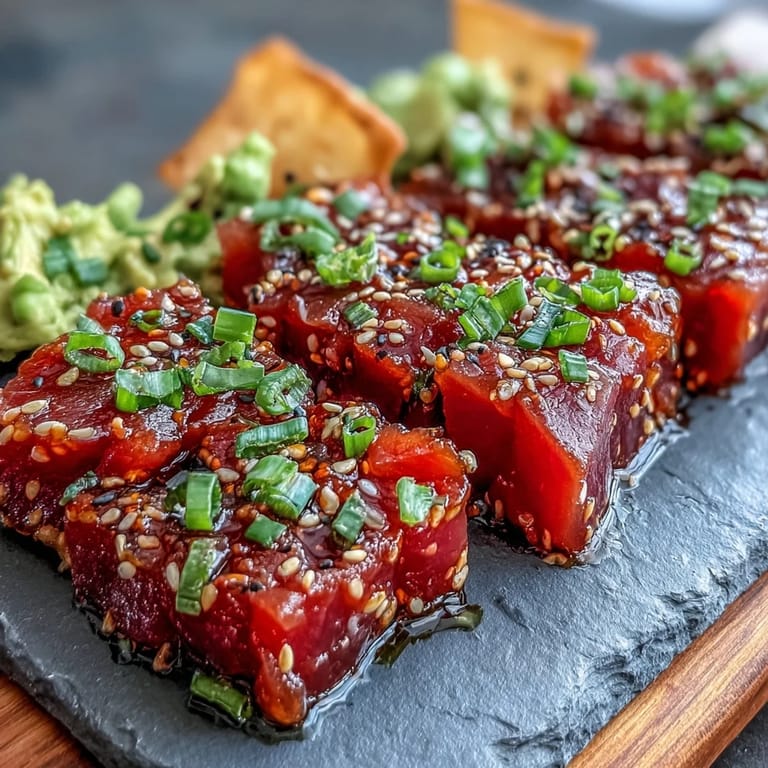
- Place your diced tuna in a medium bowl and pour the dressing over it, then fold everything together with a rubber spatula using slow, deliberate movements—you're coating the tuna, not breaking it up into smaller pieces. Fold in the scallions, cilantro, and sesame seeds just before serving.
- Add avocado at the last moment:
- Fold the diced avocado into the mixture right before plating so it stays creamy and visible rather than disappearing into the rest of the ingredients. This thirty-second delay makes an actual difference.
- Plate and serve immediately:
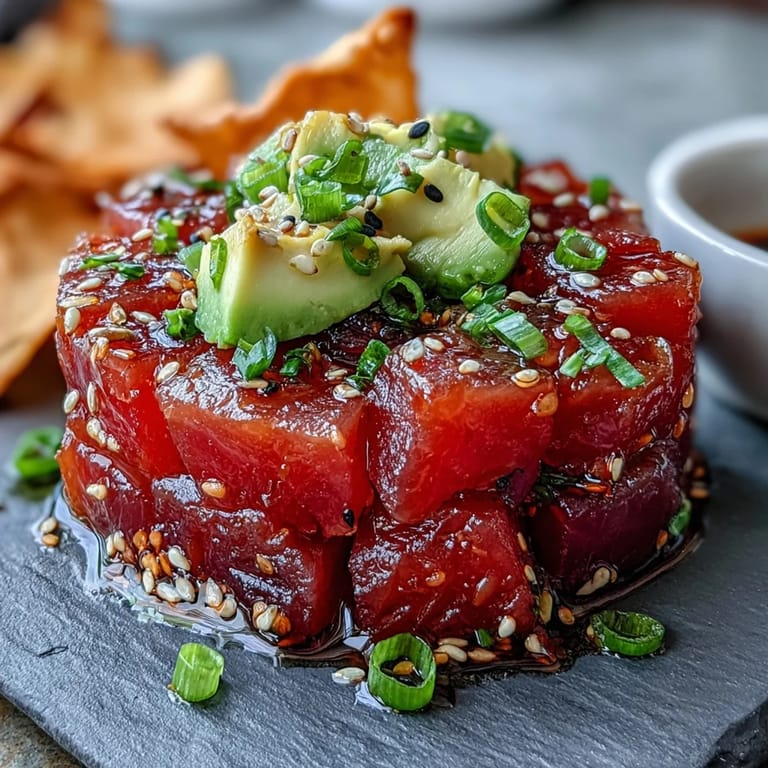
- Arrange the tartare on individual plates or a platter, surround it with the crispy wonton chips, and place lime wedges nearby so people can brighten each bite to their liking. Serve this right away while the chips are still crunchy and the tartare is at its best.
 Save to Pinterest
 What surprised me most about this dish was how it became the thing people asked about days later—not because it was complicated, but because it felt special in a way that matched the simplicity of its components. There's honest pleasure in serving something that tastes like you understand flavor, even when the actual work was minimal.
The Wonton Chip Secret
I used to make my wonton chips in an air fryer thinking it would be easier, but they turned out pale and slightly chewy instead of that crispy, shattered texture that makes this appetizer sing. Going back to shallow frying in a skillet taught me that sometimes the traditional method exists because it actually works better—the oil conducts heat more evenly, and you get that satisfying sound and smell that tells you exactly when they're ready. The trick is keeping your oil at a consistent temperature and not trying to fry too many at once, which I learned after rescuing a batch of pale, sad wonton chips from the bottom of a crowded pan.
Dressing Balance and Flavor Building
The dressing is intentionally balanced so that no single flavor dominates—the lime and vinegar provide sharpness, the soy adds umami depth, the sriracha brings heat, and the honey rounds everything out with subtle sweetness. I spent an entire afternoon one week just adjusting ratios, tasting, and adjusting again, until I realized that the honey wasn't just a sweetener, it was a mediator that made all the other flavors feel purposeful rather than competing. Once I understood that, every other batch came together perfectly because I wasn't fighting the recipe, I was working with its internal logic.
Making It Your Own
This recipe is flexible enough to accommodate your preferences and your ingredients without losing its essential character. I've made it with cucumber slices replacing the wonton chips when I wanted something lighter, and once I added finely diced jalapeño because I wanted more fresh heat alongside the sriracha. The core stays the same—quality tuna, balanced dressing, textural contrast—but the details can shift based on what speaks to you and what you have available.
- Try replacing some of the tuna with finely diced yellowtail for a different texture and flavor note if you want to experiment.
- If you're avoiding oil or prefer baking, you can toast wonton wrapper triangles in a dry skillet with just a light spray of oil for a lighter chip option.
- Keep lime wedges nearby during serving because people will want to adjust the citrus level to their taste.
 Save to Pinterest
 This appetizer lives in that perfect space where it feels elegant without being fussy, impressive without being complicated. Serve it when you want people to know you care about what ends up on their plate.
Recipe Help Center
- → What type of tuna is best for this dish?
Sushi-grade tuna is recommended for its freshness, texture, and safety when served raw.
- → Can I adjust the heat level in the dressing?
Yes, the amount of sriracha sauce can be modified to suit your preferred spice intensity.
- → How should I prepare the wonton chips for maximum crispiness?
Fry wonton wrappers in hot oil until golden brown, about 30–45 seconds per side, and drain on paper towels before seasoning.
- → Is there a way to add extra texture to the tartare?
Diced cucumber can be folded in for added crunch and freshness if desired.
- → What beverages pair well with this dish?
Dry Riesling or sparkling sake complement the zesty and spicy notes beautifully.