 Save to Pinterest
 There's something about October that makes me crave bowls instead of plates—something about layering textures and colors that feels less like cooking and more like arranging a still life you actually get to eat. I discovered this particular combination on a crisp afternoon when my farmers market haul was threatening to overwhelm my crisper drawer, and instead of panic, I felt this quiet excitement about possibility. The squash was golden, the Brussels sprouts were firm and compact, and there was an apple that smelled like it had been kissed by autumn itself. What started as ingredient rescue became something I now make deliberately, almost reverently, whenever the season turns.
My friend Sarah came over on a November evening when everything felt a little too chaotic, and I made this without thinking much about it. She took one bite and got quiet in that specific way people do when they're tasting something that matters. She asked for the recipe, then came back two weeks later and told me she'd made it three times. That's when I realized this bowl had crossed from my kitchen into someone else's routine, becoming part of how they feed themselves through the season.
Ingredients
- Butternut squash, peeled and cubed (2 cups): Buy it pre-cut if you're short on time—there's no medal for knife work when you're already juggling four components.
- Brussels sprouts, trimmed and halved (2 cups): Don't skip the halving; flat surfaces create that crucial caramelized crust that makes them worth eating.
- Kale, stems removed and leaves chopped (2 cups): Lacinato kale stays tender faster than curly, but either works if you treat it gently.
- Apple, cored and sliced (1 large): A tart variety like Granny Smith holds its shape better than sweet ones, though sweetness against the savory vegetables isn't wrong.
- Farro (1 cup): This chewy grain is the backbone of the bowl, but brown rice or quinoa work equally well if you need gluten-free.
- Vegetable broth or water (2 cups): Broth adds flavor effortlessly—use it when you can.
- Olive oil (3 tbsp): Good oil matters here because it's one of the main players, not just infrastructure.
- Sea salt (1 tsp): Distribute it between the vegetables so seasoning is even, not just on top.
- Black pepper (1/2 tsp): Freshly cracked if you have it; pre-ground if you don't, but add it right before roasting.
- Smoked paprika (1/2 tsp): This is the quiet flavor that makes people ask what's in it.
- Ground cinnamon (1/2 tsp): Sounds strange with vegetables, but it's the bridge between sweet apples and savory squash.
- Toasted pumpkin seeds (1/4 cup): These add crunch and keep the bowl from feeling too soft—don't skip them.
- Dried cranberries (2 tbsp): They burst with tartness and offset the natural sweetness of roasted vegetables.
- Feta or vegan cheese (2 tbsp, optional): This is where you make it yours—creamy or crispy, traditional or plant-based.
Tired of Takeout? 🥡
Get 10 meals you can make faster than delivery arrives. Seriously.
One email. No spam. Unsubscribe anytime.
Instructions
- Prepare your workspace and heat the oven:
- Preheat to 425°F and line two baking sheets with parchment paper while you're thinking about it—future you will appreciate not having to do this later. The parchment prevents sticking and makes cleanup feel like a kindness to yourself.
- Season and arrange the winter vegetables:
- Toss your cubed squash and halved Brussels sprouts with 2 tablespoons olive oil, salt, pepper, and smoked paprika in a bowl, making sure the oil coats everything. Spread them in a single layer on one baking sheet, leaving room between pieces so they roast instead of steam.
- Prepare the apples for their own roasting:
- Place apple slices on your second sheet, drizzle with the remaining tablespoon of oil, and dust with cinnamon. They roast separately because they need less time and a gentler approach.
- Begin the roasting process:
- Slide both sheets into the oven; the squash and Brussels sprouts will need 25 to 30 minutes until they're golden and tender, and you'll want to stir them once halfway through. The apples need only about 15 minutes, just until they're soft and lightly caramelized at the edges.
- Cook the grains while vegetables roast:
- While the oven is working, rinse your farro and bring vegetable broth to a boil in a medium saucepan. Add the farro, reduce heat to low, cover, and let it simmer for 20 to 25 minutes until the grains are tender and have absorbed the liquid.
- Quickly wilt the kale:
- In a skillet over medium heat, add your chopped kale with just a splash of water and stir for 2 to 3 minutes until it's tender and loses its raw edge. This takes less time than you think and transforms the texture entirely.
- Assemble each bowl with intention:
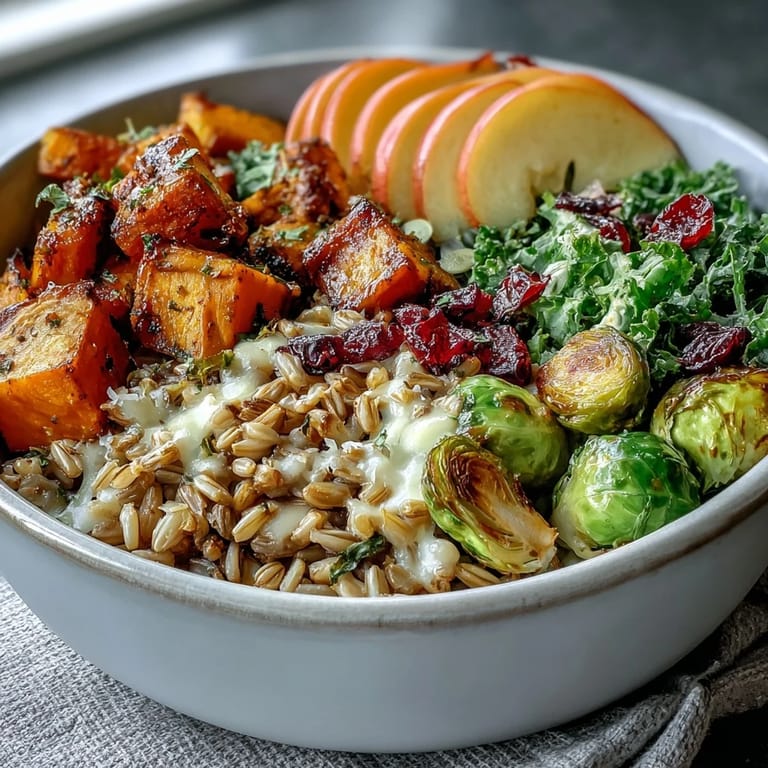
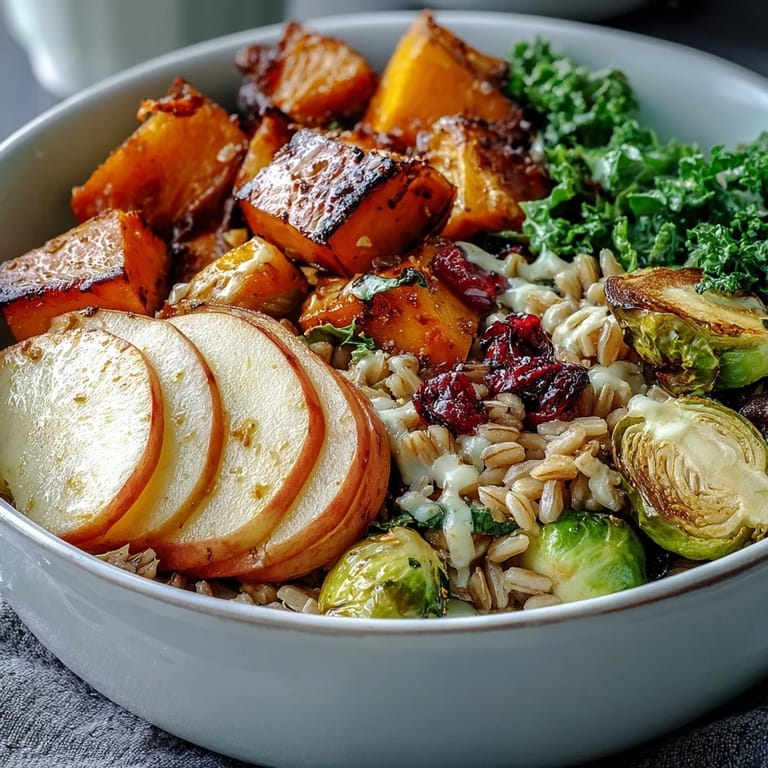
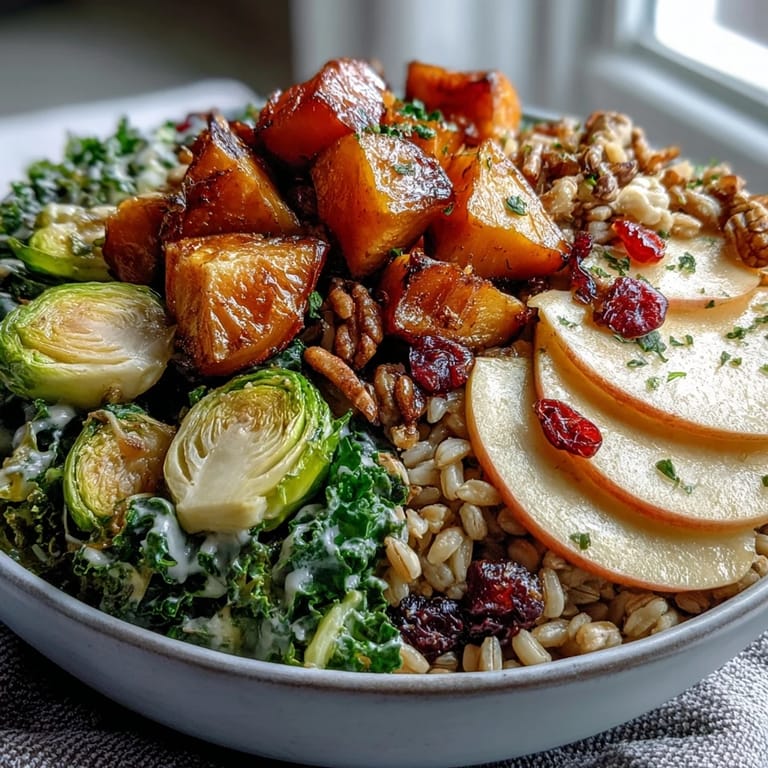
- Divide the cooked farro among four bowls as your base, then arrange the roasted squash, Brussels sprouts, sautéed kale, and roasted apples on top like you're creating something meant to be looked at before eaten. The arrangement matters more than you'd expect—colors next to each other, textures in contrast.
- Finish with texture and brightness:
- Scatter pumpkin seeds and dried cranberries over each bowl, add cheese if you're using it, and serve while everything still holds warmth. That first bite with all the layers together is when the recipe becomes complete.
 Save to Pinterest
 I made this bowl for my mother on a day when she didn't feel like cooking, and watching her eat it slowly, actually pausing between bites, reminded me that sometimes feeding someone is the clearest way to say you're thinking about them. That bowl became a ritual between us as autumn deepened.
Why This Bowl Works Through the Seasons
The beauty of this dish is that it breathes with the seasons without losing its essential identity. In early fall, use smaller, sweeter apples and delicate young squash. As winter approaches, reach for heartier varieties—acorn squash instead of butternut, pears instead of apples. The grains stay substantial, the roasting technique remains constant, and suddenly you're eating something entirely different even though you're following the same steps. It's like one recipe that contains multitudes.
Building Flavor Through Roasting
Roasting at high heat isn't about cooking vegetables quickly; it's about coaxing out their natural sweetness and creating edges that taste like caramel. The Brussels sprouts develop a nutty depth, the squash becomes almost silky, and the apples concentrate into something closer to jam than fruit. I learned this by accident, leaving a sheet in too long one evening and discovering that the browned edges were actually the best part. Now I intentionally let things get darker than I once thought prudent, and the bowls taste richer because of it.
Making It Your Own
This recipe is a framework more than a prescription, which is why it feels sustainable to make repeatedly without boredom. Your farmer's market will determine what appears in your bowl; your mood will determine the grains and toppings. I've made it with roasted chickpeas stirred in for protein, with pomegranate seeds instead of cranberries, with tahini drizzled over top like a finishing sauce. The core technique—roast, grain, greens, assembly—stays the same while everything else shifts.
- Swap the farro for any grain you have on hand; the cooking time will vary slightly but the principle holds.
- Add roasted chickpeas, crispy tofu, or white beans if you want the bowl to feel more like a complete meal.
- Don't be afraid to experiment with the spice ratio; this is your dinner, and it should taste like your version of autumn.
 Save to Pinterest
 This bowl has become how I cook through autumn and into winter, a ritual that grounds me when the days get shorter. There's something deeply satisfying about feeding yourself this thoughtfully, and everyone you serve it to will understand why.
Recipe Help Center
- → What grains work best in this bowl?
Farro provides a chewy, nutty texture that pairs beautifully with roasted vegetables. Quinoa cooks faster and adds protein, while brown rice offers a firmer bite. Each grain absorbs the seasonings differently, so choose based on your preferred texture and cooking time.
- → Can I prepare the vegetables ahead of time?
Yes, you can roast the vegetables up to 3 days in advance and store them in the refrigerator. Reheat in a 375°F oven for 10-15 minutes to restore their crispy edges before assembling. The kale is best sautéed fresh for optimal texture.
- → How do I prevent the apples from becoming mushy?
Roast apples separately from the vegetables and check them after 12-15 minutes. They should be tender but still hold their shape. Choose firm varieties like Honeycrisp or Gala that withstand heat well without breaking down completely.
- → What protein additions work well?
Roasted chickpeas add crispy texture and plant-based protein. Tofu cubes roasted alongside the vegetables absorb the smoked paprika seasoning. Shredded chicken or white beans also complement the autumn flavors without overpowering the vegetables.
- → Can I use other winter vegetables?
Sweet potatoes, parsnips, or cauliflower substitute beautifully for squash. Delicata squash requires no peeling. Add roasted beets for color, or include Brussels sprouts halved for even cooking. The seasoning blend works with most hearty fall vegetables.
- → Is this suitable for meal prep?
Absolutely. Store components separately in airtight containers for up to 4 days. Keep grains, vegetables, and toppings in separate containers, then assemble when ready to eat. The flavors actually develop and improve overnight as the ingredients meld together.