 Save to Pinterest
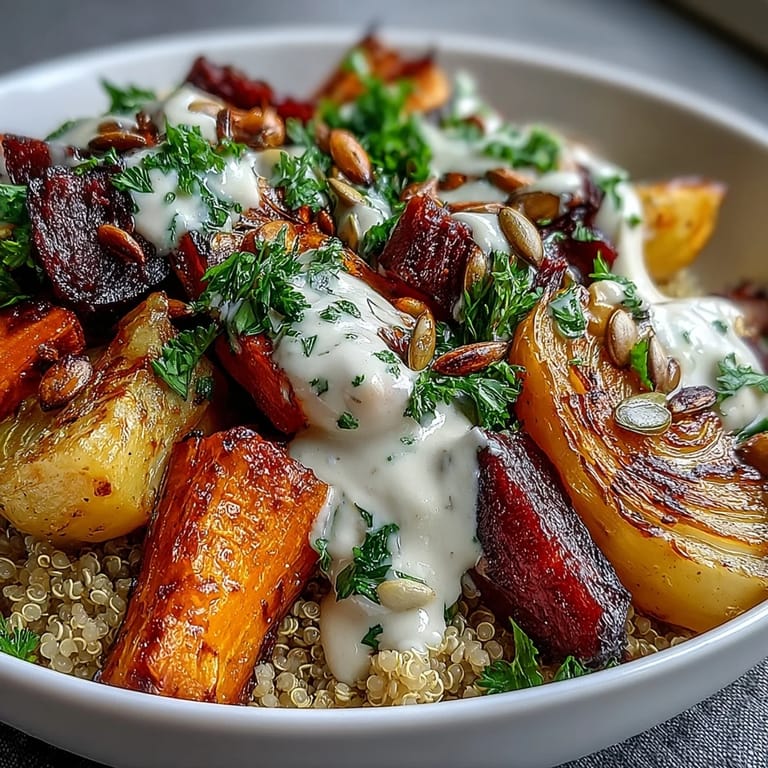
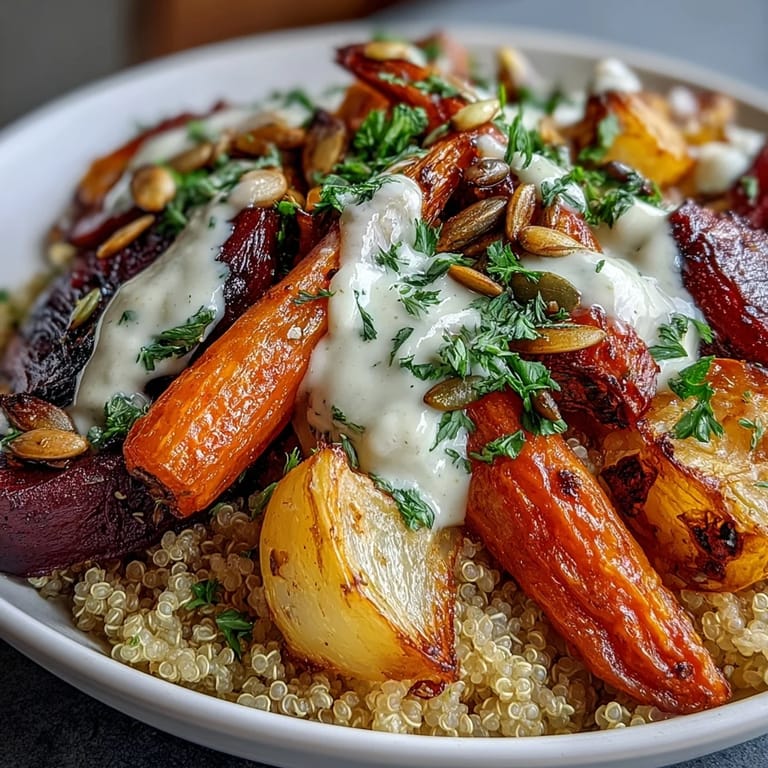
 There's something about the smell of root vegetables turning golden in a hot oven that makes a kitchen feel intentional, purposeful. I discovered this bowl on a gray afternoon when I had half a dozen vegetables rolling around in my crisper drawer and absolutely no plan. What started as a simple way to use what I had on hand became my go-to lunch for weeks, then months. The tahini sauce was the game-changer, that creamy, tangy contrast against the sweet, caramelized vegetables that somehow taste nothing like their raw selves.
I made this for my partner one night when they were stressed about work, and watching their whole face change when they tasted it was oddly touching. They took one bite and just went quiet for a moment, genuinely enjoying the food instead of just eating. Now whenever we're both exhausted but want something that feels nourishing and special, this bowl appears on our table.
Ingredients
- Carrots: Choose medium ones if possible; they caramelize beautifully and stay slightly firm rather than turning mushy.
- Beets: Their earthiness deepens when roasted, and that deep purple-red color makes the bowl visually stunning.
- Turnips: They're crispy when done right, adding a subtle sweetness that balances the whole dish.
- Parsnips: These are the sweet ones; they get almost caramel-like edges if you let them roast long enough.
- Olive oil: Don't skip this or go light—the vegetables need enough fat to properly caramelize and develop flavor.
- Sea salt and black pepper: Taste as you go; the seasoning on the raw vegetables tastes different once they roast down.
- Dried thyme or rosemary: Optional but genuinely changes the flavor profile; I lean toward thyme most days.
- Quinoa: Rinse it under cool water first to remove the bitter coating, and use vegetable broth if you have it for extra depth.
- Water or vegetable broth: Broth gives the quinoa more dimension, but water works perfectly fine too.
- Tahini: Buy the raw, unsweetened kind; it should be smooth and pale, not grainy or separated.
- Lemon juice: Fresh is non-negotiable here; bottled juice won't give you that bright, living quality the sauce needs.
- Garlic: One small clove is enough; it should whisper in the background, not shout.
- Maple syrup or honey: Just a teaspoon balances the tahini's earthiness, but it's truly optional.
- Fresh parsley: Chop it just before serving so it stays vibrant and doesn't oxidize into something sad-looking.
- Toasted seeds: Pumpkin or sunflower seeds add crunch; toasting them yourself makes a real difference in flavor.
Tired of Takeout? 🥡
Get 10 meals you can make faster than delivery arrives. Seriously.
One email. No spam. Unsubscribe anytime.
Instructions
- Heat your oven and prepare:
- Set the oven to 425°F and line a large baking sheet with parchment paper so cleanup is mercifully easy.
- Toss the vegetables:
- In a large bowl, coat your carrots, beets, turnips, and parsnips with olive oil, salt, pepper, and herbs if you're using them. Get your hands in there and make sure every piece is glossy with oil.
- Spread and roast:
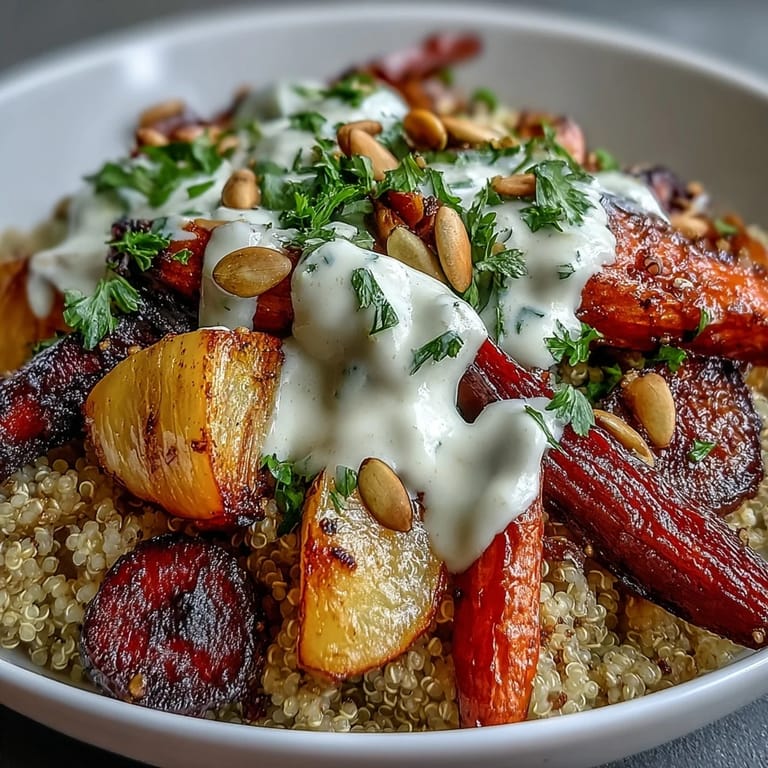
- Lay the vegetables in a single layer on the baking sheet, and roast for 30 to 35 minutes, stirring halfway through so they caramelize evenly. They're done when the edges are dark golden and a fork goes through easily.
- Cook the quinoa:
- While the vegetables roast, combine rinsed quinoa, water or broth, and salt in a medium saucepan. Bring it to a boil, then cover and lower the heat to a gentle simmer for 15 minutes.
- Rest the quinoa:
- Remove the pan from heat and let it sit, covered, for 5 minutes. Then fluff it gently with a fork so the grains separate without getting mushy.
- Make the tahini sauce:
- In a small bowl, whisk together tahini, lemon juice, water, minced garlic, salt, and maple syrup if using. Keep whisking until it's smooth and creamy; add a bit more water if it's too thick.
- Assemble and serve:
- Divide the fluffy quinoa among four bowls, top each with a generous portion of roasted vegetables, drizzle with the tahini sauce, and finish with fresh parsley and seeds. Serve warm or at room temperature.
 Save to Pinterest
 There was a moment when a friend who eats mostly meat came over for lunch and tried this bowl, and they genuinely couldn't believe there was no protein besides what the quinoa offered. That conversation shifted something for me about what I was cooking and why.
Why Root Vegetables Transform in the Oven
Raw root vegetables are sturdy and somewhat reserved, with sharp edges and a quiet flavor. Something magical happens at high heat: the natural sugars concentrate and caramelize, the vegetable flesh becomes tender, and flavors that were muted suddenly sing. The longer you roast them, the more their true sweetness emerges. I've learned to not be impatient with this step—those extra minutes of roasting make all the difference between a nice side dish and something people actually crave.
The Tahini Sauce Is Your Secret Weapon
Tahini sauce can feel intimidating if you're not used to working with it, but honestly, it's just whisking together a few ingredients until smooth. The lemon juice is what keeps it from tasting heavy or overwhelming; it cuts through the richness and brings brightness. Start with less water than you think you need and add more gradually until you reach the consistency you want—this is where control lives in this recipe.
Customization Ideas
This bowl structure is flexible enough that you can adapt it to what's in your kitchen or what you're craving. I've made it with sweet potatoes and rutabaga when I couldn't find parsnips, and honestly sometimes I mix up the base too. The roasting technique and the tahini sauce are what anchor the whole thing; swap out the specific vegetables and you're still making something delicious.
- Add chickpeas or white beans roasted alongside the vegetables for extra protein and substance.
- Top with a poached egg if you want richness and extra nutrients without dairy.
- Swap in sweet potatoes, rutabaga, or celery root based on what's available or what sounds good.
 Save to Pinterest
 This bowl has become my answer for lunch, for feeding guests, for nights when I want something both simple and satisfying. It's the kind of recipe that makes you feel like you're taking care of yourself without any fuss.
Recipe Help Center
- → Which root vegetables work best for roasting?
Carrots, beets, turnips, and parsnips roast beautifully together. Sweet potatoes and rutabaga make excellent additions or substitutions. Cut all vegetables into uniform 1-inch pieces for even roasting.
- → How do I achieve perfectly caramelized vegetables?
Preheat your oven to 425°F and spread vegetables in a single layer without overcrowding the pan. Roast for 30–35 minutes, stirring halfway through, until edges are golden and interiors are tender.
- → Can I make the tahini sauce ahead?
Absolutely. The tahini sauce keeps well in the refrigerator for up to a week. Whisk again before serving and add a splash of water if it thickens. The flavors actually develop and improve over time.
- → What proteins pair well with this bowl?
Chickpeas, lentils, or a poached egg complement the earthy vegetables beautifully. Grilled chicken, roasted tofu, or pan-seared halloumi also work wonderfully for a more substantial meal.
- → How do I store leftovers?
Store components separately in airtight containers for up to 5 days. Reheat vegetables at 400°F for 10–12 minutes to restore their caramelized edges. Serve fresh tahini sauce chilled or at room temperature.