 Save to Pinterest
 There's something about October that makes me crave this soup, though honestly it sneaks onto my table whenever the weather turns unpredictable. A friend brought a pot of something similar to a dinner party, and I spent most of the evening asking questions instead of making conversation, scribbling notes on a napkin like I'd discovered something revolutionary. The combination of creamy pumpkin with savory sausage felt like autumn finally understood what I needed, and I've been refining my version ever since, usually while chopping vegetables and humming along to whatever's playing in the kitchen.
I made this for my coworkers during one of those early autumn Fridays when everyone's mood shifts with the temperature. One person went back for thirds and declared it was the reason they were staying for the weekend—I'm still not sure if she meant the soup or my kitchen, but I'll take the compliment either way. That's when I learned this soup has a secret power: it makes people linger over bowls and actually talk to each other instead of scrolling phones.
Ingredients
- Olive oil: Just enough to coat the bottom of your pot and let the onions get golden without sticking or browning too fast.
- Yellow onion and carrot: These two create the flavor foundation, and dicing them roughly equal-sized means they soften at the same pace.
- Garlic: Mince it fresh if you can—jarred changes the whole character of the soup into something harsher.
- Pumpkin puree: Canned works beautifully and honestly tastes almost identical to what you'd make from scratch, saving you an hour of roasting and blending.
- Chicken broth: Low-sodium lets you control the salt levels as you taste, which matters more than you'd think with cream-based soups.
- Kale: Strip those stems away completely or they'll stay tough no matter how long you simmer, and chop it into bite-sized pieces so it wilts evenly.
- Chicken sausage: The slices cook through quickly at medium-high heat, and a little browning gives them flavor that plain diced chicken can't match.
- Cheese tortellini: Fresh or refrigerated versions cook in the pot perfectly, and the cheese inside adds richness without needing extra parmesan in the broth.
- Heavy cream: Add it at the end and keep the heat low so it doesn't break, which you'll know happened if your soup suddenly looks grainy and separated.
- Thyme and nutmeg: These spices exist in a quiet conversation with pumpkin; too much nutmeg tastes like pumpkin pie, not soup, so measure carefully.
Tired of Takeout? 🥡
Get 10 meals you can make faster than delivery arrives. Seriously.
One email. No spam. Unsubscribe anytime.
Instructions
- Warm your pot and soften the vegetables:
- Heat olive oil over medium flame and add your diced onion and carrot, stirring occasionally until the edges of the onion turn translucent and the carrot softens slightly, about 4 to 5 minutes. You'll smell sweetness rising from the pot once they're ready, which is your cue to move forward.
- Brown the sausage and add garlic:
- Increase heat slightly, add your sliced chicken sausage, and let the pieces sit long enough to develop a light golden crust on each side, roughly 3 to 4 minutes of occasional stirring. Add minced garlic in the final minute and stir constantly so it perfumes the oil without burning.
- Build the soup base:
- Pour in pumpkin puree, chicken broth, dried thyme, nutmeg, salt, and pepper, stirring to combine everything evenly. Bring the mixture to a gentle simmer where small bubbles break the surface, then taste and adjust seasoning—you can always add more salt later, but you can't take it back.
- Add greens and pasta:
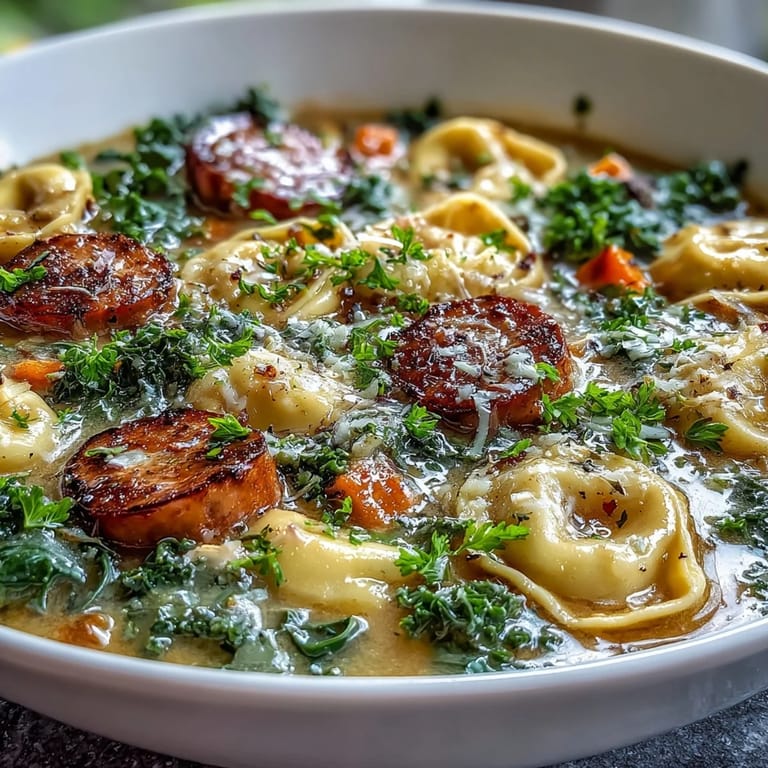
- Stir in your chopped kale and cheese tortellini, keeping the heat at a gentle simmer rather than a rolling boil so the tortellini don't burst and spill their filling. Cook for 8 to 10 minutes, stirring occasionally, until the pasta is tender and the kale has wilted down into soft, dark ribbons.
- Finish with cream and season:
- Reduce heat to low, pour in heavy cream while stirring slowly, and taste once more for salt, pepper, and a pinch of red pepper flakes if you like warmth at the finish. Never let the soup boil after adding cream, or you'll end up with separated, curdled liquid instead of that silky, cohesive texture you're after.
- Serve and garnish:
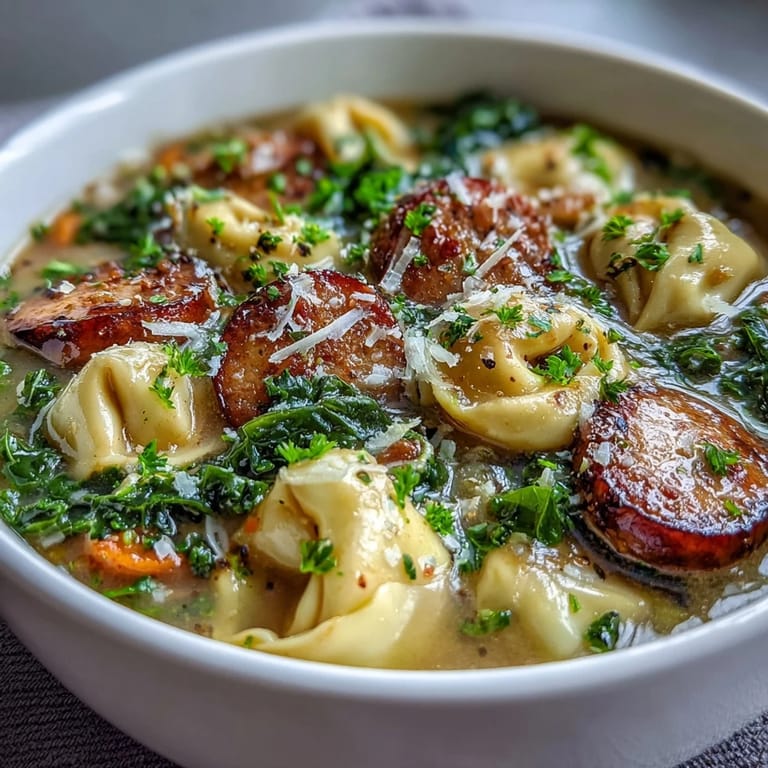
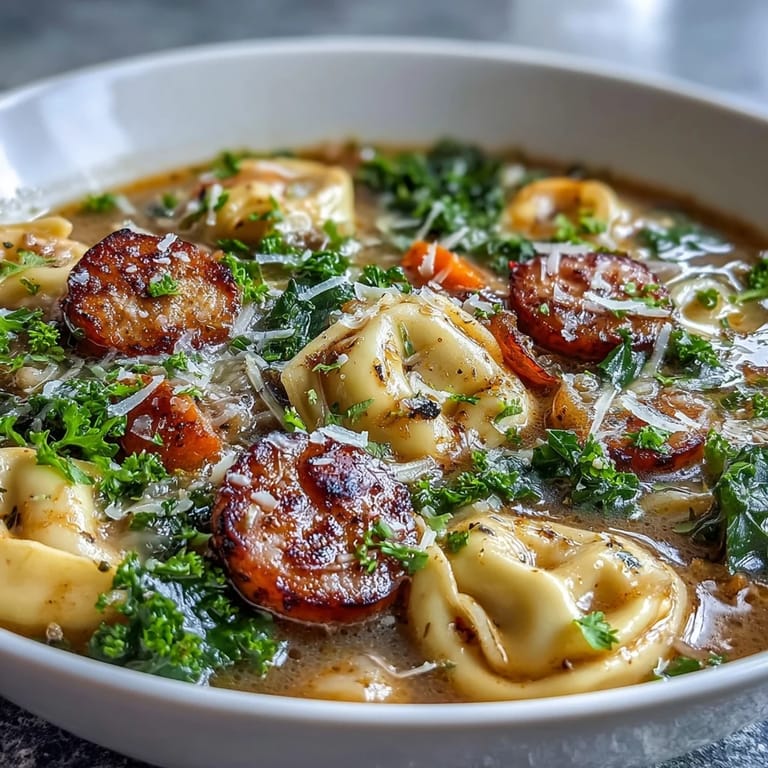
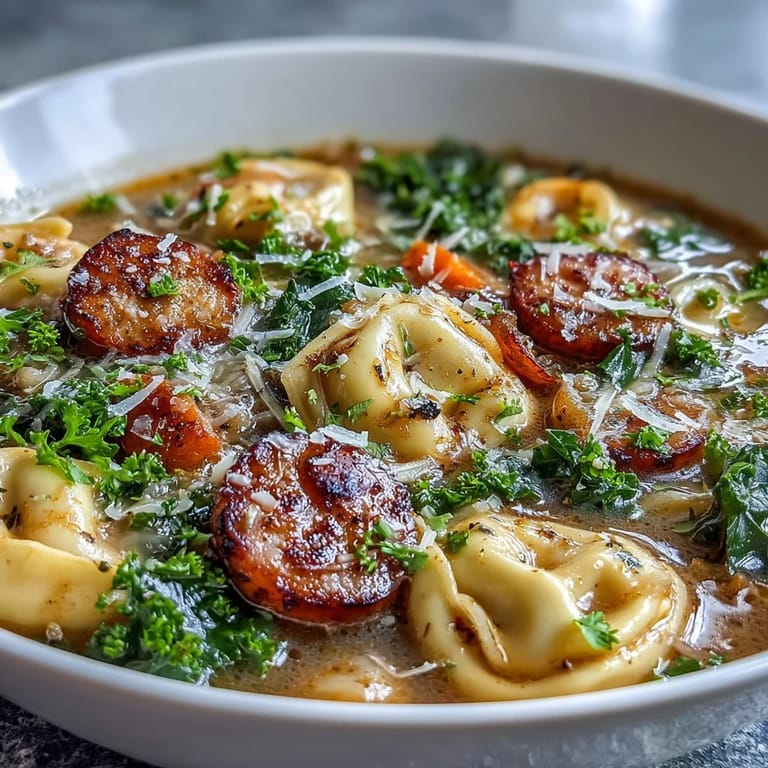
- Ladle into bowls and scatter fresh Parmesan and parsley across the top if you'd like, though honestly the soup is complete without fuss. Serve while steaming, ideally with crusty bread beside the bowl for soaking up every last spoonful.
 Save to Pinterest
  Save to Pinterest
 My neighbor smelled this cooking one evening and appeared at my door holding flowers, asking if she could trade them for a bowl. We ended up eating together at my counter, and she asked for the recipe written down because apparently I talk so fast while cooking that taking mental notes doesn't work. Sometimes food becomes the reason people show up at each other's doors, and this soup has that magic.
Making It Your Own
Substitutions feel less like cheating and more like evolution once you've made this a few times. Turkey sausage works beautifully if chicken isn't your preference, and butternut squash puree brings a deeper, almost earthy sweetness compared to pumpkin's bright nuttiness. I've also seen people use acorn squash puree or even plain roasted butternut squash blended smooth, each creating a slightly different character while keeping the soup's essential warmth intact.
Cream Alternatives and Lighter Versions
Heavy cream is wonderful but not mandatory if you're watching fat or simply don't have it on hand. Half-and-half creates a thinner, still-creamy soup that feels lighter on the stomach, or you could use coconut milk for a subtle sweetness that plays beautifully with nutmeg and thyme. I once made it with cashew cream in a pinch, blended smooth with a splash of the hot broth, and it gave the soup an almost velvety quality that surprised everyone at the table.
Serving and Pairing
This soup holds its own at the center of a meal but becomes even more memorable with the right companions. A hunk of crusty sourdough or focaccia turns it into something you'll dream about later, and a crisp white wine—Sauvignon Blanc or Pinot Grigio work especially well—echoes the soup's creamy richness without competing for attention. I've also found that a simple arugula salad with lemon vinaigrette on the side cleanses the palate between spoonfuls and makes the whole meal feel more intentional.
- Pair with bread that has enough structure to hold up to dunking without immediately falling apart.
- A dry white wine cuts through cream better than red, which will taste flat alongside pumpkin.
- Add a small side salad if you want brightness against the soup's deep, warming flavors.
 Save to Pinterest
  Save to Pinterest
 This soup proves that comfort food doesn't need to be complicated to be memorable. Make it once, and it'll become your own seasonal ritual.
Recipe Help Center
- → Can I use fresh pumpkin instead of canned puree?
Yes, you can use homemade pumpkin puree. Roast a sugar pumpkin, scoop out the flesh, and blend until smooth. You'll need about 2 cups of puree for this soup.
- → What type of chicken sausage works best?
Any fully-cooked chicken sausage works well. Italian-style, apple chicken, or spinach and feta varieties all complement the pumpkin beautifully. Slice into half-inch rounds for even cooking.
- → Can I make this soup ahead of time?
Yes, prepare the soup without the tortellini and cream. Store refrigerated for up to 3 days. When reheating, add the tortellini and cream, simmering until the pasta is tender.
- → How do I prevent the tortellini from getting mushy?
Add tortellini during the last 8-10 minutes of cooking and simmer gently. If making ahead, cook tortellini separately and add when serving to maintain their texture.
- → What can I substitute for heavy cream?
Half-and-half creates a lighter version, while coconut cream works for dairy-free needs. You can also use whole milk thickened with a tablespoon of flour for a similar richness.
- → Is this soup freezer-friendly?
The base freezes well for up to 3 months, but add tortellini and cream fresh when reheating. Kale may darken but remains flavorful. Thaw overnight in the refrigerator before reheating.