 Save to Pinterest
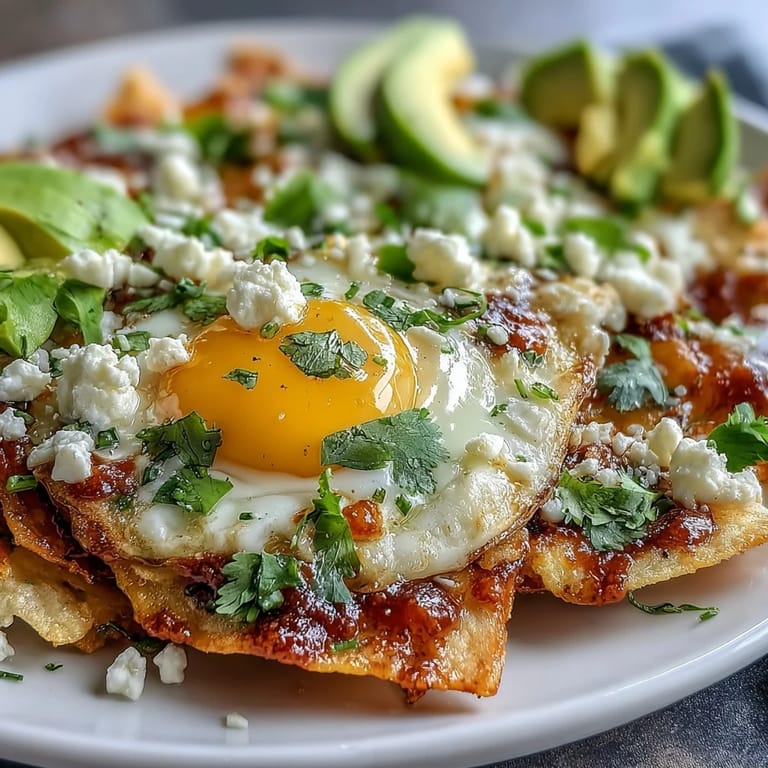
 My neighbor Maria once showed up at my door with a bag of just-fried tortilla chips still warm from her skillet, asking if I wanted to learn how to make chilaquiles the way her abuela taught her. Twenty minutes later, I understood why this dish has survived generations of Mexican families—it's the kind of breakfast that tastes like someone cares about your morning. The contrast of crispy chips softening into the salsa, that golden egg yolk breaking over everything, the cool crunch of fresh cilantro—it all comes together in this beautifully imperfect way that somehow feels both indulgent and simple.
I made this for my roommate on a Sunday morning when she was having a rough week, and she literally sat at the kitchen counter in silence for a minute before looking up at me with this surprised expression. She'd grown up eating similar dishes at her partner's family home but had never thought to make it herself. Watching her fork cut through the runny yolk and drag it across the salsa-softened chips felt like I'd just handed her a small piece of comfort she'd been missing.
Ingredients
- Corn tortillas: Use small ones and cut them into triangles so they fry evenly and give you that perfect ratio of crispy edges to slightly chewy centers.
- Vegetable oil: High heat oil keeps these chips crackling without burning, and you'll use it again for the eggs so don't be shy about it.
- Salsa verde or roja: This is where your chilaquiles live or die—homemade is incredible but honestly a good store-bought salsa does the job beautifully.
- Large eggs: Fresh eggs matter here because you want that yolk to be almost liquid, so skip the carton if you can.
- Queso fresco: If you can't find it, feta works but crumbles differently—the salty tang is what you're after anyway.
- Fresh cilantro: This isn't a garnish you skip; it's the final note that makes everything sing.
- Avocado: Slice it just before serving or it'll turn that sad gray color that makes you wonder what went wrong.
- Sour cream or Mexican crema: The coolness against the heat is essential, so don't skip it even if it seems like overkill.
Tired of Takeout? 🥡
Get 10 meals you can make faster than delivery arrives. Seriously.
One email. No spam. Unsubscribe anytime.
Instructions
- Heat your oil until it's almost smoking:
- You'll know it's ready when a tortilla triangle sizzles immediately and loudly when it hits the pan. This is non-negotiable if you want crispy chips instead of sad, oil-soaked ones.
- Fry the tortilla triangles in batches:
- Don't crowd the pan or they'll steam instead of fry, and watch them like a hawk because the line between golden and burnt is honestly about 30 seconds. Drain them on paper towels and hit them with a pinch of salt while they're still hot.
- Create your salsa base:
- Leave about a tablespoon of that seasoned oil in the skillet, pour in your salsa, and let it bubble gently for a minute so the flavors deepen. You're not making soup here—you want the salsa to cling to the chips, not drown them.
- Toss the chips gently but thoroughly:
- This is where your instinct matters more than timing; you're looking for the chips to absorb some salsa while still having a little structural integrity. A minute or two, watching as they soften slightly around the edges but stay mostly crispy in the middle, is the sweet spot.
- Fry your eggs separately:
- Sunny side up is traditional, but honestly whatever makes your yolk runny and your whites set is the goal. Season them with salt and pepper while they're still in the pan so the seasoning sticks.
- Build your bowls:
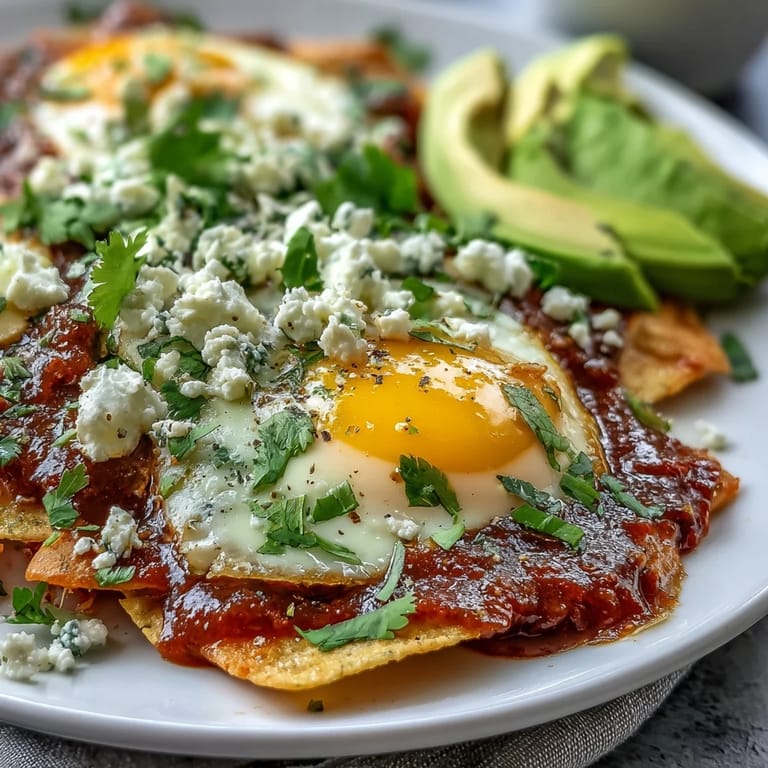
- Divide the warm, salsa-coated chips between two plates, top each with an egg, then let your hands go wild with the toppings. The order doesn't matter as much as the fact that each bite has everything.
 Save to Pinterest
 There's a moment when I make this where the smell of frying tortillas and warming salsa fills the whole kitchen, and it's like a signal to my brain that something good is happening. It's the kind of breakfast that turns an ordinary Tuesday morning into something worth remembering.
The Art of the Perfect Chip Texture
I've made these maybe fifty times now, and the one thing I keep learning is that texture is everything in chilaquiles. Some people like their chips almost completely softened into the salsa, but I've always preferred catching them at that moment where the outside has absorbed enough salsa to be flavorful while the center still has some snap. The way to achieve this is to resist the urge to add more salsa than you think you need; a generous cup coats the chips beautifully without turning them into a mushy mess. Watch your chips during that final minute of cooking—you'll see them transform from crispy to tender, and you want to pull them off the heat just before they lose all their structural integrity.
Why Fresh Toppings Make All the Difference
One afternoon, I was in a rush and used pre-sliced red onion from a container that had been sitting in my fridge, and the whole dish felt flat and tired in a way I couldn't quite name. The next time I made it, I sliced a fresh onion right before serving, and suddenly everything tasted brighter and more alive. This is a simple breakfast, and that means every component matters—the cilantro should be cut just before plating, the avocado should be sliced from a ripe fruit moments before it hits your plate, and the crema should be drizzled with intention rather than stirred in haphazardly. These ingredients aren't just decoration; they're the supporting cast that makes the whole production work.
Making It Your Own (Because Every Kitchen Is Different)
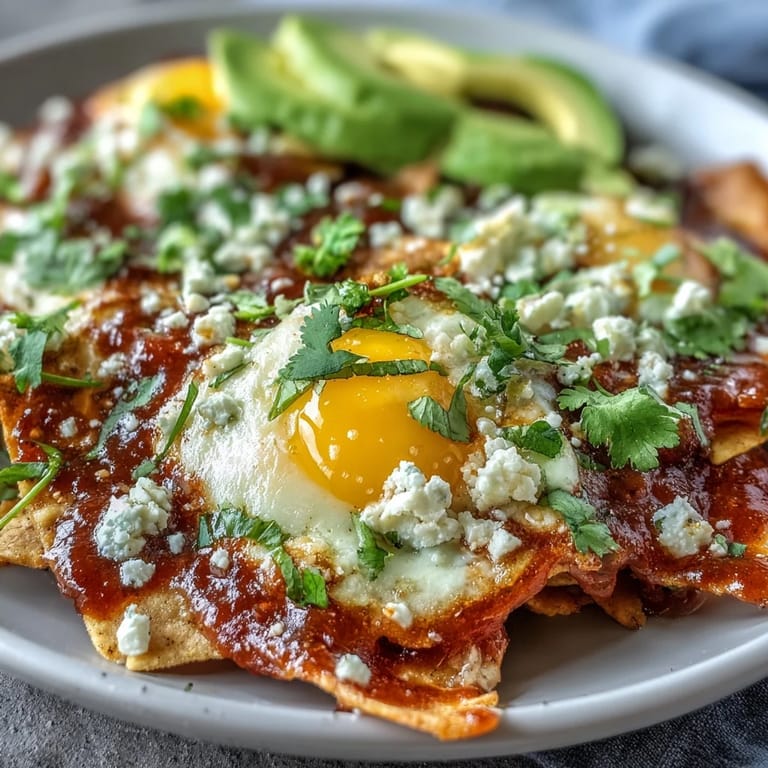
The beautiful thing about chilaquiles is that it's genuinely flexible while still being recognizable, which means you can build it around whatever you have in your kitchen without losing the spirit of the dish. I've made versions with leftover rotisserie chicken shredded over the top, versions with crispy chorizo mixed into the chips, and even a version where I added black beans because that's what needed using. The egg and the salsa-coated chips are the non-negotiables, but everything else is an invitation to adapt and play.
- Try adding crispy bacon or chorizo if you want the dish to feel more substantial and savory.
- A drizzle of hot sauce over the top adds complexity if your salsa is mild or store-bought.
- Serve immediately with a cold glass of fresh orange juice or strong coffee because that's how the morning should taste.
 Save to Pinterest
 Chilaquiles remind me that breakfast doesn't have to be complicated to feel like care, and that some of the most memorable meals are the simple ones we make for people we actually want to feed. Make this when you want to slow down a morning or surprise someone with something that tastes a little bit like home.
Recipe Help Center
- → What's the difference between chilaquiles verdes and rojos?
Chilaquiles verdes use green salsa made from tomatillos, while chilaquiles rojos use red salsa made from tomatoes and dried chiles. Both deliver authentic flavor—choose based on your preference for tangy green or rich red sauce.
- → Can I make chilaquiles with store-bought chips?
Absolutely. High-quality store-bought tortilla chips work well for a quicker version. Look for thick, sturdy chips that won't become soggy when tossed in salsa. Skip thin restaurant-style chips as they break down too quickly.
- → How do I prevent the tortilla chips from getting soggy?
Fry tortillas until thoroughly crispy, drain well, and toss in salsa just before serving. Cook the chips in sauce for only 1-2 minutes to coat without softening completely. Serve immediately after adding toppings for the best texture.
- → What can I use instead of queso fresco?
Feta cheese works beautifully as a substitute with similar crumbly texture and salty tang. Cotija, panela, or even mild goat cheese make excellent alternatives. Shredded Monterey Jack or cheddar melt differently but still taste great.
- → Are chilaquiles traditionally served for breakfast or lunch?
Chilaquiles are primarily a breakfast dish in Mexico, often served alongside eggs, beans, and warm tortillas. However, they're equally popular for brunch or lunch. Many families also enjoy them as a comforting dinner option.