 Save to Pinterest
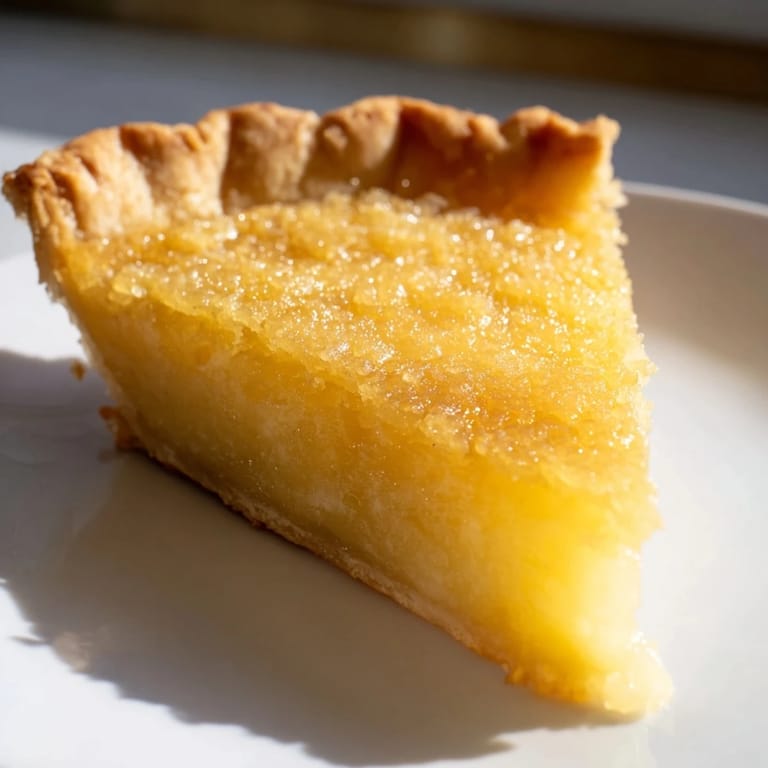
 My grandmother had this chess pie recipe written in faded pencil on an index card, tucked between her favorite cookbooks. I made it once on a whim during a humid summer afternoon when nothing felt quite right, and the buttery smell that filled the kitchen was like stepping into a warm memory I didn't even know I had. There's something almost magical about how simple ingredients—sugar, butter, eggs—transform into this silky custard with that signature golden top. It's the kind of dessert that doesn't announce itself loudly; it just quietly becomes everyone's favorite thing on the table.
I brought this pie to a church potluck once, nervous because everyone there had strong opinions about their desserts. A woman named Ruth who'd grown up in Mississippi took one bite and closed her eyes like she was remembering something precious. She asked for my recipe, and that's when I knew it wasn't just good—it was authentic in a way that mattered to people. Watching someone connect with food like that changes how you think about cooking.
Ingredients
- 1 unbaked 9-inch pie crust: Use homemade if you have time and patience, but honestly, a quality store-bought crust holds its own beautifully here—no shame in that shortcut.
- 1 1/2 cups granulated sugar: This is what creates that distinctive sweet custard base that makes chess pie chess pie.
- 1/2 cup unsalted butter, melted and cooled: Cooling it slightly prevents the eggs from scrambling when you mix everything together.
- 4 large eggs: Room temperature eggs blend more smoothly and create a silkier filling.
- 1 tablespoon cornmeal: This subtle ingredient adds a gentle texture and slight grittiness that balances the sweetness.
- 1 tablespoon all-purpose flour: Just enough structure to keep the filling from being too loose.
- 1/4 teaspoon salt: It sounds small, but salt wakes up all the other flavors and prevents the filling from tasting one-dimensional.
- 1/4 cup whole milk: Adds richness and helps achieve that custardy consistency.
- 1 teaspoon vanilla extract: Choose real vanilla if you can; it makes a noticeable difference in the final flavor.
- 1 tablespoon white vinegar (optional): A trick I learned late—it adds a subtle brightness that keeps the sweetness from feeling cloying.
Tired of Takeout? 🥡
Get 10 meals you can make faster than delivery arrives. Seriously.
One email. No spam. Unsubscribe anytime.
Instructions
- Get your oven ready:
- Preheat to 350°F (175°C) and let it come to temperature while you prep everything else. A fully preheated oven makes all the difference in getting that golden-brown top.
- Prepare the crust:
- Place the unbaked pie crust in a 9-inch pie dish and crimp the edges however you like—decorative, casual, or perfectly neat, it's all about what makes you happy. Let it sit while you make the filling so it stays cold.
- Mix the dry and wet elements:
- In a large bowl, whisk together the sugar, melted butter, eggs, cornmeal, flour, and salt until the mixture is completely smooth with no lumps. This takes maybe two or three minutes of steady whisking, and you'll feel when it's right—suddenly silky and cohesive.
- Add the final flavors:
- Pour in the milk, vanilla extract, and vinegar (if using) and whisk until everything is fully combined. The mixture should look like a pourable custard now, glossy and consistent.
- Fill and bake:
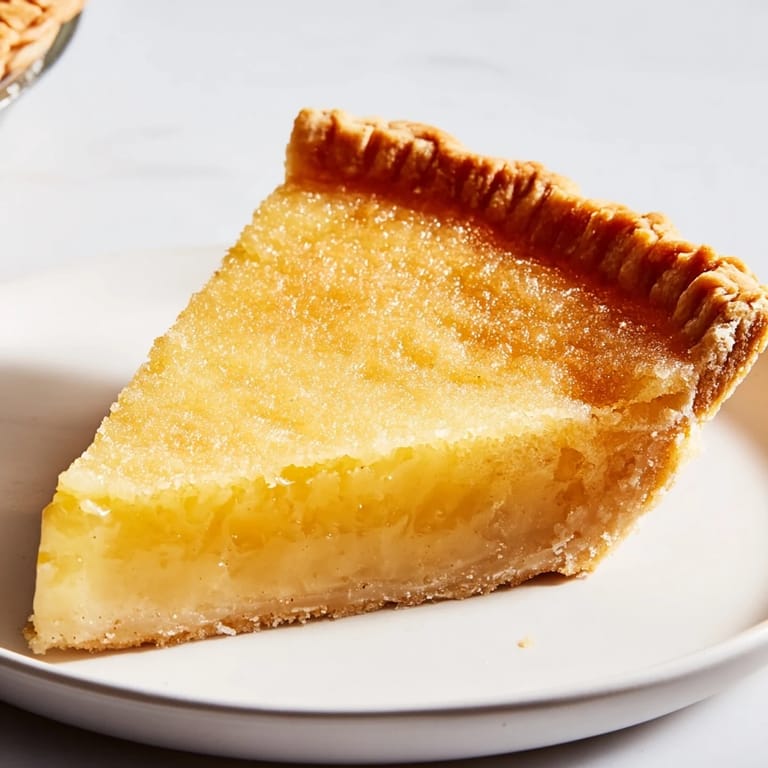
- Pour the filling gently into the pie crust and slide it into the oven. Bake for 45–50 minutes until the center is just barely set (it should jiggle slightly in the very middle) and the top is a beautiful golden brown. The pie will puff up a bit as it bakes, then settle down as it cools.
- Cool with patience:
- Remove from the oven and let it cool completely on a wire rack—this usually takes a couple of hours. Don't skip this step; the filling continues to set as it cools, and you'll get the perfect texture.
 Save to Pinterest
 I remember my teenager, who usually picks at desserts, eating two slices of this and not saying much, which is how I knew it was special. Sometimes food does more than taste good; it creates a moment where everyone's just present at the table together, and that's what this pie does.
The Magic of Simple Desserts
There's wisdom in recipes that don't require fancy techniques or hard-to-find ingredients. Chess pie belongs to that quiet tradition of Southern baking where a handful of pantry staples become something that feels luxurious. The custard filling is actually just whisked together in one bowl—no tempering, no double boiler, no fussing. It teaches you that sometimes the simplest approach is the most elegant.
When to Serve This Pie
This dessert feels equally at home at a weeknight dinner as it does at a formal gathering. I've made it for church potlucks, holiday tables, and quiet afternoons when I needed something to do with my hands. It travels well too, holding up beautifully in a pie box, which makes it perfect for bringing somewhere or gifting to someone who appreciates old-fashioned goodness.
Variations and Personal Touches
While chess pie is beautiful in its simplicity, I've learned that gentle variations respect the original while making it your own. A pinch of nutmeg adds warmth, lemon zest brings brightness, and a tiny splash of bourbon in place of a tablespoon of milk adds sophistication. Serve it with fresh berries, whipped cream, a scoop of vanilla ice cream, or just a fork and a quiet moment—it's good every way.
- Nutmeg or cinnamon added to the filling creates an almost pumpkin-pie feeling that's subtle and lovely.
- Fresh berries on top or alongside offer a tart contrast to the sweetness and make it feel special.
- A dollop of whipped cream is never wrong and lasts better than ice cream if you have leftovers.
 Save to Pinterest
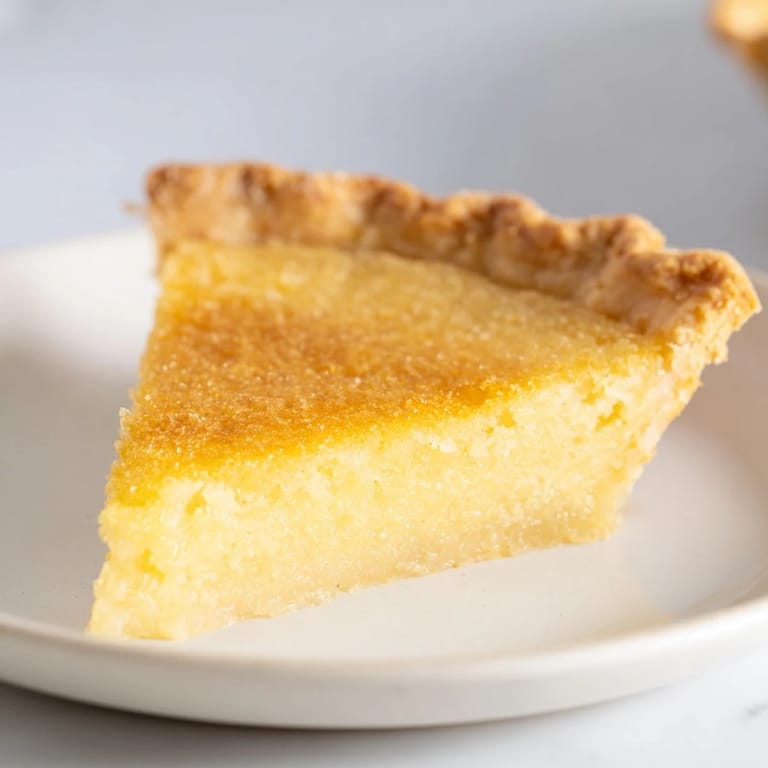
 Chess pie is proof that the best recipes don't need to be complicated to be beloved. Make it once and you'll understand why it's stuck around for generations.
Recipe Help Center
- → What makes the filling creamy and smooth?
The combination of eggs, melted butter, milk, and sugar, whisked thoroughly, creates a silky custard texture when baked.
- → Why is cornmeal used in the filling?
Cornmeal adds a subtle grainy texture that balances the smooth custard and helps slightly thicken the filling.
- → Can vinegar be omitted from the filling?
Yes, vinegar is optional and adds a slight tang that brightens the custard’s flavor, but it can be left out if preferred.
- → What is the best crust to use for this pie?
A 9-inch unbaked pie crust, either homemade or store-bought, works well to hold the custard filling firmly.
- → How do I know when the pie is done baking?
The top should be golden brown and the center just set but still slightly jiggly as it will firm up while cooling.
- → What are good serving suggestions?
Serve chilled or at room temperature with fresh berries or a dollop of whipped cream for added richness.