 Save to Pinterest
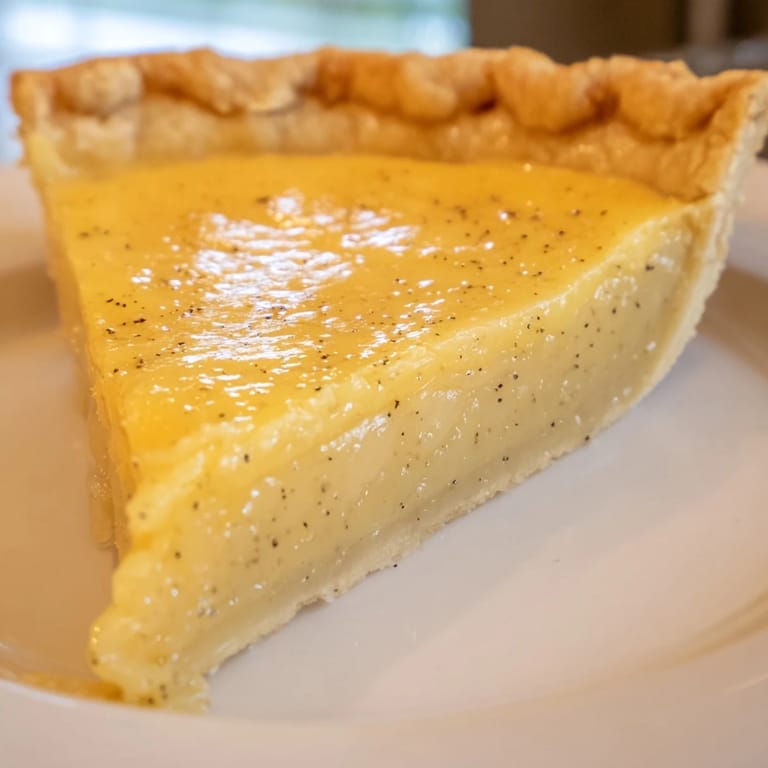
 My grandmother kept a worn recipe card in a wooden box, and buttermilk pie was the one I'd find her reaching for on lazy Sunday afternoons. The first time I made it myself, I was surprised by how simple it looked on paper—just a few pantry staples whisked together—yet somehow it transformed into something elegant and rich. That tangy-sweet custard that forms its own little crust while baking felt like kitchen magic, the kind that makes you want to call someone and say, "You have to taste this." I've been making it ever since, and every time the aroma fills my kitchen, it feels like coming home.
I remember bringing this pie to a church potluck years ago, nervous it wouldn't hold up against everyone else's elaborate desserts. A woman I'd never met came back for thirds and asked for the recipe right there in the fellowship hall, her fork still in hand. That moment taught me that sometimes the simplest things are exactly what people are craving—no pretense, just warmth and sweetness.
Ingredients
- Unbaked 9-inch pie crust: This is your canvas—I've used both homemade and store-bought, and both work beautifully, so don't stress about that part.
- Granulated sugar: The sweetness backbone; don't skip or swap this out or the balance goes sideways.
- All-purpose flour: Just a few tablespoons to help set the custard gently without making it starchy.
- Unsalted butter, melted and cooled: Let it cool slightly or it'll cook your eggs—I learned that the messy way.
- Large eggs: Room temperature works best; they whisk into the filling more smoothly.
- Buttermilk: The soul of this pie; that slight tang is what makes it sing.
- Lemon juice: A tablespoon adds brightness, but you can push it to 2 if you want more of a tang.
- Vanilla extract: A whisper of vanilla rounds out all the flavors.
- Ground nutmeg: Just a pinch—enough to notice, not enough to overpower.
- Salt: Never skip this; it makes everything taste more like itself.
Tired of Takeout? 🥡
Get 10 meals you can make faster than delivery arrives. Seriously.
One email. No spam. Unsubscribe anytime.
Instructions
- Heat your oven and prepare:
- Preheat to 350°F and settle your pie crust into the dish, crimping the edges however feels right to you. This little ritual of preparing your vessel makes a difference in how present you are while baking.
- Build the dry foundation:
- Whisk sugar and flour together in a large bowl until combined. You're just getting them acquainted here—no lumps needed.
- Bring the butter in:
- Stir the melted butter into the sugar mixture until it looks like wet sand. Make sure your butter has cooled enough that it won't scramble anything.
- Add eggs with care:
- Whisk in eggs one at a time, really whisking between each addition so you get a smooth, lump-free mixture. This step matters more than you'd think.
- Bring it all together:
- Pour in the buttermilk, lemon juice, vanilla, nutmeg, and salt, stirring until everything is fully mixed and silky. You want no streaks of flour hiding at the bottom.
- Pour and bake:
- Carefully pour the filling into your crust—it'll look thin and loose, but trust it. Bake for 40–50 minutes until the center is just set (a slight jiggle in the very middle is fine) and the top is golden.
- Cool with patience:
- Let it sit on a wire rack until completely cool. I know it's tempting to cut into it warm, but waiting lets the custard finish setting up properly.
 Save to Pinterest
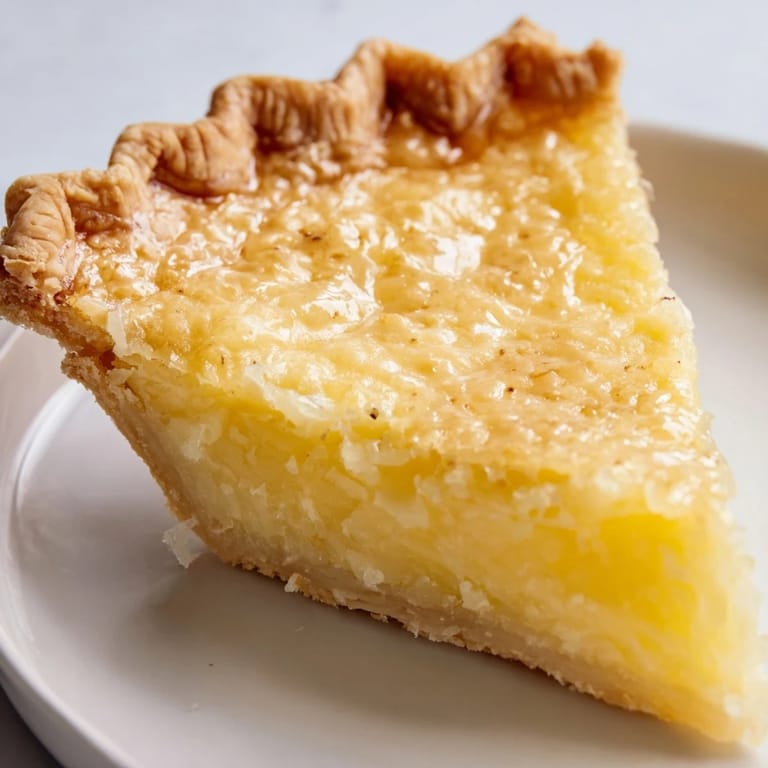
 There's a specific moment when this pie comes out of the oven and the kitchen fills with that golden, nutmeg-tinged aroma—it stops conversations and draws people in. My kids now ask for this pie more than cake on their birthdays, which says everything.
Why This Pie Works
Buttermilk pie works because it doesn't try to be something it's not; it's honest Southern dessert that sits somewhere between custard and chess pie, with its own quiet confidence. The buttermilk keeps the filling tender and prevents it from becoming too rich, while the nutmeg and lemon add just enough complexity to make you pause between bites and notice the flavors. I've watched this recipe outlast food trends because it solves something real—it's elegant enough for company but easy enough to make on a Tuesday.
Serving and Storage
Serve this at room temperature with nothing but a fork, or top it with fresh whipped cream and a small scattering of berries if you want to dress it up. Leftover pie keeps beautifully in the refrigerator for up to three days, and honestly, cold slices straight from the fridge are sometimes the best version.
Making It Your Own
Once you nail the basic formula, this pie is yours to play with—some people add a splash of bourbon, others push the lemon juice toward that 2-tablespoon mark for more tang. I've seen versions with a hint of almond extract or a touch more nutmeg on top for aroma. The beauty is that the structure is sturdy enough to handle your experiments.
- For extra tang, add up to 2 tablespoons lemon juice instead of 1 if you love bright flavors.
- Sprinkle a little extra nutmeg on top before baking for a subtle aroma that fills the kitchen.
- Let any leftover pie chill in the fridge—it's somehow even better the next day.
 Save to Pinterest
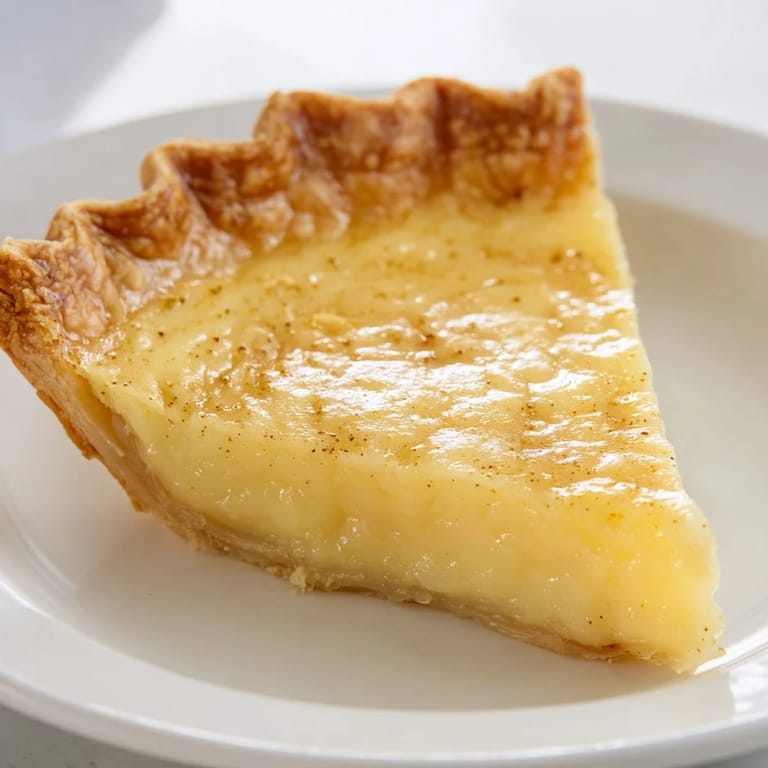
 This pie has a way of becoming tradition once you make it—it becomes the thing people request, the dessert that shows up at holidays and gets passed around with quiet approval. That's the real magic here.
Recipe Help Center
- → What gives the pie its tangy flavor?
The tanginess comes from buttermilk and a touch of lemon juice, which brighten the custard filling.
- → Can I use a store-bought crust for this pie?
Yes, a pre-made 9-inch pie crust works well and saves time without compromising flavor.
- → How do I know when the filling is set?
The center should be firm and only slightly jiggly when gently shaken, with a lightly golden top.
- → What are some good serving suggestions?
Serve at room temperature or chilled; garnish with whipped cream or fresh berries for extra appeal.
- → Can I adjust the sweetness or spice levels?
Yes, adding more lemon juice increases tang, and a sprinkle of nutmeg on top enhances aroma and flavor.