 Save to Pinterest
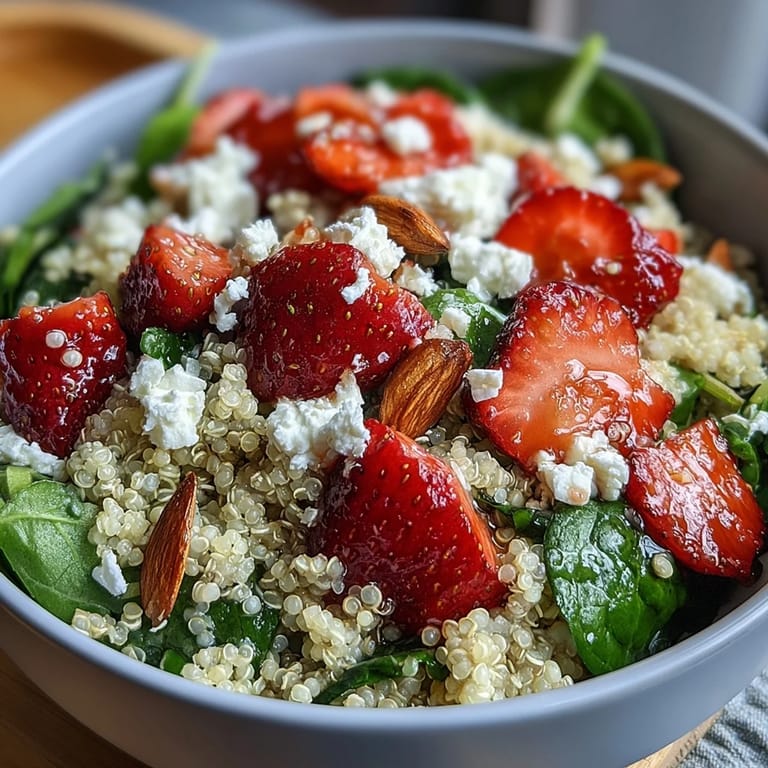
 Last spring, I was standing in my kitchen on a Tuesday afternoon when my neighbor stopped by with a basket of strawberries from her garden, and something just clicked. The berries were so perfectly ripe that I knew they needed to be the star of something special, not buried in a smoothie. I started pulling ingredients from my pantry—quinoa, feta, a bottle of balsamic that had been waiting for the right moment—and this salad practically assembled itself. It became the dish I make whenever I need to feel like summer is already here.
I made this for a potluck once, genuinely worried it wouldn't be impressive enough next to everyone else's casseroles and pasta dishes. But people kept coming back to it, and I overheard someone asking if quinoa was really what made it taste so good. That's when I realized the magic wasn't complexity—it was letting each ingredient do what it does best without fussing over it.
Ingredients
- Quinoa, 1 cup uncooked: Rinsing it first removes a bitter coating you didn't know was there, and it makes all the difference in how clean and light the salad feels.
- Water, 2 cups: Use filtered water if you have it—it keeps the quinoa from tasting mineral-y or flat.
- Fresh strawberries, 1½ cups hulled and sliced: Choose berries that smell sweet when you bring your nose close; that's your sign they're at their peak, not picked too early.
- Baby spinach, 2 cups roughly chopped: Raw spinach wilts slightly when dressed, which is exactly what you want here—it becomes silky and tender without losing its bright green color.
- Red onion, ¼ small one thinly sliced: The thin slices let the sharpness distribute evenly instead of shocking your palate with big bites.
- Cucumber, ½ cup diced: Leave the skin on for color and a little texture, unless your cucumber is waxy or tough-looking.
- Feta cheese, ½ cup crumbled: Buy a block and crumble it yourself if you can—the texture is better than pre-crumbled, and you'll use less because it doesn't pack down as much.
- Sliced almonds, ¼ cup toasted (optional): Toast them yourself in a dry skillet for two minutes until they smell toasty; it wakes up their flavor in a way that changes everything.
- Extra-virgin olive oil, 3 tablespoons: This is where you don't skimp—a good olive oil is half the dressing.
- Balsamic vinegar, 2 tablespoons: Look for one that's thick and glossy, not thin and sharp; it should coat a spoon.
- Honey or maple syrup, 1 teaspoon: This rounds out the vinegar's edge and helps the dressing emulsify, so don't leave it out even if you think it's unnecessary.
- Dijon mustard, 1 teaspoon: It acts like a tiny emulsifier and adds a whisper of warmth that you can't quite identify but makes you want another bite.
- Salt and freshly ground black pepper: Taste as you go—the feta is salty, so you might need less than you think.
Tired of Takeout? 🥡
Get 10 meals you can make faster than delivery arrives. Seriously.
One email. No spam. Unsubscribe anytime.
Instructions
- Rinse and cook the quinoa:
- Hold the quinoa under cold running water in a fine mesh strainer, swishing it around with your fingers for about 30 seconds—you'll feel it get slightly slippery, which means the coating is washing away. Bring the water and quinoa to a boil in a medium saucepan, then drop the heat low, cover it, and let it bubble quietly for 12 to 15 minutes until the water is completely absorbed and you can see the little spirals of the cooked grain.
- Make the dressing while everything cools:
- In a small bowl, pour in the olive oil first, then add the vinegar, honey, and mustard, and whisk hard for a full minute until it looks creamy and cohesive. This emulsification is what keeps the dressing from separating back into oil and vinegar puddles on your plate.
- Assemble with intention:
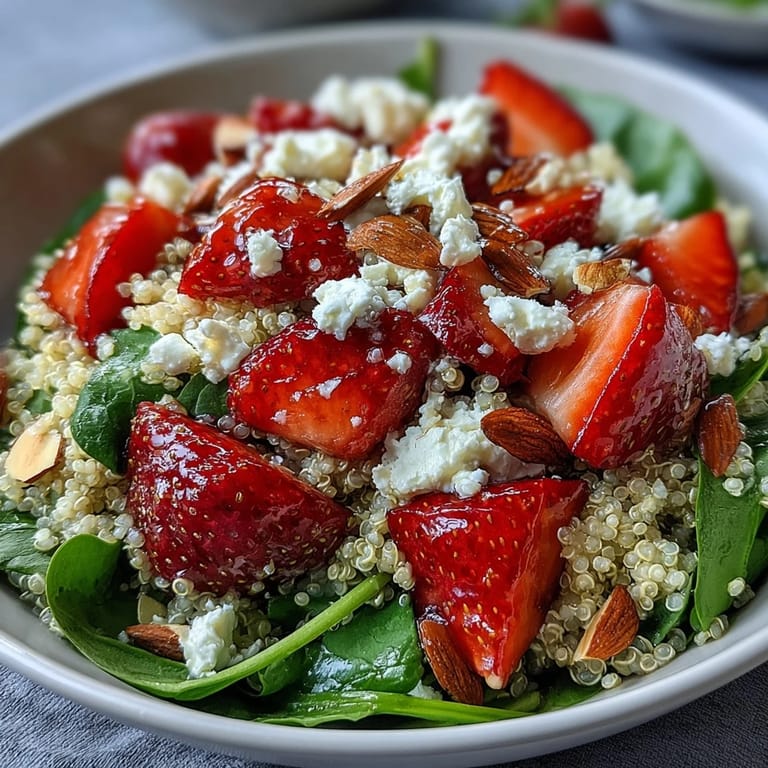
- Once the quinoa has cooled to room temperature, pile it into your salad bowl with the spinach, strawberries, red onion, and cucumber, then scatter the feta over top. Drizzle the dressing over everything gently, as if you're being deliberate about each area getting a little attention.
- Toss and finish:
- Use two forks or salad servers to toss the whole thing together with a light hand—you want everything mingled but not bruised or broken up. Toast your almonds right before serving and scatter them on top so they stay crispy and don't get soggy from the dressing.
 Save to Pinterest
 My eight-year-old nephew tried this once while we were setting the table, and he asked why strawberries and cheese were friends. I didn't have a good answer except that sometimes things just work better together, and he seemed satisfied with that. Watching him eat it with genuine curiosity instead of skepticism made me realize food doesn't always need an explanation to be worth making.
The Strawberry-Feta Partnership
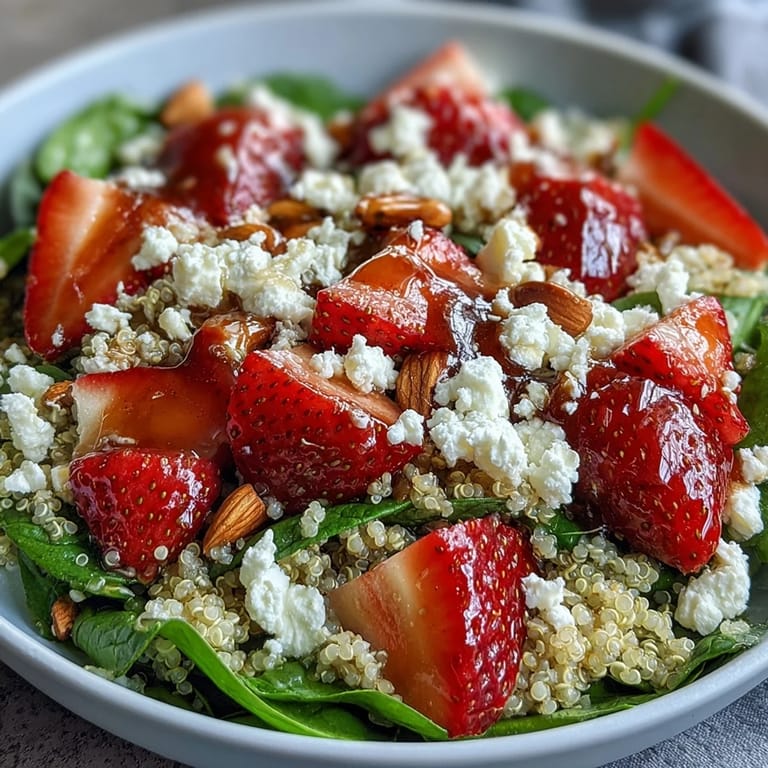
The sweetness of fresh strawberries and the salt and creaminess of feta create a balance that your mouth recognizes immediately, like a flavor chord that was always supposed to be played together. I've learned that this kind of contrast—sweet with salty, soft with tangy—is what keeps salads interesting enough to eat without getting bored halfway through. It's the same reason people have been eating fruit with cheese for centuries; our taste buds just know it works.
Why Quinoa Instead of Lettuce
Quinoa holds its texture in a way that regular greens don't, so this salad can actually sit in the fridge for a day without turning into mush. The grain gives you protein and substance too, making this feel like a complete meal rather than a side dish that leaves you hungry an hour later. When I switched from making this with just spinach and greens to adding quinoa, it became something I could eat alone for lunch without needing anything else.
Variations and Flexibility
This salad is honestly forgiving and adaptable, which is one reason I keep coming back to it through different seasons and pantry situations. I've made it with arugula instead of spinach when I had that on hand, and with chickpeas instead of almonds when I wanted something heavier and protein-forward. It's also naturally vegetarian and gluten-free without any substitutions, so it works for almost anyone at the table.
- Add grilled chicken or hard-boiled eggs if you want to make this heartier and more of a full meal.
- Swap the almonds for toasted pumpkin seeds if you have nut allergies or just want something different.
- Use whatever berries you have—raspberries work beautifully here, or even a mix if strawberries aren't in season.
 Save to Pinterest
 This is the kind of salad that reminds you why fresh, simple food is often the most satisfying. Make it when you want to feel like you're eating something that's good for you without any sense of deprivation.
Recipe Help Center
- → How do you cook quinoa properly?
Rinse quinoa to remove bitterness, then simmer in water for 12-15 minutes until absorbed. Let it rest covered before fluffing with a fork.
- → Can I substitute feta cheese?
Yes, vegan feta alternatives can be used or omitted for dairy-free options without compromising the flavor balance.
- → What dressing ingredients complement the salad?
A combination of extra-virgin olive oil, balsamic vinegar, honey or maple syrup, Dijon mustard, salt, and pepper creates a tangy, slightly sweet dressing that enhances the ingredients.
- → Are toasted almonds necessary?
They add a pleasant crunch and nutty flavor but are optional and can be replaced with pumpkin seeds for nut allergies.
- → How can I add more protein to this dish?
Incorporate grilled chicken, chickpeas, or other legumes to boost protein content while maintaining freshness.