 Save to Pinterest
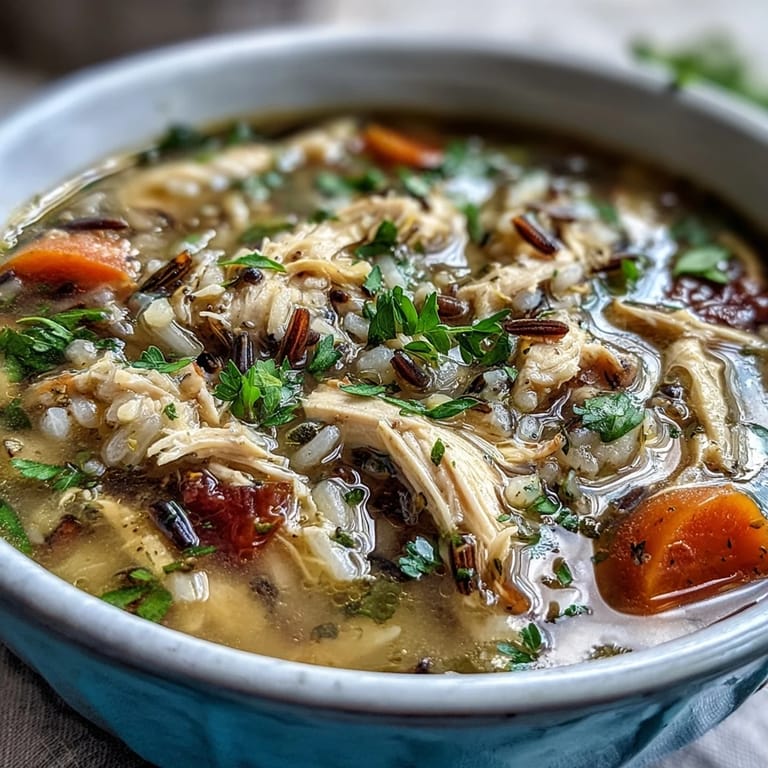
 My neighbor showed up at my door one November afternoon with a container of homemade wild rice soup, still steaming, and I realized right then that this was the kind of dish that builds friendships. The nutty aroma alone had me hooked, and when I tasted it—tender chicken, perfectly chewy rice, carrots sweet enough to need no sugar—I knew I had to learn how to make it. Now it's my go-to when someone needs comfort in a bowl, or when the weather turns and I want something that feels like a warm hug from the inside.
I made this for my book club one winter, and it became the thing people asked about instead of discussing the actual novel. Someone brought it up again six months later, which told me everything I needed to know about how memorable a really good bowl of soup can be.
Ingredients
- Cooked chicken breast, shredded or diced (2 cups): Use rotisserie chicken if you're short on time—it shreds easily and adds incredible flavor without extra work.
- Wild rice, uncooked and rinsed (3/4 cup): Rinsing removes any debris and helps it cook more evenly, giving you that perfect tender-but-chewy texture.
- Carrots, peeled and sliced (3 medium): The natural sweetness balances the earthiness of the rice, and slicing them thinner means they soften faster.
- Celery stalks, diced (2): This is the quiet backbone of the flavor—don't skip it even though it seems subtle.
- Yellow onion, diced (1 small): Dicing it small helps it practically dissolve into the broth, creating a deeper, richer base.
- Garlic, minced (2 cloves): Fresh garlic makes all the difference; add it after the softer vegetables so it doesn't burn and turn bitter.
- Low-sodium chicken broth (7 cups): Low-sodium lets you control the salt level and prevents the soup from tasting oversalted by the time it's done cooking.
- Bay leaf (1): This adds a subtle herbal note that you'll taste but never quite identify—that's the sign it's working perfectly.
- Dried thyme (1 teaspoon): Thyme and wild rice are best friends; it brings out the nuttiness without overpowering anything else.
- Dried rosemary (1/2 teaspoon): Use just enough to add depth—too much and it tastes like you're cooking with pine needles.
- Salt and freshly ground black pepper, to taste: Always add these at the end so you can adjust to your preference without over-seasoning.
- Fresh parsley, chopped (2 tablespoons for garnish): A handful of bright green at the end lifts the whole dish and adds freshness that balances the earthiness.
- Olive oil (2 tablespoons): Good olive oil matters here since it's the foundation flavor for your vegetables.
Tired of Takeout? 🥡
Get 10 meals you can make faster than delivery arrives. Seriously.
One email. No spam. Unsubscribe anytime.
Instructions
- Warm your base and soften the vegetables:
- Heat olive oil in a large pot over medium heat, then add onion, carrots, and celery. Sauté for 5–6 minutes, stirring occasionally, until the vegetables start to soften and the kitchen fills with that perfect savory smell.
- Bloom the garlic:
- Stir in minced garlic and cook for about 1 minute—you'll know it's ready when it's fragrant and just barely golden around the edges.
- Build the soup:
- Add wild rice, chicken broth, bay leaf, thyme, and rosemary to the pot. Bring it to a boil, then turn the heat down to low, cover it, and let it simmer for 40–45 minutes until the rice is tender but still has a slight chew to it.
- Bring the chicken in:
- Add your cooked chicken to the pot and let it simmer for another 5–8 minutes so it heats through and absorbs some of the broth's flavor.
- Season and finish:
- Remove the bay leaf, then taste and add salt and pepper until it's exactly how you like it. Ladle into bowls and finish with a sprinkle of fresh parsley.
 Save to Pinterest
 There's something about serving a bowl of this soup that makes people slow down, sit for a minute, and actually talk to each other instead of eating while checking their phones. That's when I know a recipe is worth keeping.
The Secret Behind Perfect Wild Rice
Wild rice has a reputation for being finicky, but honestly it's just patient. The key is making sure you rinse it first—this removes dust and helps it cook more evenly so you don't end up with some grains perfectly tender and others still hard. Once it's in the pot with enough liquid, just let it do its thing without stirring constantly. It'll tell you when it's ready by opening up slightly at the end, and that's when you know you've nailed it.
Why This Soup Gets Better With Time
Day-old soup tastes richer and more complex because the flavors have had time to meld and deepen. The rice absorbs more broth, making each spoonful more flavorful, and the herbs have settled in completely. If you're meal prepping, this is actually one of the rare soups that improves in the refrigerator rather than declining.
Making It Your Own
This recipe is forgiving and invites experimentation without losing what makes it special. A splash of heavy cream at the end transforms it into something richer and more luxurious, or you can leave it as is for something lighter. Some people add a handful of fresh spinach at the very end, which wilts right into the warmth and adds color without changing the essential character of the dish.
- For creamier texture, stir in 1/2 cup heavy cream or whole milk in the final minute of cooking.
- Brown rice or farro can replace wild rice if that's what you have on hand—just adjust cooking time accordingly.
- Serve alongside crusty bread or a simple green salad to round out the meal.
 Save to Pinterest
 This soup has a way of showing up in your kitchen on the days when you need it most, and somehow it always feels like the right choice. Make it once and you'll find yourself returning to it again and again.
Recipe Help Center
- → What type of rice is best for this dish?
Wild rice offers a nutty texture and flavor that complements the tender chicken and vegetables, but brown rice can be used as a substitute with adjusted cooking times.
- → Can I prepare this in advance?
Yes, this dish can be made ahead and reheated gently; flavors often deepen after resting overnight in the refrigerator.
- → How do I achieve a creamier texture?
Stir in half a cup of heavy cream or whole milk at the end of cooking for a richer, creamier broth.
- → What herbs enhance the flavor best?
Dried thyme, rosemary, and a bay leaf provide earthy, aromatic notes that elevate the overall depth of the dish.
- → How should leftovers be stored?
Store leftovers in an airtight container in the refrigerator for up to 3 days; reheat gently on the stove or microwave.