 Save to Pinterest
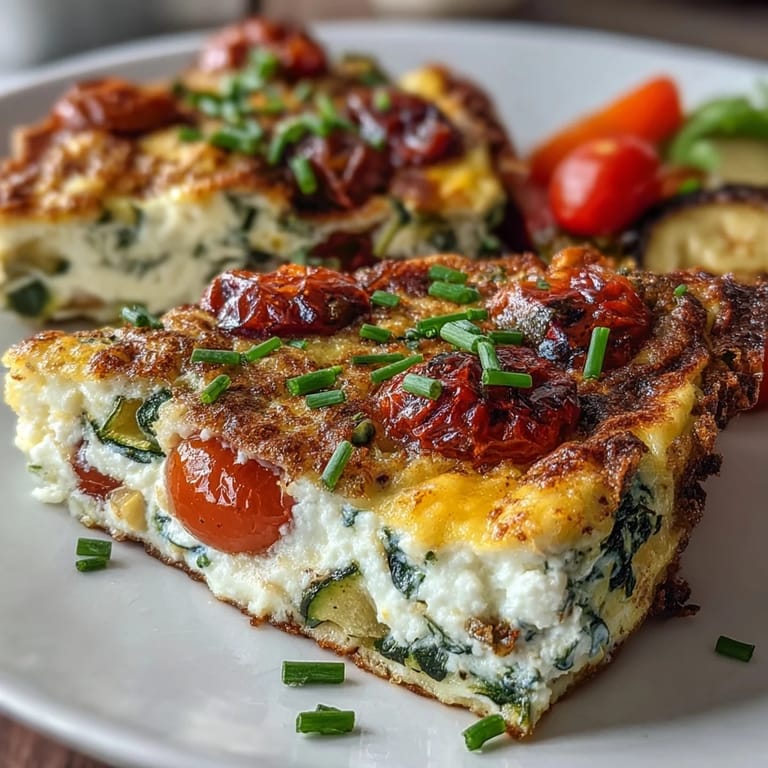
 Sunday mornings at my parents' house meant my mom pulling a sheet pan of baked eggs from the oven while we all gathered in the kitchen, drawn by the smell of herbs and roasted vegetables. Years later, I realized that what made those breakfasts so effortless wasn't magic—it was this simple technique of mixing everything together and letting the oven do the work. When I started meal prepping for the week, I stumbled back onto this method, and suddenly I had six perfect servings of high-protein breakfast ready before Monday even arrived. The cottage cheese was the revelation I didn't expect; it adds richness and protein without heaviness, making each bite feel almost cloud-like against the tender vegetables.
I made this for a friend's overnight visit, and watching her reheat a slice in the microwave the next morning while still half-asleep, then actually smile while eating it—that's when I knew this recipe was keeper-worthy. She texted me weeks later asking for it again because apparently heating it for forty-five seconds gave her this perfectly tender, almost custardy texture that made her whole morning better.
Ingredients
- Eggs (10 large): These are your structure and protein foundation; don't skip whisking them thoroughly or you'll get an uneven, separated texture.
- Cottage cheese (1 1/2 cups): This is the secret weapon—it keeps everything moist and adds serious protein without drying things out, but make sure it's low-fat or the richness gets overwhelming.
- Milk (1/4 cup): Use whatever you have on hand; it just loosens the mixture so it spreads evenly across the pan without dense pockets.
- Cherry tomatoes (1 cup, halved): Halving them keeps the juices from turning everything watery; if you use larger tomatoes, scoop out the seeds first.
- Baby spinach (1 cup, chopped): Fresh spinach wilts down dramatically, so don't worry about it looking like too much raw volume.
- Red bell pepper (1/2 cup, diced): The slight sweetness balances the herbs, and dicing small ensures every slice gets color and flavor.
- Zucchini (1/2 cup, diced): Choose small-to-medium zucchini with thin skin; pat it dry after cutting to prevent excess moisture.
- Red onion (1/4 cup, finely chopped): The sharp bite mellows during baking and adds a subtle sweetness that makes everything feel more developed.
- Salt, pepper, dried oregano or Italian seasoning: These quiet flavors layer together; don't skip the oregano or things taste flat and one-dimensional.
- Fresh chives or parsley: Add these after baking for brightness; cooking them destroys their delicate flavor.
Tired of Takeout? 🥡
Get 10 meals you can make faster than delivery arrives. Seriously.
One email. No spam. Unsubscribe anytime.
Instructions
- Prepare your pan:
- Preheat your oven to 375°F (190°C) and lightly grease a 13x9-inch rimmed baking sheet with nonstick spray or parchment paper. This prevents sticking and makes cleanup feel almost luxurious.
- Build your egg base:
- Whisk together eggs, cottage cheese, and milk in a large bowl until smooth and slightly frothy—the froth is key because it creates those little pockets that make the texture tender and almost fluffy. Don't rush this step; take a full minute to really incorporate everything.
- Season and flavor:
- Stir in salt, pepper, and your dried herbs, then taste a tiny spoonful of the raw mixture to adjust seasonings. This is your only chance to taste and fix things before baking.
- Fold in the vegetables:
- Gently add tomatoes, spinach, bell pepper, zucchini, and red onion, stirring just enough to distribute them evenly. Overmixing at this point can bruise the spinach and make everything look muddy.
- Transfer and settle:
- Pour the entire mixture onto your prepared pan and gently tap the pan on the counter a few times to help everything settle into an even layer. You want the vegetables to distribute themselves naturally rather than you chasing them around.
- Bake until set:
- Slide into the oven for 22 to 25 minutes—you're looking for the center to be just set (it should jiggle slightly when you gently shake the pan) and the edges to have a light golden color. A completely firm center means you've overbaked it and the texture turns rubbery.
- Cool and slice:
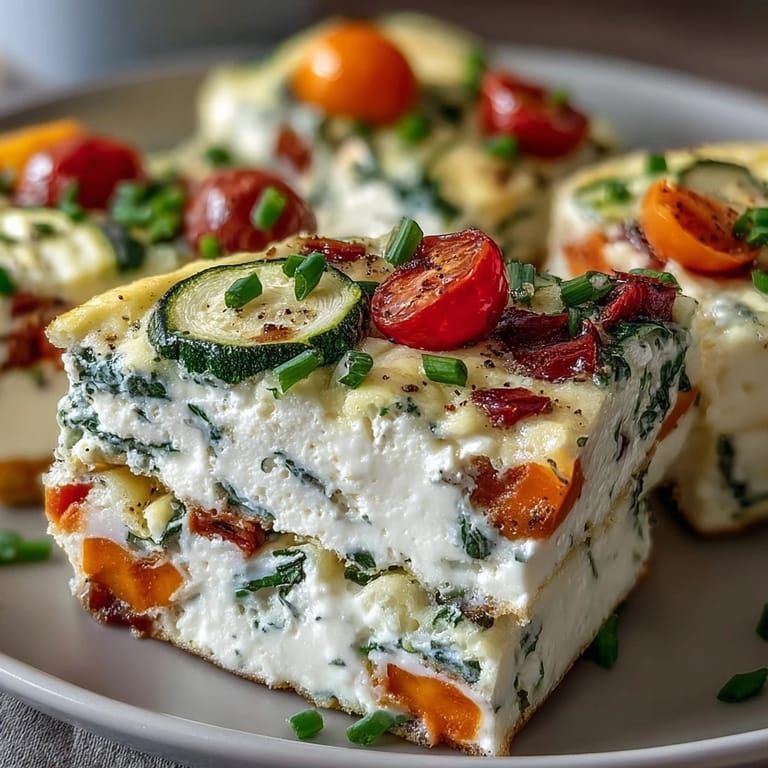
- Pull it out and let it rest for five minutes; this cooling period helps it firm up just enough to slice cleanly into squares. Warm slices are almost custard-like, but it firms up beautifully as it cools.
- Finish and serve:
- Scatter fresh chives or parsley over the top right before serving for brightness and color. Serve it warm, at room temperature, or even cold straight from the fridge.
 Save to Pinterest
 My sister brought a slice of this to a friend's birthday potluck and people actually asked for the recipe—not out of politeness, but genuine curiosity about why a baked egg dish was somehow more interesting than the three casseroles next to it. That moment crystallized for me how simple, real food made with care just lands differently with people.
Customization Without Chaos
The beauty of this recipe is that it's genuinely flexible, and I've experimented enough to know what actually works. Mushrooms are phenomenal—sauté them first to remove moisture, then fold them in cold. Asparagus works too, but cut it small so it softens properly in the 25-minute window. Broccoli tends to get tough unless you blanch it first, which feels like extra work for something meant to be simple. I've added shredded cheddar right before baking and watched it melt into pockets of richness, which elevates the whole thing if you're feeding people who aren't strictly watching their intake. The key is respecting that anything wet needs pre-treatment, anything tough needs pre-cooking, and anything delicate should go in after baking as a garnish.
Reheating and Storage Secrets
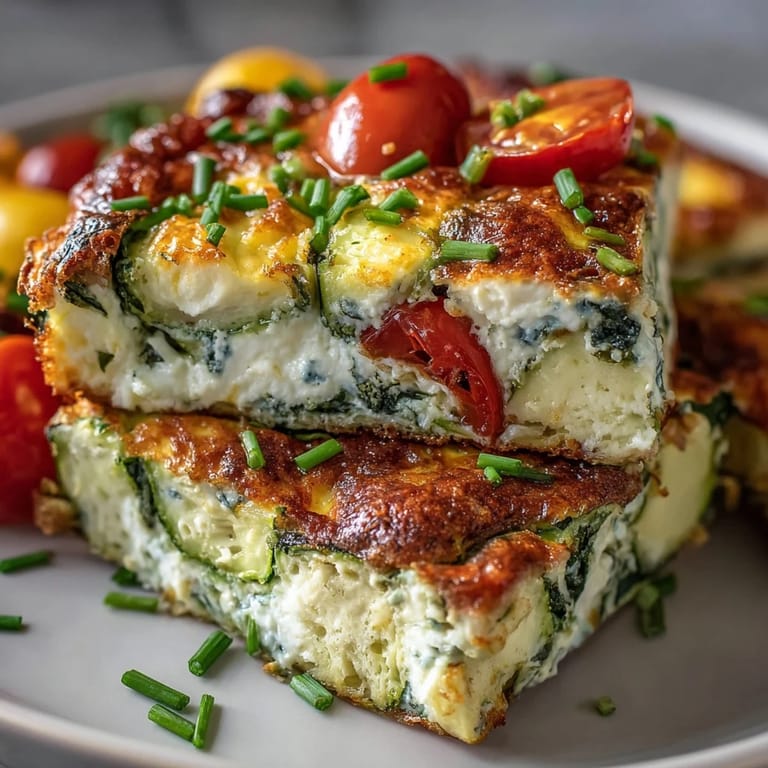
Cold from the fridge, this tastes almost like a savory custard pie—genuinely delicious and perfect with coffee. Reheating changes the texture slightly; forty-five seconds in the microwave makes it almost puff up again, which is honestly preferable to eating it cold if you're having it for actual breakfast. If you reheat from cold, it's done when a knife inserted near the center comes out warm but not piping hot.
Why This Works as Meal Prep
Most meal-prep breakfasts get boring by Wednesday, but the combination of eggs, cottage cheese, and vegetables somehow stays interesting because the textures don't break down into mush. The cottage cheese seems to protect the eggs from drying out, and the vegetables maintain their slight firmness even after days in the fridge. I've brought slices to work, eaten them cold at my desk while answering emails, and felt genuinely nourished rather than like I was eating emergency food.
- Store in an airtight container and it keeps for four days—sometimes five if your fridge runs cold.
- Don't stack the slices directly on each other or they'll compress; use parchment paper between layers if you need to pack them tightly.
- If you're batch-making this multiple times a week, line your pan with parchment paper for even faster cleanup and to prevent sticking on second use.
 Save to Pinterest
 This recipe became my quiet Sunday ritual, the one thing I make without thinking, knowing it'll carry me smoothly through the week. There's something grounding about simplicity that actually nourishes you.
Recipe Help Center
- → Can I make these ahead of time?
Absolutely. These baked eggs store exceptionally well in an airtight container in the refrigerator for up to 4 days. Reheat individual portions in the microwave for 30-60 seconds until warmed through.
- → What vegetables work best in this dish?
Cherry tomatoes, spinach, bell peppers, zucchini, and red onion are excellent choices. You can also swap in mushrooms, broccoli, asparagus, or diced eggplant depending on what's in season or your personal preference.
- → Why add cottage cheese to eggs?
Cottage cheese adds protein while creating an incredibly fluffy, tender texture. As it bakes, the cheese melts into the eggs, adding moisture without making them soggy. The mild flavor complements the vegetables perfectly.
- → Can I freeze these baked eggs?
Yes. Once completely cooled, cut into portions and wrap tightly in plastic wrap, then place in a freezer-safe container. They'll keep for up to 2 months. Thaw overnight in the refrigerator before reheating.
- → How do I know when the eggs are done?
The eggs are finished when they're just set in the center—there should be no liquid egg remaining. The edges will be lightly golden, and a knife inserted into the center should come out clean.
- → Can I use plant-based alternatives?
You can substitute plant-based milk and vegan cottage cheese alternatives, though the texture may vary slightly. For egg-free options, try using chickpea flour mixed with water or a commercial egg replacer designed for baking.