 Save to Pinterest
 There's something about the smell of garlic hitting hot oil that makes you stop whatever you're doing. One Thursday evening, I was standing in my kitchen on autopilot, thinking about the week ahead, when that aroma hit and suddenly everything slowed down. I'd grabbed a can of tomatoes and some basil from the farmers market without a real plan, just knowing I wanted something warm and uncomplicated. What emerged was this soup—silky, bright, and the kind of thing that tastes like someone actually cared while making it.
I made this for my neighbor who'd just moved in, and we ended up eating it sitting on her kitchen counter surrounded by half-unpacked boxes. She dunked her bread strips with the focus of someone solving a puzzle, and we talked for another hour after the bowls were empty. That's when I realized the best part of this recipe isn't the cream or the basil—it's how it gives you permission to slow down and actually taste something.
Ingredients
- Olive oil: Use good quality here because it's one of the first flavors to bloom—it makes a real difference in how the soup tastes.
- Yellow onion: Chopped medium-fine so it melts into the soup and adds sweetness without any harsh bite.
- Garlic cloves: Minced small, because you want them to disappear into fragrance rather than sit as chunks.
- Crushed tomatoes: The 28-ounce can is the sweet spot for four servings; canned tomatoes are actually better than fresh here because they're concentrated and consistent.
- Vegetable broth: This isn't about being fancy—it's about not overpowering the tomato, so go with something neutral you trust.
- Tomato paste: Just a tablespoon, but it deepens everything without making the soup taste like a tin can.
- Sugar: A teaspoon cuts the acidity in a way that cream alone won't, and you'll taste the difference immediately.
- Salt and black pepper: Season as you go, not all at once—your palate will tell you what it needs.
- Heavy cream: Stirred in at the very end so it stays luxurious without breaking or splitting.
- Fresh basil: Chopped right before serving, because basil hates sitting around getting dark and sad.
- Sourdough loaf: Cut thick enough that the interior stays tender while the outside gets crispy—thin slices just turn to cardboard.
- Unsalted butter: Softened so it spreads easily and toasts evenly on the bread.
- Garlic clove: Halved for rubbing, which gives you aromatics without the danger of burning raw garlic pieces.
Tired of Takeout? 🥡
Get 10 meals you can make faster than delivery arrives. Seriously.
One email. No spam. Unsubscribe anytime.
Instructions
- Build the base:
- Heat your oil over medium heat and listen for it to shimmer lightly. Add the chopped onion and let it sit for a minute before stirring—you want it to actually touch the pan and start softening, not just moving around.
- Wake up the garlic:
- After five minutes when the onion turns translucent and sweet-smelling, add your minced garlic and stir constantly for about a minute. The moment it becomes fragrant (not browned), you move forward.
- Build the body:
- Pour in your tomatoes, broth, tomato paste, sugar, salt, and pepper all at once. Stir it together so the paste dissolves, then bring everything to a gentle simmer—you're not boiling it aggressively, just creating small bubbles that break the surface.
- Let it simmer:
- Reduce the heat and let it bubble quietly for twenty minutes, stirring occasionally so nothing sticks to the bottom. This time is when all the flavors start to marry together.
- Add creaminess and brightness:
- Remove from heat, pour in your cream, and add the fresh basil. The soup will be hot enough that the basil releases its oil without losing its color.
- Blend smooth:
- Use an immersion blender right in the pot, or transfer to a regular blender in batches (careful with hot liquid). You want it velvety, not chunky—blend until it feels right to you.
- Toast the bread:
- Heat your skillet or griddle over medium heat and spread softened butter on both sides of your thick sourdough slices. They'll take two to three minutes per side to turn golden brown with some crispness.
- Finish the dippers:
- While the bread is still warm, rub each slice with the cut side of your garlic clove—the warmth releases the garlic oil and it adheres perfectly. Then cut into strips for dipping.
- Serve:
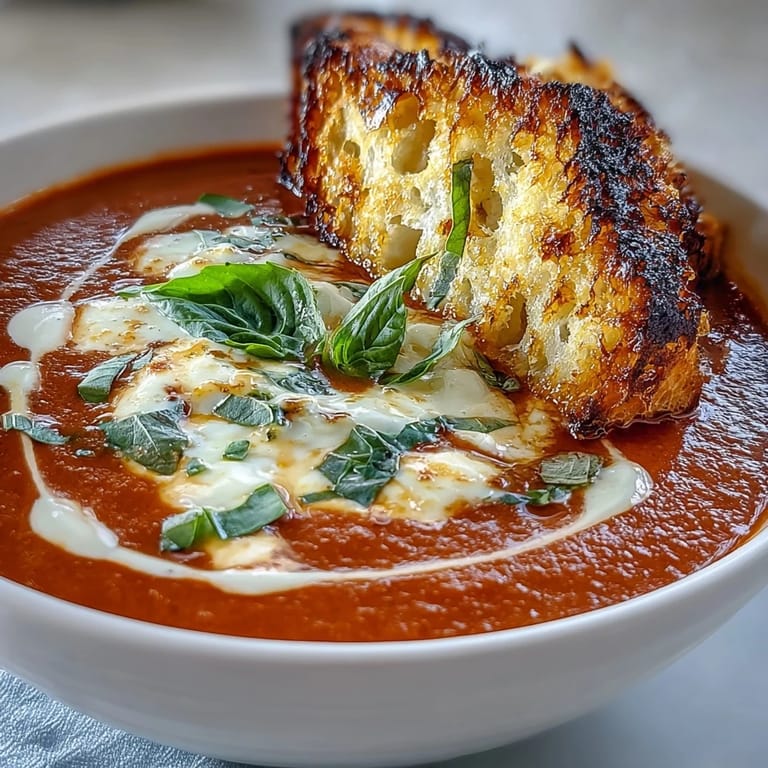
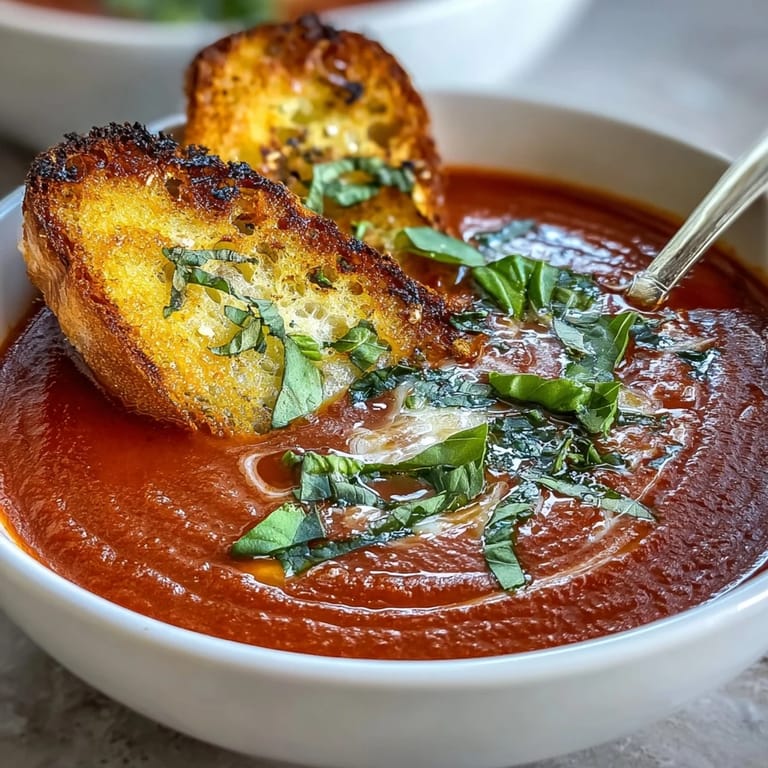
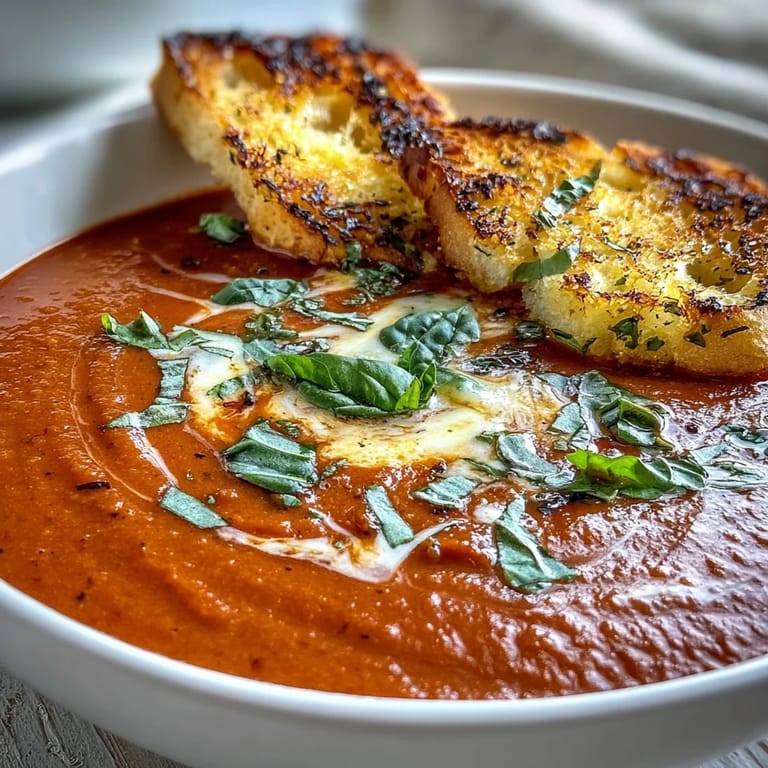
- Ladle the soup into bowls, scatter a little extra basil on top, and lean the sourdough strips against the side like you actually care about presentation.
 Save to Pinterest
 I served this to my mother on a cold Sunday in November, and she asked for the recipe before she even finished her bowl. We didn't talk much that day—just sat at the table together with steam rising off the soup, dunking bread, existing quietly in the same space. Food like this does that sometimes: it stops being about hunger and becomes about feeling less alone.
When to Make This Soup
This is the kind of soup that works year-round, but it really sings in fall and winter when you want something warm that tastes bright anyway. Spring tomatoes are lovely, but canned tomatoes in colder months are actually richer and more reliable, so don't feel bad about using them. It's also the perfect answer when you have someone coming over for lunch and you want to seem like you've put effort in without actually spending hours in the kitchen.
Making It Your Own
The recipe is flexible enough that you can adjust it without breaking it. Some people swirl in a little pesto right before serving, others add a pinch of red pepper flakes for subtle heat, and I've seen versions with a splash of balsamic that adds a darker depth. The sourdough dippers are non-negotiable though—that contrast between the crispy bread and silky soup is what makes the whole thing work.
Storage and Make-Ahead Notes
The soup keeps in the refrigerator for four days and actually tastes better on day two or three once the flavors have settled. You can freeze it in portions without the cream and basil, then thaw and finish it fresh. The sourdough dippers are best made fresh the same day, but if you're in a rush you can butter and garlic-rub them in the morning and toast them right before serving.
- Make the soup base up to two days ahead and add cream and basil just before serving.
- Toast extra sourdough slices even if you don't need them—they're hard to stop eating.
- Store leftover soup in shallow containers so it cools faster and tastes fresher when you reheat it.
 Save to Pinterest
 This soup has shown up in my kitchen through seasons and moods, and it never feels like a burden to make. It's the kind of recipe that lives between effort and ease, between something you're proud of and something you don't have to think too hard about.
Recipe Help Center
- → What type of bread works best for the dippers?
Thick slices of sourdough bread are ideal as they grill well and hold up to dipping without becoming soggy.
- → Can I use fresh tomatoes instead of canned?
Fresh ripe tomatoes can be used, but canned crushed tomatoes provide consistent flavor and texture for a smooth soup.
- → How do I achieve a creamy texture without dairy?
Substitute heavy cream with coconut or cashew cream and use plant-based butter for the dippers to keep it creamy and dairy-free.
- → Why is tomato paste added to the soup?
Tomato paste enhances the depth and richness of the tomato flavor, adding a subtle sweetness and body.
- → How should I store leftovers?
Keep the soup refrigerated in an airtight container for up to 3 days; reheat gently to preserve its creamy texture.